Table of Contents
- How to Identify a Trusted Online Store
- Best Practices for Buying Electronics Online
- Verifying Product Authenticity Online
- Comparing Online Gadget Retailers for Quality: What Actually Matters
- Refurbished vs. Open-Box: Quality Standards Compared
- Data Privacy and Sustainability: What Most Retailer Comparisons Skip
- Frequently Asked Questions
Last Updated: September 23, 2026
How to Identify a Trusted Online Store
Identifying a trusted online store starts with three checks: verifiable contact information, clearly written policies, and reviews on independent platforms, not just the seller's own site. Retailers that hide their address or bury their return terms are telling you something.
Check Contact Info, Policies, and Reviews Before You Buy
A trusted online store publishes verifiable contact details, plain-language return and warranty policies, and a review record you can confirm on outside platforms. If any of the three is missing, treat it as a warning sign.
Run this checklist before entering payment details anywhere:
- Physical address listed on the site, not just a contact form
- Return window stated in days, plus who pays return shipping
- Warranty terms written out, including what is excluded
- Reviews visible on independent sites, not only on the retailer's own pages
- Secure checkout with visible encryption and recognized payment methods
- Order tracking provided after purchase
The FTC's guidance on online shopping is a useful reference for what sellers are required to disclose about refunds and shipping timelines.
Best Practices for Buying Electronics Online
Matching the retailer to the gadget matters more than chasing the lowest listing. A store built for computer components handles a motherboard well and a pet mobility aid poorly.
Match the Retailer to the Gadget You Need
Here is how the main retailer types differ:
| Retailer Type | Strengths | Watch For |
|---|---|---|
| Big-box electronics chains | In-store pickup, professional tech support | Narrower inventory than marketplaces |
| Price comparison engines | Real-time price tracking across sellers | No control over shipping or quality |
| Component specialists | Deep technical specs, enthusiast reviews | Limited lifestyle and home categories |
| Curated lifestyle stores | Vetted product mix across home, pet, and personal care | Smaller catalogs than mass marketplaces |
For everyday gadgets, home cleaning tools, and pet care items, a curated retailer that stocks a focused range tends to offer more consistent quality than a marketplace listing thousands of near-identical products. WellnessLifeClub74, for example, builds its catalog around trending gadgets and specialized collections for pets, home, and personal care, which means fewer listings but more consistency across them.
Verifying Product Authenticity Online
Verifying product authenticity online means confirming the item matches what the manufacturer made and that the seller had the right to sell it. Serial numbers, packaging details, and seller authorization are the three levers you control.
How Counterfeit Electronics Actually Reach Buyers
Counterfeit and gray-market gadgets rarely arrive through obvious channels. The common paths are:
- Third-party marketplace sellers who list a genuine product photo but ship a different unit, often sourced from liquidation pallets or overseas wholesalers.
- Unauthorized resellers who sell genuine products but outside the manufacturer's authorized channel, which can void the warranty even though the device is real.
- Refurbished units sold as new, where the device is genuine but the condition and packaging do not match the listing.
- Accessory counterfeits, where the gadget is real but the included charger, cable, or battery is not, which is a safety concern for anything with a lithium-ion cell.
Serial Numbers, Packaging, and Seller Verification
Counterfeit prevention starts before checkout. Ask:
- Does the listing show a manufacturer part number or model number? A missing MPN or a model number that does not match the manufacturer's own site is a red flag.
- Is the seller listed as an authorized retailer or a third-party reseller? Check the manufacturer's own "where to buy" page. If the retailer is not listed, assume the warranty may not apply.
- Does the product page include original packaging photos, not stock renders? Stock renders are normal for new products, but a listing that only shows manufacturer marketing images and no real photos of the actual unit is worth scrutinizing.
- Will the retailer confirm the serial number on request? A retailer that can pull the serial number before shipping is a retailer that controls its own inventory.
When the item arrives, check the serial number against the manufacturer's lookup tool; mismatched or missing serials are the clearest counterfeit sign. On packaging, look for:
- Font inconsistencies or blurry printing on the box
- Missing regulatory marks that the genuine product carries
- A serial number sticker that is crooked, peeling, or printed on a separate label rather than integrated into the packaging
- Accessories that feel lighter or have different connector tolerances than the genuine version
The Retailer-Level Check Most Buyers Skip
The strongest authenticity signal is whether the retailer publishes its sourcing model. Retailers that buy directly from manufacturers or authorized distributors can tell you which one; those sourcing from liquidation or open-market wholesalers often cannot, and their listings show wider price swings and inconsistent stock. Before buying a high-value gadget, look for a sourcing statement or "authorized retailer" badge, and verify it against the manufacturer's own list.
Comparing Online Gadget Retailers for Quality: What Actually Matters
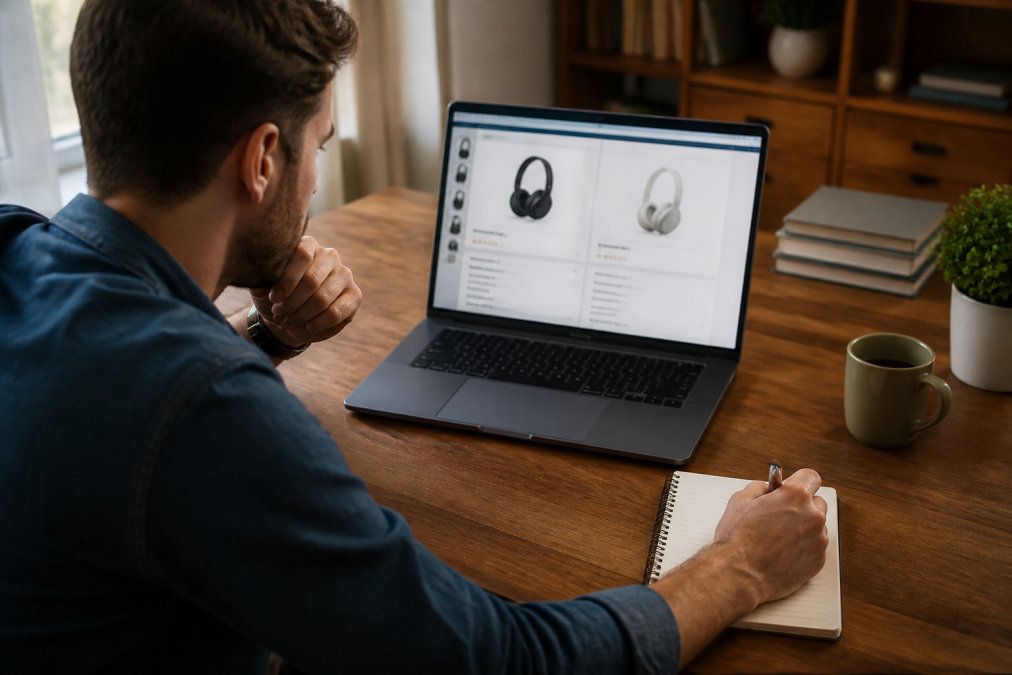
When comparing online gadget retailers for quality, the deciding factors are return policy mechanics, warranty administration, and post-purchase service, not homepage design or sale banners. "Check the return window" is not enough to separate a retailer that stands behind its products from one that merely advertises a policy.
The Five Quality Signals That Actually Differentiate Retailers
Use this framework to score any retailer before you buy. Each signal has a concrete test.
1. Return policy mechanics, not just the window length.
- Whether the return window starts at order date or delivery date (delivery date is more consumer-friendly)
- Whether opened electronics are eligible, and at what fee
- Who pays return shipping on a defective item (the retailer should)
- Whether refunds go back to the original payment method or store credit only
2. Warranty administration, not just warranty length.
3. Post-purchase support accessibility.
4. Inventory depth and fulfillment reliability.
5. Pricing transparency.
How the Main Retailer Types Score on These Signals
| Retailer Type | Return Mechanics | Warranty Administration | Post-Purchase Support | Best For |
|---|---|---|---|---|
| Big-box electronics chains | Standardized, usually 15-30 days, restocking fees common on opened items | Manufacturer warranty honored; in-store service centers | Phone and in-store; typically strong | Buyers who want a physical location for returns |
| Marketplaces with third-party sellers | Varies by seller; platform policy is a floor, not a guarantee | Depends on whether seller is authorized; often unclear | Platform-level only; seller-level support varies | Price comparison, not quality assurance |
| Component and hobbyist specialists | Often shorter windows but clearer terms | Manufacturer warranty plus specialist technical support | Strong technical support; staff know the products | Builders and enthusiasts who need spec help |
| Curated single-brand or focused-catalog retailers | Usually simpler, more consumer-friendly terms | Manufacturer warranty, with retailer as the point of contact | Direct access to the retailer; response times often faster | Buyers who want consistency across a smaller catalog |
Retailer reputation compounds: a store that answers support tickets quickly on a small order usually does the same on a large one. The five signals above give you a repeatable way to check that before you commit.
Refurbished vs. Open-Box: Quality Standards Compared
Refurbished and open-box items are not the same thing, and the difference decides what you pay and how much risk you take.
Data Privacy and Sustainability: What Most Retailer Comparisons Skip
Two factors rarely make it into retailer comparisons, and both matter more each year: how a store handles your data, and what happens to the electronics you replace.
Frequently Asked Questions
What should I look for when comparing online gadget retailers for quality?
Focus on five things: a clear return policy, warranty coverage, verified customer reviews, responsive customer service, and transparent pricing. Check whether the retailer lists a physical address and phone number, and read the fine print on restocking fees. Retailers that publish detailed product specifications and post-purchase support options tend to be more reliable than those that only show a checkout page.
How can you tell if an online electronics store is legitimate?
Look for a working phone number, a real business address, and a return policy written in plain language. Search the store name plus 'reviews' or 'complaints' to see what past buyers say. Legitimate stores also use secure checkout (look for HTTPS and recognized payment processors) and do not pressure you with countdown timers or 'only 1 left' warnings on every item.
Are third-party marketplace sellers reliable for gadgets?
It depends on the seller, not the marketplace. Check the seller's rating, how long they have been active, and whether the item ships from a domestic warehouse or overseas. For higher-priced electronics, buying from the marketplace itself or a specialized retailer with warranty coverage reduces the risk of receiving a counterfeit or gray-market unit. Always confirm the return window applies to third-party purchases.
How do return policies affect the quality of an online retailer?
A generous return policy signals that the retailer stands behind its products. Look for at least a 30-day window, free return shipping on defective items, and no restocking fee for unopened products. Retailers with restrictive policies (14 days or less, customer pays return shipping) often shift risk to the buyer, which matters most when you are buying refurbished or open-box gadgets.