Table of Contents
- How Often to Use Whitening Strips: A Safe Routine
- Teeth Whitening Strips Side Effects You Should Know
- How Long to Leave Whitening Strips On
- Signs of Tooth Sensitivity From Whitening
- Strips on Crowns, Veneers, and Fillings
- Maintenance Phase: Keeping Results After the Cycle
- Conclusion
- Frequently Asked Questions
Last Updated: September 21, 2026
How Often to Use Whitening Strips: A Safe Routine
Most people reach for whitening strips and guess.
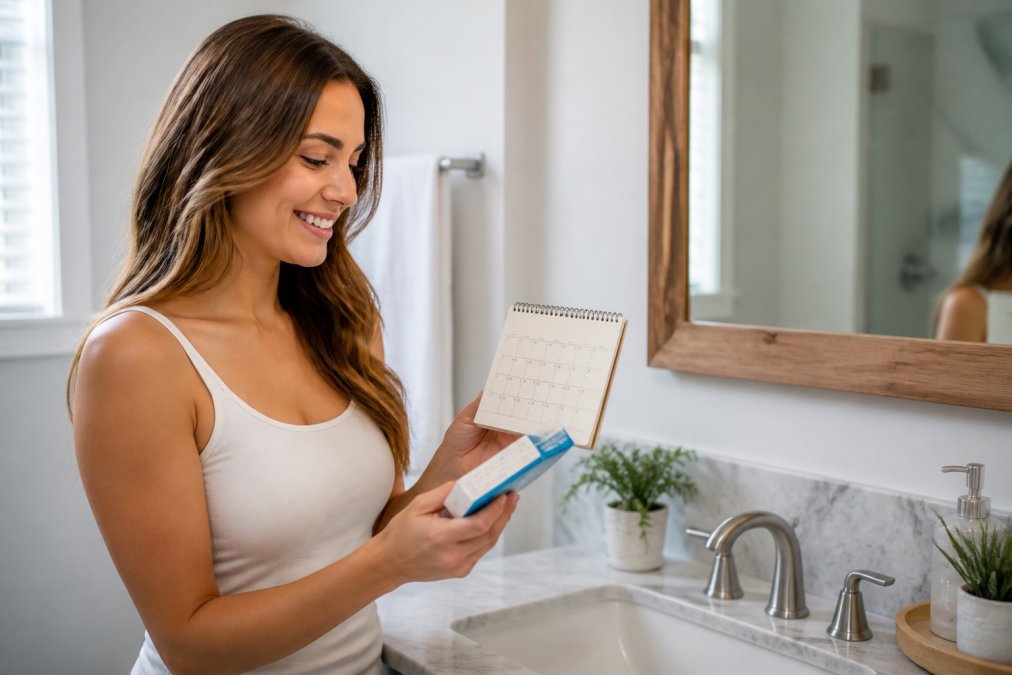
What the Instructions Actually Mean
The directions on the box are not suggestions. They are tested limits.
A Sample Two-Week Schedule
A safe whitening cycle looks like this:
- Days 1-3: Apply once daily, 30 minutes. Watch for sensitivity.
- Days 4-7: Continue daily if no irritation. Reduce to 20 minutes if you feel twinges.
- Days 8-14: Finish the cycle. Do not extend past the box limit.
- After day 14: Stop for at least 2 weeks before considering another cycle.
This schedule respects the whitening cycle and gives your teeth time to recover between rounds.
Teeth Whitening Strips Side Effects You Should Know
The two side effects that matter most, tooth sensitivity and gum irritation, are not the same problem, do not have the same cause, and do not have the same fix. Most guides conflate them. Treating them separately is the fastest way to stay comfortable through a full cycle.
Because the causes differ, the fixes differ:
| Symptom | Likely cause | What actually helps |
|---|---|---|
| Sharp twinge with cold or hot | Peroxide reaching dentin | Desensitizing toothpaste, shorter wear time, every-other-day schedule |
| Dull ache after removal | Prolonged peroxide exposure | Skip a day, then resume at a lower duration |
| White line or sore gum edge | Strip contact with soft tissue | Trim the strip, reposition away from gums, pause until it heals |
| Redness along gumline | Repeated contact burn | Stop for 48 hours, then re-check fit before resuming |
Other effects people report, and what they usually mean:
- Mild toothache after removal, usually dentin sensitivity, not decay
- Increased sensitivity to cold drinks, normal during an active cycle, resolves after
- Temporary gum redness, contact irritation, not infection
- Uneven whitening near fillings, composite does not bleach, so the natural tooth around it lightens alone
Enamel Safety and Ingredient Profiles
Enamel safety comes down to two variables: the concentration of the whitening agent and the total contact time. Neither one alone tells the whole story.
What this means in practice:
- First-time users or sensitive teeth: a lower-concentration, carbamide-based strip is usually the safer starting point.
- Stubborn staining, no history of sensitivity: a hydrogen peroxide strip may finish the job in fewer days.
- Existing restorations or gum recession: talk to a dental professional before choosing either, because exposed dentin and composite margins change the risk profile.
- Never stack products. Using a peroxide mouthwash, whitening toothpaste, and strips in the same 24 hours multiplies exposure without multiplying results.
How Long to Leave Whitening Strips On
Leave whitening strips on for the time your package specifies, usually 30 minutes for standard strips and sometimes less for sensitive formulas. Longer is not better.
Mild vs. Significant Staining: Adjusting Duration
Staining intensity changes your plan, not your strip time.
- Mild staining: One short cycle, often 7 days, is usually enough.
- Moderate staining: A full 14-day cycle, then reassess.
- Significant staining: Same cycle length, but expect to repeat after a rest period.
The key point: you adjust how many cycles you do, not how long each strip stays on. Application duration stays fixed. Treatment duration is what stretches.
Signs of Tooth Sensitivity From Whitening
Signs of tooth sensitivity from whitening include sharp twinges with cold or hot drinks, a dull ache after removal, and discomfort when brushing. These are common and usually fade within a few days of stopping.
What to do:
- Skip a day and see if it settles
- Switch to a desensitizing toothpaste
- Shorten your application time
- Use strips every other day instead of daily
When to Stop and When to See a Dentist
Stop using strips immediately if you have constant pain, bleeding gums, or sensitivity that lasts more than a few days after you quit.
See a dental professional if:
- Pain continues after you stop whitening
- You notice gum recession or white burn marks
- A single tooth hurts more than the others
- You have deep cracks or untreated cavities
Strips on Crowns, Veneers, and Fillings
Whitening strips do not work on crowns, veneers, or fillings. These materials do not respond to peroxide the way natural enamel does.
- Expect your natural teeth to change, not the crown
- A shade guide helps you track the gap
- Some people whiten first, then replace old crowns to match
Maintenance Phase: Keeping Results After the Cycle
The maintenance phase is where most people lose their results, and it is the phase almost every guide skips. Competitors stop at "brush and floss." That advice is fine, but it does not explain why freshly whitened teeth re-stain faster in the first 48 hours, or how to build a touch-up schedule that does not quietly turn into daily use.
The 48-Hour Post-Cycle Diet
For the first two days after your last strip:
- Skip: coffee, black tea, red wine, cola, dark berry juices, soy sauce, tomato sauce, curry, balsamic vinegar, and tobacco.
- Choose: water, milk, plain yogurt, white rice, pasta with cream or butter sauces, bananas, apples, and skinless poultry.
- Use a straw for anything cold and lightly colored, it reduces contact with the front teeth.
- Rinse with plain water immediately after any meal or drink, even a safe one. Rinsing removes surface pigment before it can bind.
- Wait at least 30 minutes after acidic foods before brushing. Brushing softened enamel wears it down.
After 48 hours, the surface has re-mineralized enough that normal eating is fine, but the habits you keep from here decide whether your results last three months or three weeks.
Building a Touch-Up Schedule That Does Not Slip
The most common maintenance mistake is treating touch-ups like a daily habit. They are not. A touch-up is a single strip, used to refresh a specific area, not a restart of the full cycle.
A workable pattern most people can sustain:
- Weeks 1-2 after the cycle: no strips at all. Let enamel recover.
- Weeks 3-8: one touch-up strip every 2 to 4 weeks, only if you notice dulling.
- Month 3 onward: reassess. If you need a touch-up more than once every two weeks, you likely need a full cycle with a rest period, not more frequent single strips.
- Never exceed one strip in a 24-hour period, even during maintenance.
Daily Habits That Protect the Shade
- Brush twice daily with a soft-bristle brush and a non-abrasive toothpaste. Whitening toothpastes with harsh silica can scratch enamel over time and make it hold stain more easily.
- Floss once daily. Stain collects at the margins between teeth, where a brush cannot reach.
- Use a straw for iced coffee, cola, and iced tea, the everyday drinks that do the most cumulative staining.
- Rinse after staining foods, even when you are not near a toothbrush.
- Keep dental cleanings on schedule. Professional polishing removes surface stain that no strip can reach and lets a hygienist flag enamel changes early.
- Do not smoke. Tobacco tar is one of the most persistent chromogens and re-stains faster than any food.
Conclusion
The safe rule for how often to use teeth whitening strips comes down to discipline: follow the cycle, respect the time limit, and stop when your teeth tell you to. Most problems come from impatience, not from the strips themselves.
Frequently Asked Questions
Is there a downside to whitening strips?
Yes. Overuse can cause tooth sensitivity, gum irritation, and enamel wear, especially if you apply strips more often than the label recommends. Hydrogen peroxide and carbamide peroxide, the active whitening agents, can irritate dentin when the protective enamel is compromised. Stick to the recommended daily regimen, avoid leaving strips on longer than instructed, and take breaks between whitening cycles to let your enamel recover.
How long should you wait between using whitening strips?
Most whitening strips are designed for once-daily use over 7 to 14 days. After completing a full whitening cycle, wait at least two to four weeks before starting another round. This rest period allows your enamel to remineralize and reduces the risk of cumulative sensitivity. If you have mild staining, you may only need a maintenance application once every few weeks rather than a full cycle.
What are the signs of over-whitening teeth?
Signs of over-whitening include sharp, lingering tooth sensitivity to hot or cold, visible gum irritation or redness, and teeth that look unnaturally chalky or translucent. If you notice these signs of tooth sensitivity from whitening, stop using strips immediately. Over-whitening can make teeth appear gray or blue because the enamel becomes thinner and the darker dentin underneath shows through. Give your teeth a break and consult a dental professional if symptoms persist.
Can whitening strips damage tooth enamel?
Whitening strips can damage enamel if used too frequently or left on longer than directed. The bleaching process temporarily opens pores in the enamel, which is normal, but repeated exposure without recovery time can weaken the surface. To protect enamel safety, follow the application frequency on the package, avoid using strips on the same day as other whitening products, and use a desensitizing toothpaste with fluoride to support remineralization between treatments.