Table of Contents
- What Actually Causes Gum Recession (And Why It Matters)
- How to Stop Gum Recession from Getting Worse
- The Best Toothbrush for Receding Gums: What to Look For
- Natural Remedies for Gum Recession: What Works and What Doesn't
- Antimicrobial Mouthwash and Dietary Support for Gum Health
- Stabilization vs. Regeneration: When Home Care Isn't Enough
- Frequently Asked Questions
Last Updated: September 19, 2026
What Actually Causes Gum Recession (And Why It Matters)
Gum recession is the gradual pulling back of gingival tissue from the tooth surface, exposing tooth roots and creating sensitivity. It affects millions of adults, and the damage rarely reverses on its own. This guide from WellnessLifeClub74 explains what you can manage at home and when to see a professional.
Aggressive Brushing and Mechanical Trauma
Brushing too hard is the most common self-inflicted cause. A stiff brush and heavy pressure wear down the gum line over years. This is called mechanical trauma.
Signs you may be brushing too hard:
- Your brush bristles splay outward within weeks
- Gums bleed during or after brushing
- Teeth feel sensitive near the gum line
Plaque Buildup, Tartar, and Bacterial Infection
Bacterial infection is the other major driver. When plaque sits on teeth too long, it hardens into tartar. Tartar can't be removed with a toothbrush.
How to Stop Gum Recession from Getting Worse
You can't always regrow lost gum tissue at home, but you can slow or stop the recession. The goal is stabilization: protect what's left and prevent further damage. Below are the habits that matter most.
Fix Your Brushing Technique First
A common mistake is treating brushing as a scrubbing task. It isn't.
Key changes to make today:
- Switch to a soft-bristled brush
- Use light pressure, about the weight of a pencil
- Brush for two minutes, twice a day
- Replace your brush every three months
Daily Flossing and Water Flossing
Flossing removes plaque from between teeth where a brush can't reach. If traditional floss feels harsh on exposed roots, try dental floss tape. It's flatter and gentler.
For a simple daily routine:
- Brush gently with a soft brush
- Floss or use a water flosser
- Rinse with an antimicrobial mouthwash
- Repeat morning and night
The Best Toothbrush for Receding Gums: What to Look For
The best toothbrush for receding gums is one with soft bristles, a compact head, and a comfortable grip that lets you apply light pressure. Hard bristles and oversized heads make gentle brushing harder.
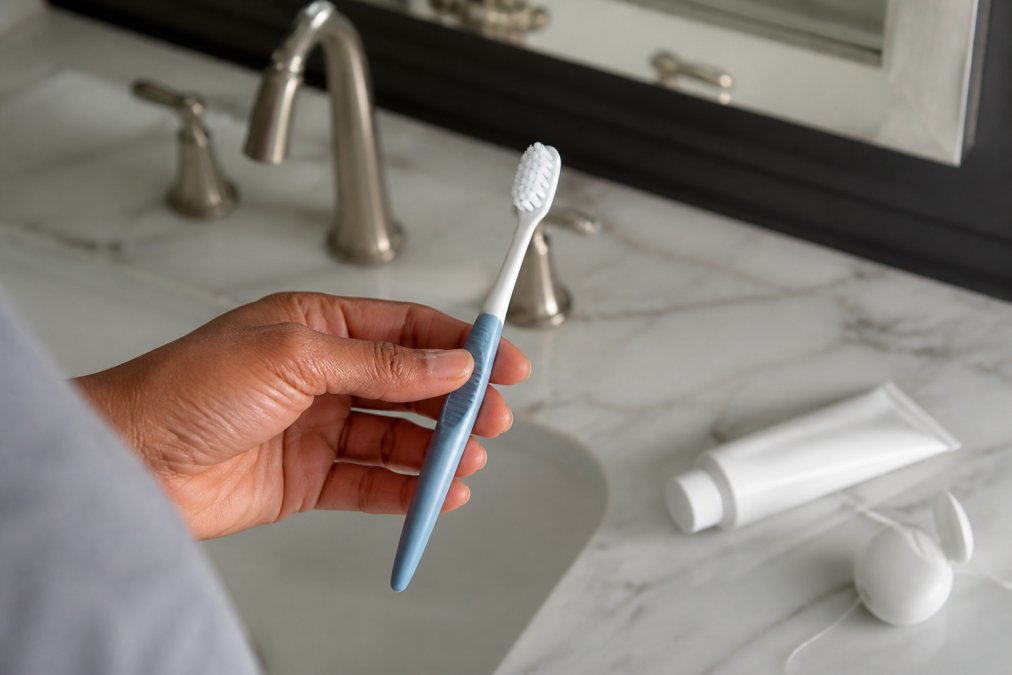
What to check before buying:
- Bristle type: soft or extra-soft only
- Head size: small enough to reach back teeth
- Handle: non-slip and easy to hold lightly
- Electric option: pressure sensors help prevent over-brushing
Natural Remedies for Gum Recession: What Works and What Doesn't
Natural remedies can support gum health, but they won't regrow lost tissue. Think of them as helpers, not cures. The useful distinction is between remedies that reduce the bacterial and inflammatory load on your gums (which can slow recession) and remedies that claim to rebuild tissue (which none of them do).
What the Ingredients Actually Do
Most "natural remedy" lists stay vague. Here's what the common actives actually do at the gum line:
- Coconut oil (oil pulling). The lauric acid in coconut oil has mild antimicrobial activity. Swishing for 10-15 minutes physically disrupts plaque biofilm and can reduce the bacterial count in saliva. It does not penetrate below the gum line, so it cannot reach the bacteria causing most recession.
- Saltwater rinse. A warm saltwater rinse (roughly 1/2 teaspoon of salt in 8 oz of warm water) is mildly antiseptic and draws fluid out of swollen tissue, which is why it soothes irritated gums. It's a comfort measure, not a treatment.
- Aloe vera gel. Aloe contains anti-inflammatory compounds and is often applied directly to the gum line. Look for pure gel with no added sugar, alcohol, or artificial sweeteners, since those can irritate already-receded tissue.
- Green tea. The catechins in green tea have antioxidant and mild anti-inflammatory properties. Drinking it or rinsing with cooled green tea is low-risk and may reduce gingival inflammation.
- Vitamin C and CoQ10. Both are involved in gum tissue maintenance. Deficiency in either is linked to gum problems, but supplementing when you're not deficient won't rebuild lost tissue.
Myths That Delay Real Treatment
Some claims about natural gum regrowth are simply not true. Believing them can cost you time and tissue.
Myths to ignore:
- "Oil pulling regrows gums." It may reduce surface bacteria, but it cannot rebuild connective tissue or cover an exposed root.
- "You can reverse recession with vitamins alone." Nutrients support health but don't restore lost gum.
- "Bleeding gums are normal." They usually signal inflammation or infection.
- "A toothpaste with 'gum repair' on the label will fix it." No over-the-counter toothpaste regrows gum tissue. Some can reduce inflammation or sensitivity, which is a different claim.
The Honest Limit of Home Remedies
Every remedy above works on the surface of the problem: bacteria, plaque, and inflammation. Recession that has already exposed a root, or that stems from grinding or a thin gum biotype, is a structural problem. No rinse, oil, or gel changes the position of your gum line. That's why the next section focuses on stabilization, the realistic goal of any at-home routine.
Antimicrobial Mouthwash and Dietary Support for Gum Health
Mouthwash and diet are the two levers most people under-use. Both can meaningfully reduce the bacterial and inflammatory load on receding gums, but only if you pick the right actives and slot them into a routine you'll actually keep.
Reading the Mouthwash Label: Actives That Matter
Not all antimicrobial rinses are equal. The active ingredient determines what the rinse actually does:
- Cetylpyridinium chloride (CPC). A common antiseptic that reduces plaque and gingivitis. Found in many alcohol-free rinses. Effective for surface bacteria; doesn't reach deep pockets.
- Essential oils (thymol, eucalyptol, menthol, methyl salicylate). The classic antiseptic blend. Well-studied for reducing plaque and gingivitis. Often contains alcohol, look for an alcohol-free version if your gums are sensitive.
- Chlorhexidine. Prescription-strength antiseptic. Very effective short-term, but long-term use can stain teeth and alter taste. Usually a dentist-directed, time-limited option, not a daily rinse.
- Stannous fluoride. Not strictly antimicrobial, but it reduces gingivitis and helps with root sensitivity, useful when recession has exposed roots.
- Hydroxyapatite. A calcium-phosphate compound that can remineralize exposed root surfaces and reduce sensitivity. Often found in sensitivity toothpastes rather than rinses.
Diet: What Actually Moves the Needle
Your oral microbiome, the community of bacteria in your mouth, responds to what you eat. The goal isn't a special "gum diet"; it's reducing the fuel that feeds inflammatory bacteria while supplying what gum tissue needs to maintain itself.
Foods that support gum health:
- Crunchy vegetables like carrots and celery, which stimulate saliva and gently clean tooth surfaces
- Leafy greens rich in vitamin C, which supports collagen in gum tissue
- Dairy with calcium and probiotics
- Water, to rinse away food and bacteria between meals
Your Daily Gum Health Checklist
Remedies only work if they're built into a routine. Here's a simple morning-and-night structure that integrates everything above:
Morning
- Rinse with warm saltwater or an alcohol-free antimicrobial mouthwash (30 seconds)
- Brush gently with a soft-bristled brush at a 45-degree angle for two minutes
- Floss or use a water flosser, especially along the gum line
- Finish with an alcohol-free rinse if you didn't start with one
Evening
- Oil pull for 10-15 minutes before brushing (optional, 2-3 times per week)
- Brush gently for two minutes
- Floss or water floss
- Apply aloe vera gel to irritated areas if needed
- Rinse with an alcohol-free antimicrobial mouthwash
Weekly
- Check your brush bristles, replace every three months or sooner if they splay
- Review your diet: are you getting vitamin C, calcium, and enough water?
- Note any changes in sensitivity, bleeding, or how your teeth look
The Takeaway on Rinses and Diet
Mouthwash and diet reduce the inflammation and bacteria that drive recession, they don't reverse it. Used consistently, they're the difference between a gum line that holds steady and one that keeps creeping back. Pair them with the brushing and flossing habits above, and you've done everything at-home care can realistically do.
Stabilization vs. Regeneration: When Home Care Isn't Enough
Home care stabilizes gum recession. It does not regenerate lost tissue. This is the line most guides blur, and it matters.
See a periodontist if you notice:
- A tooth that feels loose
- Severe or sudden sensitivity
- Gums that bleed heavily or look red and swollen
- Recession exposing a large portion of a root
Frequently Asked Questions
Can I fix my receding gums at home?
You can stabilize receding gums at home, but you can't regrow lost gum tissue without clinical treatment. Gingival tissue doesn't grow back on its own once it has receded. What home care does well is stop the recession from getting worse by removing the causes: aggressive brushing, plaque buildup, and bacterial infection. A soft-bristled toothbrush, daily flossing, and antimicrobial mouthwash address those triggers. If your gum sensitivity or exposed tooth roots are getting worse despite consistent home care, that's your signal to see a periodontist.
What is the best toothbrush for receding gums?
A soft-bristled toothbrush is the non-negotiable starting point. Stiff bristles and aggressive brushing are leading causes of mechanical trauma to gingival tissue. Look for a brush with rounded, polished bristles and a compact head that reaches back teeth without forcing. Electric brushes with pressure sensors help if you tend to brush hard. Replace your brush every three to four months, or sooner if bristles splay. Pairing the right brush with a gentle circular technique matters more than the brand you choose.
Do natural remedies for gum recession actually work?
Some natural remedies help manage symptoms and support periodontal health, but none regrow gum tissue. Oil pulling with coconut oil or sesame oil may reduce plaque buildup and gum inflammation when done consistently. Saltwater rinses soothe irritated gums temporarily. Aloe vera gel has anti-inflammatory properties that can calm gum sensitivity. These are supportive habits, not cures. If you rely on them instead of addressing aggressive brushing or seeing a periodontist when needed, recession will continue.
When should I see a periodontist for gum recession?
See a periodontist when recession exposes tooth roots, causes tooth sensitivity that disrupts eating or drinking, or progresses despite good at-home dental care. Also go if you notice loose teeth, persistent bad breath, or gums that bleed regularly. A periodontist can measure how much gingival tissue you've lost and assess whether surgical intervention like gum grafting is needed. Early evaluation gives you more options. Waiting until teeth are mobile limits what treatment can achieve.
Receding gums won't fix themselves, and the habits that caused them rarely change on their own. WellnessLifeClub74 carries soft-bristled brushes, water flossers, and wellness tools that make a gentler routine easy to keep. Our curated personal care collection helps you build a daily dental hygiene setup that protects your gums instead of wearing them down. Shop now with WellnessLifeClub74 and take the first step toward steadier gum health.