Table of Contents
- Do Robot Vacuums Actually Scratch Hardwood Floors?
- How Robot Vacuum Components Impact Floor Safety
- Common Causes of Floor Scratches (Grit, Debris, Maintenance)
- How to Prevent Robot Vacuum Scratches
- Robot Vacuum Mop Combo Hardwood Safety
- Best Robot Vacuum for Hardwood Floors 2026
- Long-Term Wear and Tear: What to Watch For
- Conclusion: Protecting Your Hardwood Floors in 2026
- Frequently Asked Questions
Last Updated: September 20, 2026
Do Robot Vacuums Actually Scratch Hardwood Floors?
Do robot vacuums scratch hardwood floors? A well-maintained one rarely damages a healthy finish; a neglected one can. The damage comes from what the vacuum drags across your floor.
How Robot Vacuum Components Impact Floor Safety
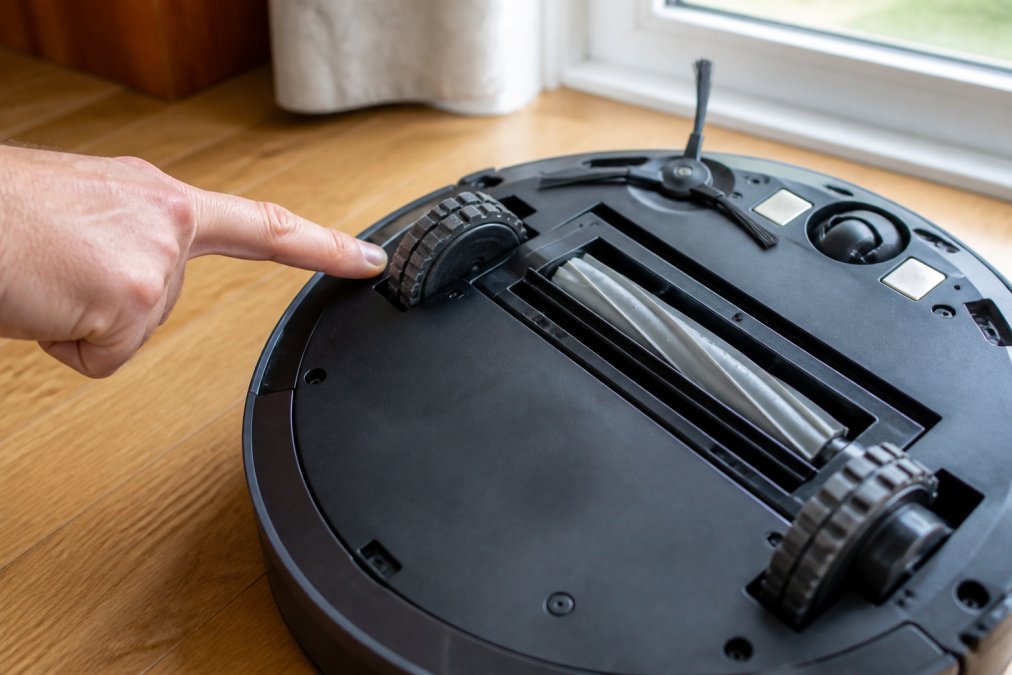
Four components matter most: drive wheels, brush rolls, the dust bin, and navigation sensors. But the list is only half the story, the other half is what those components carry when they touch the floor.
Rubberized Wheels vs. Plastic Wheels
Rubberized wheels are safer for finished wood: the tread grips without sliding, reducing the scuffing that happens when a hard plastic wheel spins in place.
Bristle Brushes vs. Silicone Brush Rolls
Silicone brush rolls are gentler on hardwood than bristle brushes, which flex and trap grit deep in the tufts, contacting the floor on every rotation.
The Pet Hair and Grit Mechanism Most Guides Skip
This is the most useful thing to understand about robot vacuum scratching.
- Grit, sand, tracked-in soil, crushed gravel, kitty litter dust, settles on the floor.
- Pet hair wraps around the brush roll in layers, and grit lodges between them.
- The hair holds the grit against the brush roll instead of letting it fall into the dust bin.
- On every rotation, that grit-loaded hair contacts the floor with the full downward pressure of the chassis.
The Dust Bin Is a Floor-Safety Component
The dust bin is both a capacity spec and a floor-protection part. A full bin or clogged filter reduces airflow, so debris is pushed sideways or left behind, then dragged again on the next pass. The bin and filter are part of the abrasion loop.
| Component | Scratch Risk on Hardwood | Inspection Frequency | Best For |
|---|---|---|---|
| Rubberized wheels | Low when tread is intact | Monthly | Finished wood, laminate |
| Plastic wheels | Higher once tread wears | Every two weeks | Low-pile carpet, tile |
| Silicone brush roll | Low when clean, higher when hair-wrapped | Every two weeks (weekly in pet homes) | Hardwood, pet hair |
| Bristle brush | Higher when grit-packed | Weekly | Carpet, rugs |
| Dust bin and filter | Indirect, recirculates grit when full | Empty after each cycle in pet homes | All floor types |
Common Causes of Floor Scratches (Grit, Debris, Maintenance)
Grit and abrasive debris cause most scratches, not the vacuum's weight or suction. Sand, tracked-in soil, and crushed gravel sit on the floor until a moving part drags them across the finish.
- Tracked-in sand and soil from entryways
- Pet hair binding grit to brush rolls
- Overfilled dust bins recirculating debris
- Worn wheel tread losing traction
- Debris trapped in wheel housings
How to Prevent Robot Vacuum Scratches
Prevention comes down to a repeatable routine: clean the parts that touch the floor, control what enters the house, and keep clutter from interfering with navigation.
Maintenance Tips to Prevent Floor Damage
- Empty the dust bin after every cycle in pet households
- Remove hair from the brush roll weekly
- Wipe wheel treads and housings every two weeks
- Check wheel tread for flattening or glazing monthly
- Place mats at entryways to capture grit before it spreads
- Clear cables and small objects before each run
- Replace worn brush rolls and wheels on schedule
Navigation sensors and obstacle avoidance reduce damage by keeping the robot from bumping furniture legs and dragging objects. A sock or cord caught in a brush roll gets dragged across the floor for the rest of the cycle.
Robot Vacuum Mop Combo Hardwood Safety
Robot vacuum mop combos are safe for sealed, finished hardwood, but standing water is the risk, not scratching. Finished wood with an intact polyurethane or factory finish tolerates a damp mop. Unsealed or worn wood does not.
Best Robot Vacuum for Hardwood Floors 2026
The best robot vacuum for hardwood floors 2026 buyers should consider has rubberized wheels, a silicone brush roll, and reliable obstacle avoidance, three features that do more for floor protection than any spec sheet number.
When you evaluate models, prioritize these qualities:
- Silicone or rubber brush roll instead of stiff bristles
- Rubberized drive wheels with replaceable tread
- Adjustable suction and brush speed for hard floors
- Navigation sensors that map and avoid obstacles
- A dust bin sized for your home's debris volume
Long-Term Wear and Tear: What to Watch For
Long-term wear shows up as a pattern, not a single mark. Arcs or circles point to a rotating part; straight lines along walls to edge cleaning contact; a uniform haze in high-traffic lanes means grit dragged repeatedly across the same path.
What a 12-Month Wear Pattern Actually Looks Like
Homeowners who run a robot daily on finished wood report three phases:
- Months 1-3: No visible change. The factory finish is intact and the robot removes surface debris without abrasive contact. This is where maintenance habits are set and most long-term outcomes decided.
- Months 4-8: The first faint micro-scratches appear in the turning radius and along baseboards, usually invisible except under a flashlight tilted at a low angle. This is the diagnostic window, the cause is almost always grit in the brush roll or a glazed wheel tread, not the machine.
- Months 9-12: Micro-scratches read as a dull patch rather than individual lines. The finish has not failed, but the light-scattering surface has changed: a finish cleaned weekly looks noticeably different from one cleaned monthly.
Finish Compatibility: The Variable Most Owners Never Check
Finish chemistry determines how much wear a robot can cause before damage shows. The three common categories behave differently:
- Water-based polyurethane: The most common factory and site finish on modern hardwood. It cures hard into a thin, clear film that resists grit reasonably well but shows fine micro-scratches under raking light because the film is thin.
- Oil-based polyurethane: Cures to a slightly thicker, amber-toned film. More forgiving of light abrasion, but slower to cure, a freshly finished floor should not see a robot for the manufacturer's full cure window, often several weeks.
- Wax and oil-rubbed finishes (penetrating oils, hardwax oil): These sit in the wood rather than on top of it, making them the most vulnerable to grit dragged by a robot because there is no sacrificial film. They also need reapplication on schedule, and a robot over a wax finish due for renewal accelerates the dulling.
Troubleshooting Wheel Degradation Before It Becomes Abrasive
Worn wheel tread is the most under-diagnosed cause of long-term scuffing. The test:
- Power the robot off and flip it over.
- Run a fingertip across each drive wheel tread. Healthy tread feels tacky and grippy; worn tread feels smooth, shiny, or glazed.
- Rotate the wheel slowly to check for flat spots. A flat spot makes the robot jerk, and jerking is where scuffs start.
- Check the wheel housing for trapped hair and grit, debris packed around the axle can push the wheel out of alignment.
Warning Signs to Track
- Circular micro-scratches that follow the robot's turning radius
- Straight scuffs along baseboards from edge cleaning
- Dull patches where the finish has worn thin, especially in high-traffic lanes
- Wheel marks that appear only in certain rooms
- A finish that looks different under raking light than it did six months ago
If your floors are due for refinishing, address that before adding a robot vacuum. A worn finish has less material to lose, and a robot accelerates the visible decline.
Conclusion: Protecting Your Hardwood Floors in 2026
The real challenge isn't picking a robot vacuum. It's building a maintenance habit that keeps grit off your floor and out of your machine. Skip that habit, and even a premium model becomes a slow abrasion tool.
Frequently Asked Questions
Which robot vacuum does not scratch hardwood floors?
Robot vacuums with rubberized wheels, silicone brush rolls, and advanced navigation sensors are least likely to scratch hardwood floors. Models that use a single rubber roller instead of bristle brushes reduce the risk of abrasive debris being dragged across the surface. Look for features like wheel traction control and obstacle avoidance, which help the vacuum move smoothly without scraping. Regular maintenance, such as cleaning wheels and brushes, also plays a key role in preventing scratches.
What is the best robot vacuum for hardwood floors in 2026?
The best robot vacuum for hardwood floors in 2026 combines rubberized wheels, a silicone brush roll, and strong suction power to lift grit without scratching. Models with a mop combo feature can be safe if they use a microfiber pad and have a water flow control to avoid excess moisture. Navigation sensors and obstacle avoidance are also important for maneuvering around furniture and edges without bumping or dragging. Always check that the vacuum is designed for finished wood and follow the manufacturer's maintenance schedule.
Can debris trapped in robot vacuum wheels damage wood finishes?
Yes, debris like grit, sand, or small pebbles trapped in robot vacuum wheels can act like sandpaper and scratch wood finishes. Over time, this abrasive debris can cause micro-scratches that dull the polyurethane or wax coating. To prevent this, clean the wheels after each use and avoid running the vacuum over spills or heavy dirt. Regular maintenance, including wiping the wheels with a damp cloth, helps maintain wheel traction and protects your floor's surface integrity.
Should I use a robot vacuum with a mop function on hardwood?
A robot vacuum with a mop function can be safe on hardwood if it uses a microfiber pad and has controlled water flow. Excess moisture can warp or damage finished wood, so choose a model with a water tank that dispenses small amounts. Avoid using the mop on unsealed or waxed floors, as water can penetrate and cause damage. For best results, use the mop function after dry vacuuming to remove abrasive debris first, and always follow the manufacturer's guidelines for hardwood compatibility.
Do robot vacuums scratch hardwood floors? Only when debris and worn parts are left unchecked. With rubberized wheels, a silicone brush roll, and a simple weekly cleaning schedule, your robot vacuum can clean finished wood for years without leaving a mark. Get started with WellnessLifeClub74 and build a cleaning setup that protects your floors.