Table of Contents
- Are Smart Pillows Worth It for Neck Pain? The Short Answer
- Smart Pillow vs Cervical Pillow: What Actually Supports Your Neck
- Do Smart Pillows Work? What the Evidence and Sensors Show
- The Best Pillow for Neck Pain Depends on How You Sleep
- When a Cervical Pillow for Neck Pain Beats a Smart Pillow
- Memory Foam Pillow Disadvantages and Other Costs to Weigh
- Cost, Privacy, and Trial Periods: The Fine Print
- Conclusion: Who Should Buy One
- Frequently Asked Questions
Last Updated: October 12, 2026
Are Smart Pillows Worth It for Neck Pain? The Short Answer
For most people with neck pain, a smart pillow is not worth it. A well-fitted cervical pillow usually delivers the same core benefit, keeping your neck in neutral alignment, for far less money and with no charging cable.
The case for buying one rests on a narrow set of conditions.
Smart pillows are bedding products with built-in sensors that track sleep position, movement, and sometimes snoring, then adjust firmness or height through an app. The tracking is the new part.
That distinction matters, because neck pain responds to support and alignment, not to data.
Smart Pillow vs Cervical Pillow: What Actually Supports Your Neck
A cervical pillow is shaped to hold your neck in a neutral position while you sleep. A smart pillow adds sensors and, in some models, adjustable air chambers. Only one of those features addresses the mechanical cause of most morning neck stiffness.
Where Conventional Cervical Pillows Win
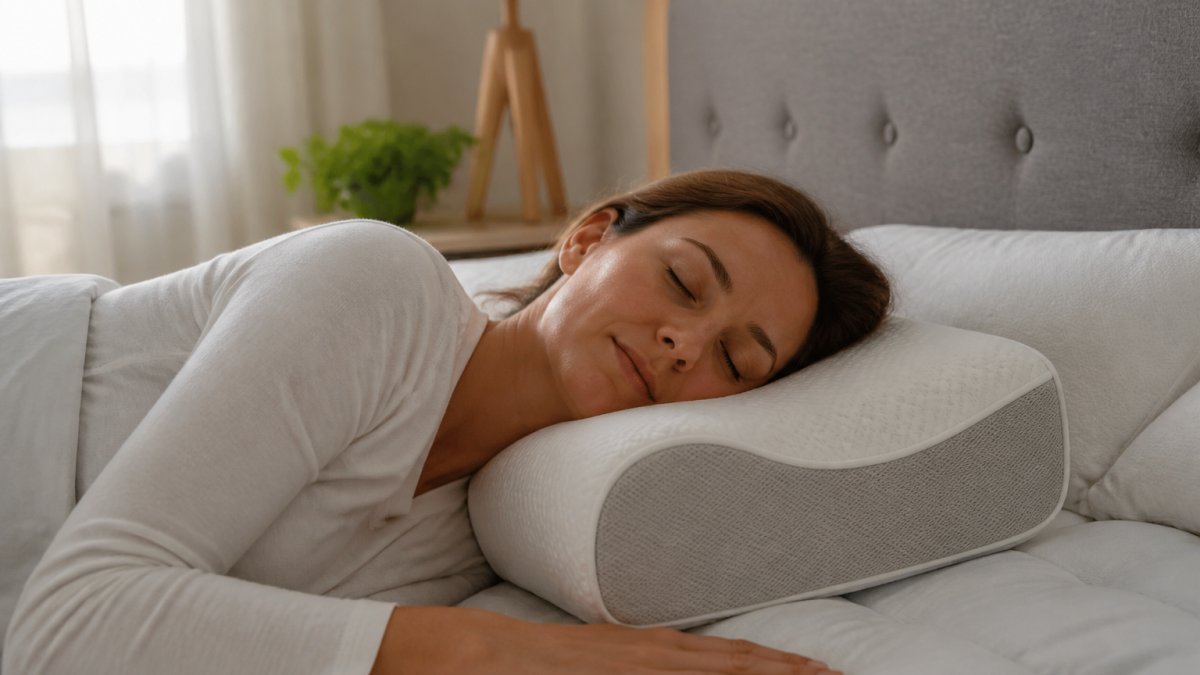
The contour does the work. A cervical contour supports the natural curve of the neck and keeps the head level with the spine. Memory foam holds that shape through the night without needing power, calibration, or an app.
There is nothing to charge and nothing to update. A cervical pillow for neck pain typically costs a fraction of a sensor-equipped model, and it works the same on night one as it does on night 300. For side sleepers and back sleepers with straightforward stiffness, that simplicity is the whole point.
Where Smart Pillows Add Something New
Adjustability is the real feature. A smart pillow can change height or firmness as you shift position, which matters if you move between your back and your side during the night. A fixed pillow cannot do that.
Sleep tracking is the second draw. Position and movement data can show whether you spend the night on your stomach, a pattern many people never notice until they see it logged. That insight can be useful, though it is a starting point for change, not the change itself.
Do Smart Pillows Work? What the Evidence and Sensors Show
The honest answer is that the evidence is thin. There is no large body of published research showing that smart pillows reduce neck pain better than a standard cervical pillow. Most claims come from manufacturers and small trials, so treat them with appropriate caution. What the research does support is narrower: cervical-contour pillows can modestly improve neck alignment and morning stiffness for some sleepers, and that benefit comes from shape and loft, not from electronics.
What the Sensors Actually Measure
A smart pillow's sensor suite is usually a combination of pressure sensors, accelerometers, and sometimes a microphone. Each one captures a different signal:
- Pressure sensors detect where your head rests and how weight shifts across the pillow surface. They infer position (back, side, stomach) from pressure distribution.
- Accelerometers track movement and restlessness, how often you shift, how long you hold a position.
- Microphones pick up sound to estimate snoring or breathing patterns.
- Air chambers (in adjustable models) respond to those signals by inflating or deflating to change height or firmness.
That is the full toolkit. None of it measures muscle tension, joint compression, or nerve irritation, the things that actually drive most neck pain.
How Accurate Is the Tracking?
Accuracy varies by metric and by model. A common pattern reported by users and reviewers:
- Position and movement tracking tends to be the most reliable, because pressure and motion signals are relatively easy to capture from a pillow surface.
- Snoring detection is rougher. A microphone on a pillow picks up ambient noise, breathing, and movement, so it can flag snoring events but struggles to distinguish them from other sounds or to grade severity.
- Sleep-stage estimates (light, deep, REM) are the least reliable. Consumer sleep trackers of all kinds, including wrist-worn devices, tend to disagree with lab polysomnography, and a pillow sensor has less contact with the body than a wristband.
Treat the numbers as directional, not diagnostic. A reading that says you spent 40% of the night on your stomach is useful if it matches how you feel. It is not a clinical measurement.
What Smart Pillows Cannot Do
A smart pillow cannot diagnose sleep apnea, cervical radiculopathy, or any medical condition. It cannot tell you why your neck hurts, only that you moved a certain way. It cannot replace a physical exam, imaging, or a clinician's assessment.
That leaves smart pillows in an awkward spot. They collect data well enough to be interesting, but not well enough to diagnose anything. Use them as a feedback tool, not a medical device.
MedlinePlus guide to neck pain causes and care
The Best Pillow for Neck Pain Depends on How You Sleep
The best pillow for neck pain is the one that keeps your head and neck in line with your spine in your dominant sleep position. That answer changes depending on whether you sleep on your side, your back, or your stomach, and on what your pain actually feels like when you wake up.
Match the Pillow to Your Sleep Position
Side sleepers need the most height. The gap between your ear and the mattress is wide, so a thinner pillow lets the head drop and the neck bend.
Back sleepers need less. Too much loft pushes the chin toward the chest, which shortens the front of the neck. A medium-height pillow with a shallow center dip usually works best.
Stomach sleepers are the hardest case. Sleeping face-down forces the head to rotate and the neck to extend, and no pillow fully corrects that.
Match the Pillow to Your Pain Pattern
Position alone does not tell the whole story. The pattern of your pain points to what the pillow needs to do:
- Morning stiffness that eases within an hour usually points to alignment. A contoured cervical pillow that restores neutral curve is the first thing to try.
- One-sided neck pain that worsens through the day often tracks with sustained head-forward posture, not sleep. A pillow can help overnight, but daytime ergonomics matter more.
- Pain with numbness, tingling, or weakness in the arm suggests a nerve issue. No pillow, smart or otherwise, is the right first step, see a clinician.
- Headaches that start at the base of the skull are commonly associated with upper-neck tension and can respond to better overnight alignment, but they also warrant a clinical look if they are new or worsening.
A Quick Decision Guide
| Your Profile | First Choice | Why |
|---|---|---|
| Side sleeper, morning stiffness | Contoured cervical pillow | Fills the shoulder gap, supports the curve |
| Back sleeper, chin-to-chest feeling | Medium memory foam, shallow dip | Prevents forward head posture |
| Stomach sleeper | Flat or minimal pillow | Limits rotation and extension |
| Combination sleeper, wants data | Adjustable smart pillow | Height changes with position |
| Pain with arm numbness or weakness | Clinician first | Pillow is not the fix |
When a Cervical Pillow for Neck Pain Beats a Smart Pillow
A cervical pillow wins whenever the problem is alignment and the budget is finite. That covers most buyers.
If you sleep in one position, wake with stiffness, and have no interest in tracking your sleep, a contoured pillow solves the mechanical issue directly.
A cervical pillow also wins on reliability. It cannot lose its charge, drop a connection, or push a firmware update at 2 a.m.
There is a third case: pain that comes with numbness, tingling, or weakness in the arm. That pattern points to a nerve issue, not a pillow problem.
Memory Foam Pillow Disadvantages and Other Costs to Weigh
Memory foam is the default fill in both smart and cervical pillows, and it has real drawbacks. It traps heat, which is a problem for anyone who runs warm.
Firmness is fixed in most foam pillows. If the loft is wrong for your frame, you cannot adjust it, and you are back to shopping.
Smart pillows add their own costs on top of that. There is the higher purchase price, the charging routine, and the app that may or may not keep working after a few years.
Cost, Privacy, and Trial Periods: The Fine Print
Total cost of ownership is where the comparison gets uncomfortable.
Privacy deserves a hard look. Sleep position, movement, and snoring data can reveal a lot about your health and habits.
Trial periods are your safety net. A 30-night testing window is the standard to look for, because that is roughly how long it takes to know whether a new pillow helps.
If you buy from us, check the product page for the current return window and shipping terms before you order.
Federal Trade Commission guidance on protecting your privacy
Conclusion: Who Should Buy One
Buy a smart pillow if you change positions through the night, want data on how you sleep, and will actually use a 30-night trial to decide.
The technology is a nice addition, not a replacement for proper support. Get the height and firmness right first. Then decide whether tracking adds anything to your routine.
WellnessLifeClub74 carries a curated range of sleep and wellness products, with fast shipping and a focus on quality and transparency. Browse our collections to find the pillow that fits how you sleep.
Frequently Asked Questions
Are smart pillows worth it for neck pain?
It depends on what you need. Smart pillows track sleep position and snoring, which can help you adjust habits over time, but they do not replace the physical neck support a contoured pillow provides. If your main problem is alignment, a cervical pillow is usually the cheaper fix. If you want sleep data and snoring feedback alongside support, the added features may justify the higher price.
Do smart pillows actually help with neck pain?
Smart pillows can help indirectly. Sensors track sleep position, movement, and snoring, so you can see whether you spend hours on your stomach or wake repeatedly. That data helps you change sleep posture, which affects neck tension. The pillow itself still needs the right height and firmness for your body. Technology alone will not fix alignment if the pillow is too tall or too flat.
What are the disadvantages of memory foam pillows?
Memory foam traps heat, which bothers hot sleepers. It also has a break-in period of one to two weeks before it softens to your shape, and some people find the initial firmness uncomfortable. Foam can off-gas a chemical smell when new, and it should be replaced every 18 to 24 months as it loses rebound. If you sleep hot or dislike a firm feel, a latex or down alternative may suit you better.
When should you see a doctor for neck pain?
See a doctor if neck pain lasts more than a few weeks, follows an injury, or comes with numbness, tingling, weakness in your arms, or headaches that will not ease. A pillow change is a comfort adjustment, not a treatment. Persistent or worsening symptoms need clinical assessment to rule out disc, nerve, or joint problems before you spend money on any sleep device.
Neck pain that lingers is a signal worth acting on, and the right pillow is only part of the answer. At WellnessLifeClub74, we stock sleep and wellness products chosen for comfort and everyday use, backed by fast shipping and a commitment to quality and transparency. Get started with WellnessLifeClub74 and build a sleep setup that actually supports your neck.