Table of Contents
- Orthopedic Mobility Aids for Dogs: Quick Comparison
- Signs Your Dog Needs Orthopedic Support
- How to Choose a Dog Wheelchair: Size, Support Type, and Adjustability
- Orthopedic Dog Harness for Lifting: Full-Body Support Solutions
- Best Dog Ramps for SUVs and Home Accessibility
- Acclimatization Training and Home Environment Modifications
- Maintenance, Hygiene, and Long-Term Care
- Conclusion: Restoring Your Dog's Quality of Life
Last Updated: August 8, 2026
Orthopedic Mobility Aids for Dogs: Quick Comparison
When a dog loses mobility, stairs become obstacles and simple walks require careful planning. The good news: best orthopedic mobility aids for dogs have evolved dramatically, ranging from affordable support harnesses to custom-fitted wheelchairs. At WellnessLifeClub74, we've curated proven mobility solutions that restore independence and improve quality of life for aging or injured dogs. Whether your dog is recovering from surgery, managing degenerative myelopathy, or struggling with arthritis, the right aid can mean the difference between confinement and continued enjoyment of walks and outdoor adventures.
| Aid Type | Best For | Key Feature | Typical Use Case |
|---|---|---|---|
| Dog Wheelchair | Severe hind-end weakness or paralysis | Adjustable frame, all-terrain wheels | Dogs with IVDD, degenerative myelopathy, or spinal injuries |
| Lifting Harness | General mobility assistance | Two-piece design with handles | Senior dogs, post-surgical recovery, arthritis |
| Belly Sling | Rear-end support | Lightweight, single-hand operation | Hind-leg weakness, balance issues, rehabilitation |
| Orthopedic Braces | Joint-specific injuries | Custom or pre-fabricated support | Knee injuries, ligament tears, joint instability |
| Dog Ramps | Home accessibility | Portable or permanent installation | Reducing strain on joints when entering vehicles or climbing stairs |
Signs Your Dog Needs Orthopedic Support
Your dog doesn't have to be completely immobilized to benefit from mobility aids. Early intervention prevents further deterioration and extends active years significantly.
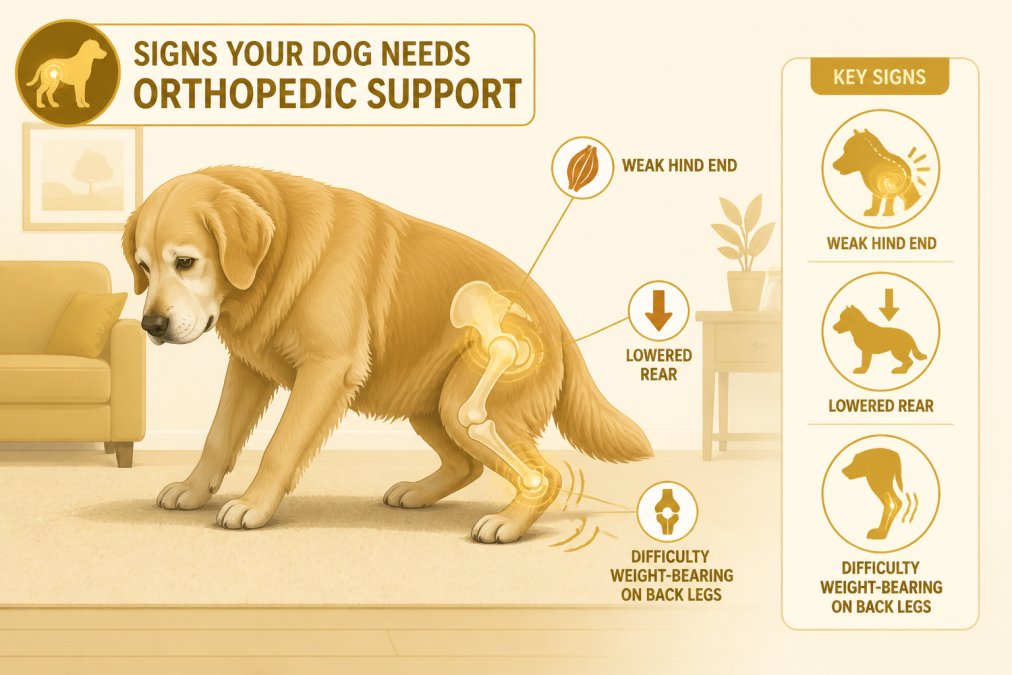
Common indicators include:
- Hind-end weakness: Your dog drags back legs, staggers, or collapses when standing, often the first sign of degenerative myelopathy or spinal issues.
- Difficulty with stairs or vehicles: What was once easy now requires multiple attempts or is avoided entirely, accelerating muscle loss.
- Limping or favoring a limb: Joint pain from arthritis, ligament injury, or hip dysplasia causes compensatory movement patterns that stress other joints.
- Reluctance to move: Stiffness after rest, difficulty warming up, or avoidance of walking suggests joint pain or neurological decline.
- Incontinence or difficulty posturing: Loss of bladder control while lying down often indicates spinal compression.
- Visible joint swelling or heat: Inflammation in knees, hips, or elbows signals active joint disease.
Mobility aids aren't just for end-stage decline. Introducing support early, when your dog still has function, preserves muscle mass, prevents secondary injuries, and maintains quality of life far longer than waiting until complete immobilization.
How to Choose a Dog Wheelchair: Size, Support Type, and Adjustability
A dog wheelchair depends on three critical factors: your dog's measurements, severity of mobility loss, and your ability to maintain and transport the device.
Measuring for proper fit requires precision. You'll need height at the shoulder, length from shoulder to hip, and weight. Most wheelchairs adjust in height and length, but width is often fixed. A wheelchair that's too wide shifts weight distribution incorrectly; too narrow restricts movement. Measure with your dog standing naturally on level ground.
Support type determines what your dog can do while in the chair. Rear-support models support only hind legs, allowing front limbs to move freely, ideal for dogs with hind-end weakness from degenerative myelopathy or spinal cord injury who have functional front legs. Full-support models distribute weight across all four limbs and suit dogs with front-leg weakness, amputations, or severe overall mobility loss.
Adjustability is invaluable. As your dog's condition changes during rehabilitation or disease progression, you can modify height, length, and support level without purchasing a new device. Look for tools-free adjustment mechanisms.
Weight capacity is non-negotiable. Wheelchairs rated for small dogs (under 20 lbs) differ fundamentally from those for large dogs (over 60 lbs).
Material and durability affect long-term usability. Aluminum frames are lightweight but less rigid than steel. Puncture-proof wheels eliminate flat-tire risk but may provide less shock absorption. Fabric harnesses should be washable and replaceable.
Ground clearance prevents catching on door thresholds, gravel, and uneven pavement, which can destabilize the chair.
Orthopedic Dog Harness for Lifting: Full-Body Support Solutions
An orthopedic harness is the workhorse of mobility aids. Unlike wheelchairs, which replace function, harnesses enhance what your dog can still do while reducing strain on joints and spine.
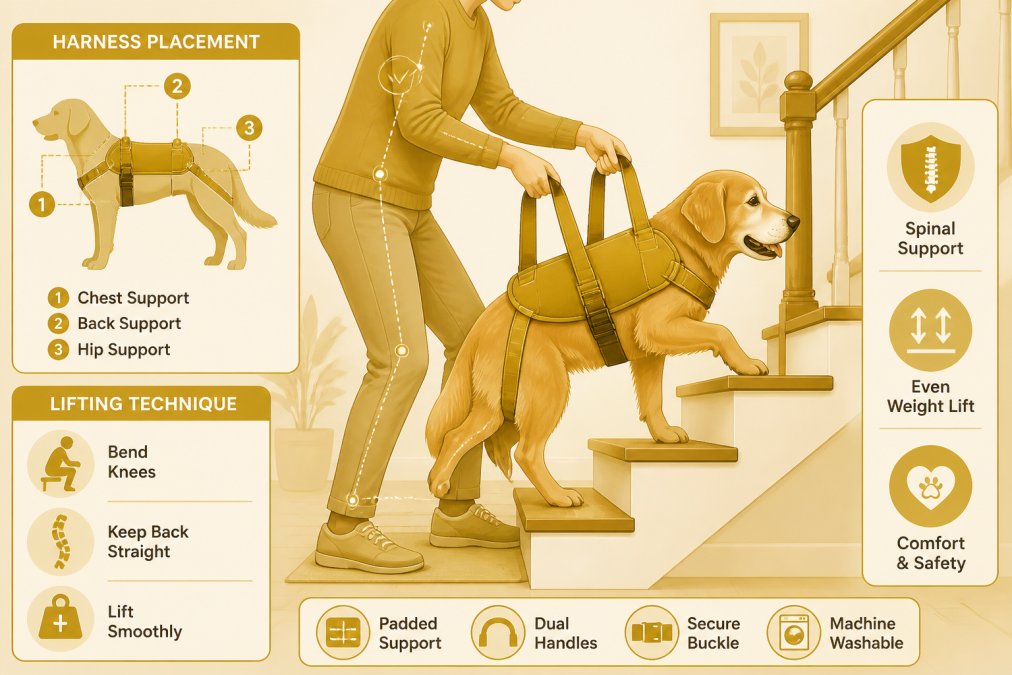
Two-piece harnesses (front and rear sections) provide comprehensive support. The front piece stabilizes the shoulder and front limbs; the rear piece supports hips and back legs. This design distributes lifting force evenly across the spine, preventing concentrated stress. Many dogs with arthritis or spinal sensitivity show immediate improvement in comfort and willingness to move.
Single-piece designs (belly slings or rear-only harnesses) are lighter and easier to put on but provide less comprehensive support. They work well for dogs with isolated rear-end weakness or those needing occasional assistance.
Handle placement affects how effectively you can assist your dog. Handles positioned at shoulder and hip allow neutral spine positioning. Handles only at the center force you to lift from the middle, which can hyperextend the spine.
Material and padding directly impact long-term wearability. Dogs wearing harnesses for hours daily develop pressure points if padding is inadequate. Look for breathable, moisture-wicking materials. Machine-washable designs are essential.
Acclimatization is critical. Start with short wearing periods indoors, pair it with treats and positive reinforcement, and gradually increase duration. Dogs that associate the harness with walks often warm to it within days.
Best Dog Ramps for SUVs and Home Accessibility
Ramps solve the physical barrier of height. A dog that can walk but struggles with weight-bearing on hind legs faces a genuine obstacle at an SUV bumper or deck edge. Ramps eliminate this barrier while reducing spinal stress and joint impact.
Vehicle ramps come in two styles: folding ramps that store in your vehicle and permanent ramps that attach to your SUV's bumper. Folding ramps are portable and work with any vehicle. Permanent ramps are faster to deploy but limit you to one vehicle.
Surface texture prevents slipping, essential for dogs with weak hind legs. Textured surfaces, grip tape, or rubberized coatings provide necessary friction. Test the texture when wet.
Width and incline angle affect usability. A ramp narrower than your dog's shoulder width forces compensatory movements. Incline steeper than 40 degrees requires excessive hind-leg extension. Longer, shallower ramps are easier for dogs with mobility challenges.
Weight capacity must exceed your dog's weight by a safety margin. Look for ramps rated at least 1.5 times your dog's weight.
Home ramps serve similar functions for deck stairs, entry steps, and furniture. Permanent ramps built into your home layout eliminate manual deployment. Portable ramps work for dogs that occasionally struggle with specific obstacles.
Acclimatization Training and Home Environment Modifications
Introducing a mobility aid requires time for adjustment and home environment modifications to support effectiveness.
Acclimatization training should begin indoors in a low-stress environment. For wheelchairs, allow your dog to stand in the chair while stationary, rewarding calm behavior. Gradually add movement on flat, familiar flooring. For harnesses, wear them during positive activities: mealtime, playtime, or short walks. Brief wearing periods, 15 minutes at a time, prevent frustration.
Environmental modifications matter significantly. Non-slip flooring is critical for dogs with hind-end weakness. Hardwood and tile become skating rinks. Rubber mats, yoga mats, or non-slip rugs in high-traffic areas provide grip and prevent secondary injuries.
Ramp placement should prioritize your dog's most-used routes. If your dog struggles to climb stairs to the bedroom, a ramp there provides immediate benefit.
Elevated food and water bowls reduce spinal strain during feeding, particularly important for dogs with degenerative myelopathy.
Bed placement and bedding affect recovery and comfort. Orthopedic beds with memory foam reduce pressure on joints. Place beds in quiet, accessible locations.
Bathroom accessibility becomes critical as mobility declines. Dogs with incontinence need easy access to outdoor areas. A ramp to the door and frequent bathroom breaks prevent accidents.
Maintenance, Hygiene, and Long-Term Care
Mobility aids require regular maintenance to function safely and last through your dog's needs.
Cleaning harnesses prevents skin irritation and odor. Most fabric harnesses are machine-washable on gentle cycles. Air-dry completely before use.
Wheelchair maintenance involves checking all moving parts monthly. Wheels should spin freely; brakes should engage smoothly. Wipe down the frame after outdoor use, particularly after rain. Inspect for cracks or bends.
Puncture-proof wheels may accumulate dirt and debris. Clean wheels monthly to maintain rolling efficiency. Check axles for wear; squeaking indicates bearing damage.
Harness inspection should happen weekly. Look for fraying, torn stitching, or padding breakdown. Most harnesses have replaceable components.
Hygiene protocols prevent infections and skin conditions. After each use, wipe down contact surfaces with your dog's skin. Allow harnesses to air-dry completely before storage.
Veterinary check-ins should occur every 3-6 months for dogs using mobility aids long-term. Your vet can assess whether the aid still fits properly as your dog's condition changes.
Documentation of your dog's mobility progression helps your vet track changes. Note when you introduced the aid, how your dog responded, and any changes in gait, strength, or behavior.
Restoring your dog's mobility isn't about returning to what was, it's about maximizing what remains. The right orthopedic aid, combined with environmental modifications and consistent care, extends your dog's active years significantly. WellnessLifeClub74 carries a curated selection of proven mobility solutions. Start with a consultation with your vet to identify your dog's specific needs, then explore options that match those requirements. Your dog's quality of life depends on the choices you make today.
Frequently Asked Questions
How do I know if my dog needs orthopedic mobility aids?
Signs include difficulty standing or walking, reluctance to climb stairs, dragging hind legs, joint pain, or visible hind-end weakness. Senior dogs with arthritis, hip dysplasia, or degenerative myelopathy often benefit from mobility support. Dogs recovering from orthopedic surgery or spinal injuries also need assistive devices. Consult your veterinarian to assess whether your dog would benefit from orthopedic mobility aids and which type suits their condition best.
What's the difference between a dog wheelchair and a harness for mobility support?
Dog wheelchairs provide full weight-bearing support for dogs with severe paralysis or hind-end weakness, allowing independent movement. Orthopedic harnesses with handles offer manual lifting assistance, ideal for dogs with mild to moderate mobility impairment who retain some strength. Wheelchairs suit degenerative myelopathy or spinal injuries; harnesses work better for arthritis or post-surgical recovery where the dog can still bear some weight.
How do I choose a dog wheelchair that fits my pet?
Measure your dog's height (ground to hip), length (shoulder to hip), and weight to ensure proper fit. Consider whether your dog needs rear-support only or full-support (4-wheel) based on their condition. Adjustable frames accommodate growth or changing needs. Test the wheelchair's terrain capability, lightweight, all-terrain wheels suit outdoor activity. Ensure the frame allows your dog to eat, drink, and use the bathroom without removal.
Are orthopedic dog braces effective for joint support and pain relief?
Yes, orthopedic braces stabilize injured joints, reduce pain, and improve weight distribution. They're effective for ligament injuries (CCL/ACL), arthritis, and post-operative healing. Custom braces like those from Bionic Pets provide precise support; pre-made options like Balto braces offer compression to increase blood circulation. Braces work best combined with physical therapy and veterinary guidance for optimal recovery and quality of life.
What maintenance do orthopedic mobility aids require?
Most harnesses and slings are machine washable, check manufacturer instructions. Wheelchairs need regular inspection of wheels for debris or damage, frame alignment checks, and occasional lubrication of joints. Clean non-slip surfaces on ramps to prevent slipping. Orthopedic beds should be spot-cleaned or machine washed regularly. Inspect all equipment weekly for wear, loose straps, or sharp edges that could irritate your dog's skin or cause pressure sores.
Related Resources:
- [EXTERNAL_LINK: American Veterinary Medical Association guidance on geriatric pet care | avma.org]
- [EXTERNAL_LINK: Canine rehabilitation and physical therapy standards | acrm.org]
- [EXTERNAL_LINK: Orthopedic Foundation for Animals joint health information | ofa.org]
This article was written using GrandRanker