Table of Contents
- Understanding Coat Types: Undercoat vs. Topcoat
-
Best Grooming Tools for Thick Fur: Top Picks
- 1. FURminator deShedding Tool: Maximum Undercoat Removal
- 2. Chris Christensen Big G Slicker Brush: Deep Penetration for Dense Coats
- 3. GoPets Dematting Comb: Dual-Sided Versatility
- 4. Safari Dematting Comb: Budget-Friendly Tangle Control
- 5. Hertzko Self-Cleaning Slicker Brush: Easy Maintenance
- 6. Master Grooming Tools Ergonomic Slicker Brush: Comfort-Focused Design
- Best Undercoat Rake for Dogs with Thick Fur
- How to Prevent Mats in Thick Dog Fur
- How to Deshed a Dog with Thick Fur
- Choosing the Right Tool for Your Dog's Coat
- Maintenance and Care of Grooming Tools
- Conclusion
Last Updated: August 10, 2026
Understanding Coat Types: Undercoat vs. Topcoat
Your dog's coat is a two-part system. The topcoat is the outer layer of longer, coarser guard hairs that protect skin and repel water. The undercoat sits beneath, made of shorter, softer hairs that provide insulation. In double-coated breeds, the undercoat is dense and prone to matting, shedding, and tangling if not properly maintained.
Dogs with thick fur accumulate loose hair quickly. Many owners brush only the topcoat, leaving the undercoat matted underneath. Coat density varies by breed: Poodles have cottony undercoats that tangle easily, Golden Retrievers and German Shepherds shed heavily during shedding season, and Doodle mixes inherit unpredictable coat types needing specialized care.
Regular deshedding and dematting prevent skin issues, reduce odor, and keep your dog comfortable. A matted coat traps moisture and heat against the skin, creating an ideal environment for bacteria and yeast.
Best Grooming Tools for Thick Fur: Top Picks
The right tool makes grooming efficient and effective. These tools penetrate dense coats and remove loose undercoat without damaging the topcoat or irritating skin.
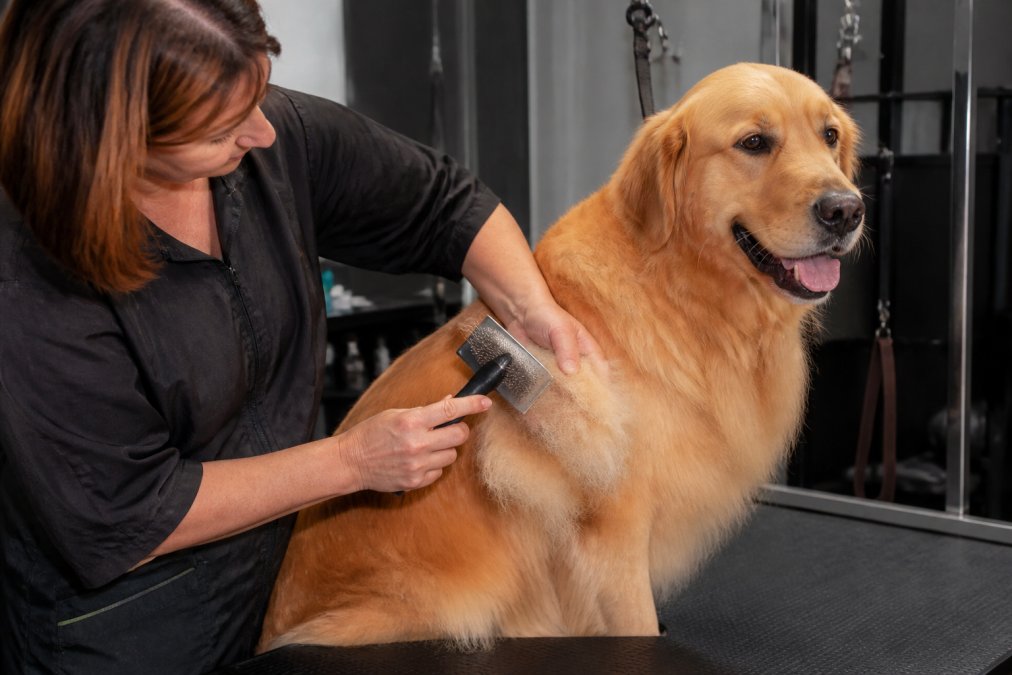
1. FURminator deShedding Tool: Maximum Undercoat Removal
The FURminator removes loose undercoat hair before it ends up on your floor. Its stainless steel deShedding edge reaches through the topcoat to grab dead hair at the root without cutting or damaging healthy fur. The curved edge conforms to your dog's body, and the FURejector button releases accumulated hair with one click. For heavy shedders during seasonal coat blows, it reduces loose hair significantly with consistent use.
It requires careful technique, apply too much pressure and you risk irritating skin or damaging the topcoat. It's not ideal for dogs with sensitive skin.
Pros: Highly effective at removing loose undercoat, reduces shedding significantly, ergonomic handle, durable stainless steel
Cons: Requires careful technique, more expensive than basic brushes, not recommended for sensitive skin
2. Chris Christensen Big G Slicker Brush: Deep Penetration for Dense Coats
The Chris Christensen Big G is the professional choice for dense, curly, or cottony coats. Its extra-long (27mm) stainless steel pins penetrate deep into thick fur without scratching skin. The flexible cushion pad absorbs pressure, preventing pin breakage and reducing discomfort. This brush excels on Poodles, Doodles, and other curly-coated breeds where matting is constant.
Proper technique matters, and the pins are delicate. For owners committed to at-home grooming of thick-coated dogs, the results justify the investment.
Pros: Exceptional at penetrating thick and curly coats, leaves coats soft and fluffy, durable professional construction, flexible cushion pad
Cons: Higher price point, requires proper technique, may feel unwieldy for small dogs
3. GoPets Dematting Comb: Dual-Sided Versatility
The GoPets Dematting Comb offers practical dual-sided design: one side has 12 teeth for stubborn mats, the other has 23 teeth for general deshedding. The stainless steel blades cut through tangles without pulling hair, and rounded blade ends prevent accidental skin scratches.
This works best as a maintenance tool. For occasional mats, it handles them well. For severe, widespread matting, you might need a more aggressive tool.
Pros: Versatile dual-sided design, durable stainless steel, comfortable ergonomic handle, effective at dematting and deshedding
Cons: Slower for extremely heavy matting, may require extra effort on very dense coats
4. Safari Dematting Comb: Budget-Friendly Tangle Control
The Safari Dematting Comb delivers solid performance at an affordable price. Its serrated stainless steel blades work best as a maintenance tool for dogs without severe matting. Use it 2-3 times per week on a thick-coated dog to prevent most mat formation.
Some users report blades dull relatively quickly with heavy use. For occasional grooming or maintenance between professional sessions, it's fine.
Pros: Effectively removes mats and tangles, gentle yet effective, affordable, ergonomic handle
Cons: Blades can dull with heavy use, not suitable for very dense coats
5. Hertzko Self-Cleaning Slicker Brush: Easy Maintenance
The Hertzko Self-Cleaning Slicker Brush solves the most annoying part of grooming: cleaning hair from the brush. Press the self-cleaning button and the bristles retract, ejecting accumulated hair instantly. The fine, bent wire bristles penetrate medium to long coats effectively, and rounded bristle ends prevent skin scratching.
While it removes loose hair effectively, it's not as aggressive as a FURminator. For heavy shedders, combine it with a dedicated deshedding tool.
Pros: Self-cleaning mechanism saves time, effective at detangling, gentle on sensitive skin, durable construction
Cons: Less powerful than specialized deshedding tools, may not fully remove heavy undercoat alone
6. Master Grooming Tools Ergonomic Slicker Brush: Comfort-Focused Design
The Master Grooming Tools Ergonomic Slicker Brush prioritizes groomer comfort. The double-coated rubber handle reduces fatigue during extended sessions. The cushioned stainless steel pins are gentle enough for regular use but effective at removing undercoat and preventing mats.
This is a generalist brush, not a specialist tool. For routine maintenance grooming, it's practical and comfortable.
Pros: Ergonomic handle reduces hand fatigue, effective for detangling, durable construction, comfortable for extended sessions
Cons: Not specialized for extremely dense undercoats, may not be as aggressive for heavy shedding
Best Undercoat Rake for Dogs with Thick Fur
An undercoat rake has wider spacing between teeth, designed to penetrate deep undercoat and remove dead hair without disturbing the topcoat. They're essential for double-coated breeds during shedding season.
The Paws & Pals Dematting Comb and Rake is practical for undercoat work. The self-cleaning stainless steel bristles effectively remove tangles and promote a healthy coat. The ergonomic handle is comfortable during longer sessions. When choosing an undercoat rake, look for stainless steel construction, comfortable grip, and teeth spacing appropriate to your dog's coat density. Rakes work best as part of a grooming routine combined with a slicker brush or deshedding tool.
How to Prevent Mats in Thick Dog Fur
Prevention is easier than removal. Brush your dog 2-4 times per week, depending on coat type and shedding cycle. During shedding season (typically spring and fall), increase frequency to 4-5 times weekly. Use a slicker brush or undercoat rake to penetrate fully, not just the topcoat surface.
Pay special attention to high-friction areas where mats form most easily: behind ears, under armpits, between hind legs, and around the rear end. Brush these areas thoroughly and separate tangles immediately.
Bathe your dog before grooming, not after. Wet hair is easier to work through, and you can remove loose undercoat while damp. After bathing, dry completely while brushing to separate hair and prevent matting. Never let a thick-coated dog air-dry without brushing.
Consider professional grooming every 6-8 weeks. Professional groomers have specialized tools and expertise to maintain thick coats and catch matting issues early.
How to Deshed a Dog with Thick Fur
Deshedding targets loose undercoat before it falls out, especially important during shedding season.
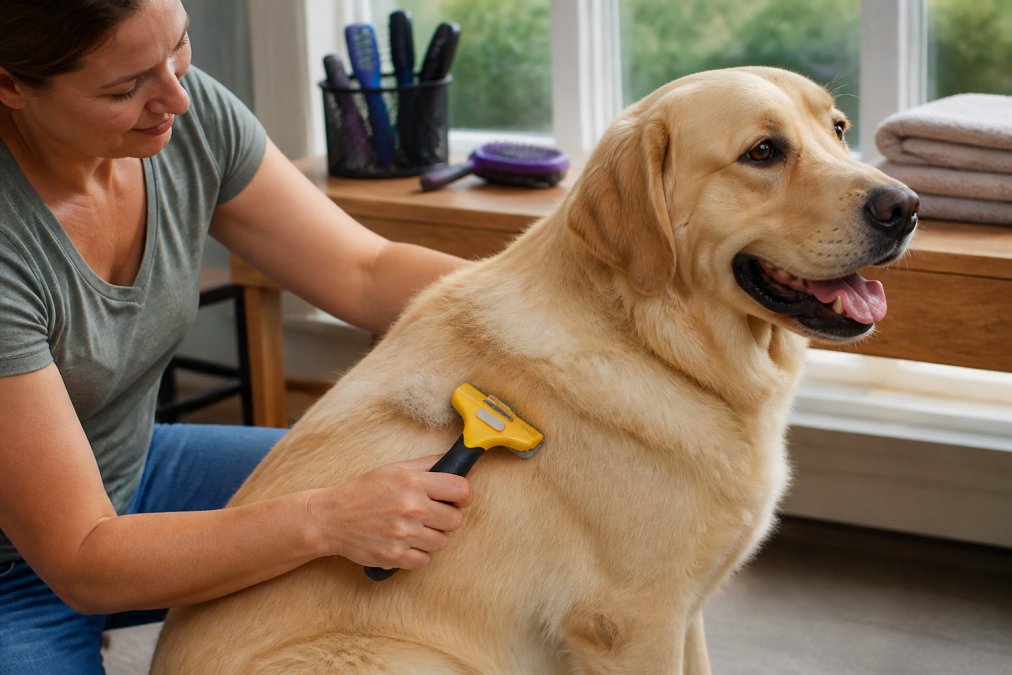
Start with a slicker brush to remove mats or tangles, working methodically section by section. Then use a deshedding tool like the FURminator or undercoat rake, working in the direction of hair growth with gentle to moderate pressure. Let the tool do the work.
Pay attention to areas where undercoat is densest: the back, sides, and rear legs. Deshedding sessions typically take 30-60 minutes for a large thick-coated dog. During heavy shedding season, deshed weekly; between seasons, monthly is usually sufficient.
After deshedding, bathe your dog to remove remaining loose hair and dirt. Dry thoroughly while brushing to prevent matting.
Choosing the Right Tool for Your Dog's Coat
Coat type, density, and your dog's temperament influence which tool is best.
For extremely thick, double-coated breeds (Huskies, Malamutes, German Shepherds), you need tools that penetrate deep: a FURminator, professional slicker brush, or undercoat rake.
For curly or cottony coats (Poodles, Doodles), a professional slicker brush like the Chris Christensen Big G is ideal.
For dogs with sensitive skin, choose gentler tools with rounded bristles: the Hertzko Self-Cleaning Slicker Brush or Master Grooming Tools Ergonomic Brush.
For maintenance grooming between professional sessions, a versatile tool like the GoPets Dematting Comb or Safari Dematting Comb handles most needs.
Consider your own comfort too. If hand fatigue is an issue, prioritize ergonomic design. If cleaning hair out of the brush frustrates you, the self-cleaning mechanism on the Hertzko is worth the investment.
| Tool | Best For | Key Advantage | Best For Sensitive Skin |
|---|---|---|---|
| FURminator | Heavy shedders, undercoat removal | Maximum loose hair removal | No |
| Chris Christensen Big G | Curly/cottony coats | Deep penetration without damage | No |
| GoPets Dematting Comb | Dual-purpose maintenance | Versatile two-sided design | Yes |
| Safari Dematting Comb | Budget-conscious owners | Affordable tangle control | Yes |
| Hertzko Self-Cleaning | Regular maintenance | Self-cleaning convenience | Yes |
| Master Grooming Tools | Comfort-focused grooming | Ergonomic design | Yes |
Maintenance and Care of Grooming Tools
Grooming tools are only effective when clean and in good condition. After each session, remove accumulated hair. For self-cleaning tools, use the button to eject hair. For others, pick out hair manually or use a fine-tooth comb.
Weekly, wash tools with warm soapy water using a soft brush to clean bristles and teeth, then rinse and air-dry completely. Check bristles and teeth regularly for damage. Replace tools when bristles become too worn or bent to straighten.
Store tools in a dry location away from direct sunlight. A simple drawer or storage box keeps tools organized and protected.
Conclusion
Grooming thick-coated dogs requires the right tools and consistent effort. The FURminator, professional slicker brushes, and dematting combs each serve specific purposes, and most owners benefit from having multiple tools on hand. WellnessLifeClub74 curates high-quality grooming tools designed to make at-home pet care simpler and more effective. Visit WellnessLifeClub74 today to explore our specialized pet grooming collection and find the tools that match your dog's coat type and your grooming needs.
Frequently Asked Questions
What is the best brush for a dog with a thick double coat?
For thick double coats, a slicker brush with long stainless steel pins works best for general grooming and mat removal. However, if your primary goal is reducing shedding during shedding season, a deShedding tool like the FURminator reaches deeper into the undercoat to remove loose hair more effectively. For dogs with curly or cottony coats, the Chris Christensen Big G Slicker Brush with extra-long pins penetrates dense fur without scratching skin. The right choice depends on whether you prioritize mat prevention or maximum loose hair removal.
How often should you brush a dog with thick hair?
Dogs with thick fur benefit from grooming 3-5 times per week during regular seasons and daily during shedding season (typically spring and fall). Regular brushing prevents tangles and knots from forming, reduces loose hair accumulation, and keeps the coat healthy. Establishing a consistent grooming routine also helps you catch mats early before they become difficult to remove. The frequency depends on your dog's specific coat density and activity level, but consistency matters more than occasional deep grooming sessions.
How do you groom a pet with very thick fur without hurting them?
Always use tools with rounded ends on the teeth or blades to prevent skin scratching. Work in sections, gently detangling from the ends upward rather than pulling from the base. Use a dematting comb with serrated or double-sided blades for stubborn knots, taking time to work through tangles slowly. Avoid aggressive scrubbing, which irritates skin beneath the dense coat. If you encounter severe matting, consider professional grooming rather than forcing a tool through, as this can cause pain and skin damage. Always check for skin sensitivity before using new tools.
What tools do professional groomers use for thick-coated breeds?
Professional groomers typically use a combination of tools: slicker brushes with extra-long pins for penetrating thick coats, specialized deShedding tools to remove undercoat efficiently, dematting combs for stubborn tangles, and electric clippers with powerful motors for breeds requiring trimming. They also use grooming rakes with multiple tooth densities to handle both mats and loose hair removal. Many professionals invest in high-quality, ergonomic tools like the Chris Christensen Big G Slicker Brush or professional-grade clippers because they work faster and more effectively on thick fur while reducing hand fatigue during long grooming sessions.
Is a slicker brush or a rake better for thick fur?
Both serve different purposes for thick fur. A slicker brush with fine, bent wire bristles excels at detangling and removing mats from the topcoat while also reaching into the undercoat. A grooming rake penetrates deeper to target loose undercoat hair and is more effective for deshedding during shedding season. For comprehensive thick-coat grooming, use both: start with a rake to remove loose undercoat, then follow with a slicker brush to smooth the topcoat and catch remaining tangles. The combination prevents mats while maximizing loose hair removal.
This article was written using GrandRanker