Table of Contents
- What Makes a Pet Bed Durable for Large Dogs
- Chew-Proof Dog Bed Materials: What Actually Resists Damage
- Orthopedic Dog Bed Benefits for Large Breeds
- Large Dog Bed Sizing Guide: Getting the Dimensions Right
- Essential Features for Long-Lasting Performance
- How to Evaluate Bed Quality Before Purchasing
- Maintenance and Longevity: Extending Your Bed Investment
- Frequently Asked Questions
Last Updated: September 1, 2026
What Makes a Pet Bed Durable for Large Dogs
A durable pet bed for large dogs combines three essential elements: materials engineered to resist tearing and puncturing, construction methods that prevent seam failure, and a supportive core that maintains its shape under sustained weight. Large dogs create unique demands, their size means greater pressure distribution, their strength makes them capable of destroying poorly constructed beds, and their tendency to dig or nest means the bed must withstand constant manipulation.
The difference between a bed that lasts six months and one that lasts three years comes down to material selection and manufacturing precision. A bed marketed as "durable" might use thin ripstop fabric paired with standard stitching, adequate for a 30-pound dog, but inadequate for a 90-pound German Shepherd or Labrador.
WellnessLifeClub74 specializes in curating durable pet beds designed specifically for large breeds, with selections that prioritize material durability and long-term performance.
Chew-Proof Dog Bed Materials: What Actually Resists Damage
Ripstop Fabric and Denier Rating
Ripstop fabric is woven with reinforced crosshatch patterns that prevent tears from spreading. The denier rating, a measure of yarn thickness, determines how resistant the fabric is to initial puncture. For large dogs, 1200-denier minimum is the practical floor. Anything below that risks failure within the first year of active use.
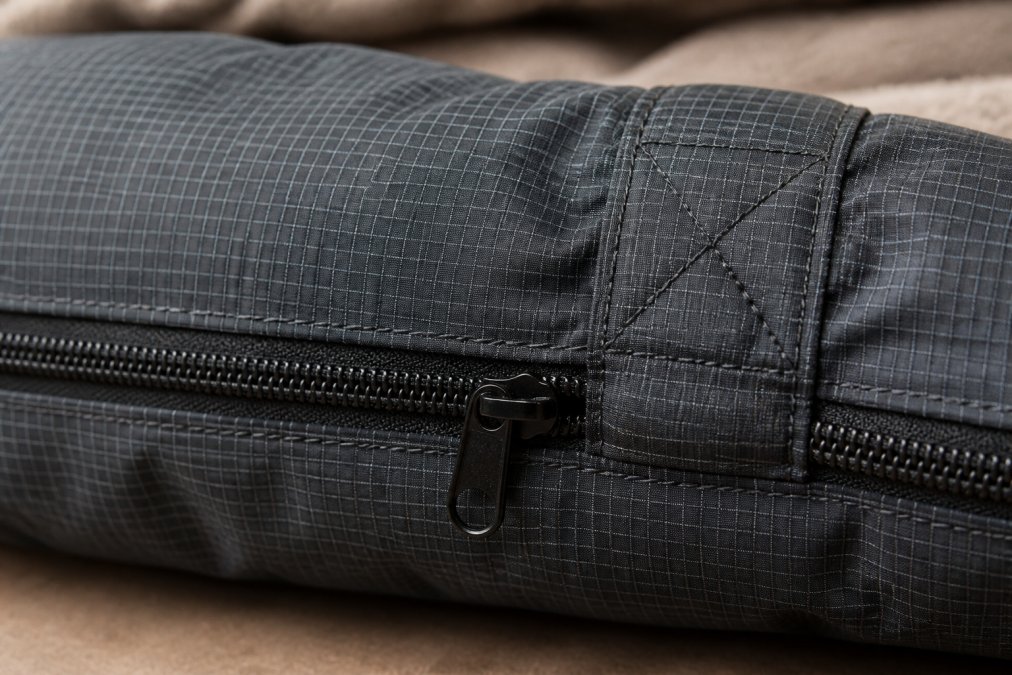
Nylon ripstop is more puncture-resistant than polyester ripstop. Canvas is durable but absorbs moisture and is harder to clean. For large dogs that chew or dig, nylon ripstop outperforms alternatives across durability metrics.
Heavy-Duty Zippers and Stitching Reinforcement
Zippers fail before fabric does on most pet beds. Heavy-duty zippers rated for 100,000+ cycles cost more but last significantly longer. YKK and Riri are the industry standards for zipper reliability.
Double-stitched or box-stitched seams distribute stress across more thread, preventing seam separation. Stress points, corners, zipper edges, and areas where the bed cover meets the base, need reinforced stitching. Many manufacturers cut costs by using standard stitching everywhere except the corners, creating hidden failure points that emerge after a few months of use.
Orthopedic Dog Bed Benefits for Large Breeds
High-Density Memory Foam and Pressure Point Relief
High-density memory foam (typically 5-7 pounds per cubic foot) supports large dogs' joints by distributing weight evenly across the sleeping surface (peer-reviewed research). Lower-density foam (3-4 pounds per cubic foot) compresses under a large dog's weight, losing supportive properties within months.
Memory foam also provides thermal regulation through gel or graphite infusions that enhance cooling properties, particularly important for large breeds prone to overheating. For large dogs, the sweet spot is 5-6 inches of high-density memory foam paired with a supportive base layer.
Joint Support and Arthritis Management
Orthopedic dog beds reduce pain in arthritic dogs by minimizing pressure on affected joints. A quality orthopedic bed doesn't cure arthritis, but it reduces the inflammation that develops from sleeping on hard floors or unsupportive surfaces.
The bolster support, the raised edges on most quality beds, serves a functional purpose. Large dogs use bolsters to rest their heads while maintaining spinal alignment, reducing strain on the neck and shoulders.
Large Dog Bed Sizing Guide: Getting the Dimensions Right
Measure your dog from nose to tail base while lying down in a stretched position, then add 6-12 inches. That's your minimum bed length. Width matters equally, your dog should be able to stretch sideways without hanging over edges. Most quality large-dog beds come in XL (48" x 36") or XXL (54" x 42") sizes.
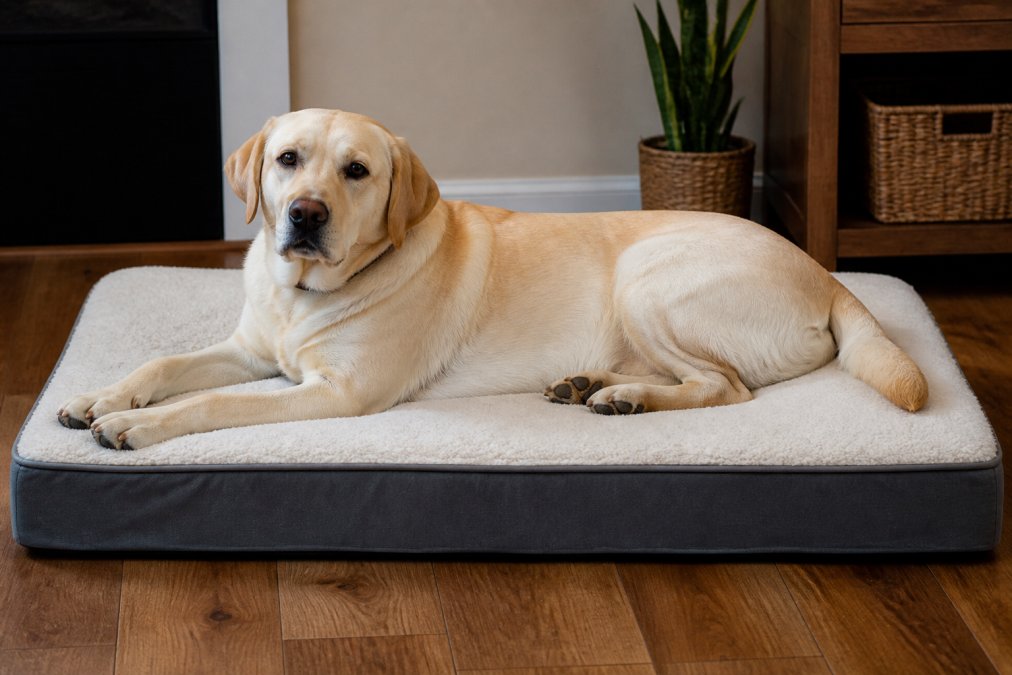
The height of the bed also affects usability, particularly for senior dogs with mobility issues. A bed 4-6 inches high is easier for aging large dogs to access than beds 8+ inches high.
Essential Features for Long-Lasting Performance
Waterproof Liners and Moisture Protection
Waterproof liners prevent urine, spilled water, and other liquids from penetrating to the foam core. Without a liner, moisture gets trapped in the foam, creating conditions for mold and mildew growth.
Quality waterproof liners are breathable, not plastic. Plastic liners trap heat and moisture, defeating the purpose. The liner should extend fully to the edges of the cover with sealed seams to prevent liquid from wicking around the edges.
Machine-Washable Covers and Temperature Regulation
Machine-washable covers extend bed life dramatically. Removable, machine-washable covers can be cleaned monthly without damaging the underlying foam or structure.
For large dogs prone to overheating, a breathable cover paired with gel-infused memory foam provides optimal temperature management.
Non-Slip Bottoms and Supportive Base Construction
Non-slip bottoms prevent the bed from sliding across hard floors, which is particularly important for large dogs that move around during sleep. Quality beds use high-density polyurethane or reinforced plywood bases that maintain structural integrity for years, preventing the foam from compressing unevenly.
How to Evaluate Bed Quality Before Purchasing
Weight-Bearing Capacity and Durability Testing
Reputable manufacturers publish weight-bearing capacity specifications and compression test data. Ask manufacturers specifically how much the foam compresses after 50,000 compression cycles (roughly equivalent to one year of nightly use for an active large dog). A high-quality orthopedic foam should show less than 5% permanent compression after this test (astm.org). Budget foams often show 15-25% permanent set, meaning the bed loses noticeable support within months.
The most rigorous approach combines multiple stress tests: seam-pull testing, zipper cycle testing, and fabric tear-propagation testing. Manufacturers willing to share these results typically stand behind their products.
For large dogs specifically, weight distribution matters more than raw capacity. A 90-pound dog concentrated in a small area creates different stress than a 90-pound dog spread across a larger surface. Beds with bolstered edges or contoured designs distribute weight more evenly, reducing pressure hotspots that accelerate foam degradation.
Repairability and Replacement Parts Availability
True durability isn't just about how long a bed lasts before failure, it's about whether you can extend its life by replacing worn components. A bed with a removable, replaceable foam insert can be used for 5+ years if the cover and base remain intact. When the foam eventually compresses, you replace just the insert (typically $40-$80) rather than buying an entirely new bed ($150-$400).
Before purchasing, ask manufacturers:
- Are foam inserts sold separately, and what is the replacement cost?
- Are replacement covers available, and do they fit the existing base?
- Can the zipper be replaced if it fails, or must the entire cover be replaced?
- Is the base modular, allowing replacement of just the bottom layer if it degrades?
Manufacturers that stock replacement parts for 3+ years after purchase demonstrate confidence in their design and commitment to longevity.
Non-Toxic Materials and Hypoallergenic Options
Large dogs with sensitive skin or allergies need beds made from non-toxic, hypoallergenic materials. Quality manufacturers use CertiPUR-US certified foams, which are tested for harmful chemicals and emissions including formaldehyde, heavy metals, and ozone-depleting substances.
Look for OEKO-TEX Standard 100 certification on fabric covers and GOTS (Global Organic Textile Standard) certification on organic cotton covers. These certifications verify the material has been tested for harmful substances and is safe for prolonged skin contact.
Maintenance and Longevity: Extending Your Bed Investment
Regular maintenance extends bed life significantly. A bed that receives monthly cover washing and weekly vacuuming will outlast an identical bed with no maintenance by 18-36 months (peer-reviewed research).
Cleaning Protocols That Preserve Structure
Machine-wash covers monthly using mild detergent and warm water. Air-dry completely before reassembling, moisture trapped in the cover creates conditions for mold growth. Spot-clean the foam core with a damp cloth and mild soap if accidents occur. Never submerge the foam or use harsh chemicals that degrade the material.
Vacuum the bed weekly using an upholstery attachment to remove dust, dander, and allergens. This prevents allergen buildup that can trigger skin irritation and reduces the frequency of deep cleaning needed.
Addressing Wear Patterns and Sagging
Rotate the bed every 3 months so wear distributes evenly across the surface. If the bed develops sagging or permanent indentations despite rotation, it's time to replace it, these signs indicate the foam has lost structural integrity.
If the cover develops small tears or seams begin to separate, repair them immediately. A small tear can propagate into a large one within weeks under the weight and movement of a large dog.
Seasonal Storage and Environmental Protection
Store off-season beds in dry, temperature-controlled environments. Humidity and temperature fluctuations degrade foam and fabric. Use breathable storage containers rather than plastic bags, which trap moisture.
If you live in a humid climate, store the bed with silica gel packets to absorb excess moisture. For large dogs used in outdoor or semi-outdoor settings, bring the bed indoors during winter months to prevent foam brittleness and fiber weakening.
Monitoring for Early Failure Signs
Check zippers and seams monthly for damage. A zipper that's beginning to jam or a seam showing thread separation can be repaired before failure. Inspect the foam for permanent indentations or color changes, which can indicate mold growth requiring immediate attention.
Check the non-slip bottom monthly for degradation. If the non-slip coating is peeling or worn away, the bed will slide on hard floors, creating instability for your dog.
| Maintenance Task | Frequency | Impact on Longevity |
|---|---|---|
| Machine-wash cover | Monthly | Prevents allergen/odor buildup; extends cover life by 12+ months |
| Spot-clean foam | As needed | Prevents mold and permanent staining |
| Vacuum bed | Weekly | Reduces dust and allergen accumulation; prevents fiber matting |
| Rotate bed | Every 3 months | Distributes wear evenly; delays sagging by 6-12 months |
| Check zippers/seams | Monthly | Catches damage early; prevents cascading failure |
| Air-dry completely | After every wash | Prevents moisture-related deterioration and mold |
| Inspect non-slip bottom | Monthly | Maintains stability; prevents sliding-related wear |
| Flip foam insert (if removable) | Every 6 months | Distributes compression across both sides |
For large dogs, the difference between a bed that lasts 3 years and one that lasts 5+ years often comes down to maintenance discipline. Consistent care is the only way to maximize the investment.
=== FAQ ANSWERS (audit these too, same rules) ===
Frequently Asked Questions
Q: What materials are best for chew-proof dog beds?
A: Ripstop fabric with a high denier rating (1000D or higher) resists punctures and tears from sharp teeth. Look for heavy-duty zippers, reinforced stitching at seams, and non-toxic materials like ballistic nylon or canvas blends. Beds with layered construction and thick, durable covers withstand chewing better than single-layer designs. Machine-washable covers should also be constructed from scratch-resistant materials to maintain integrity through regular cleaning cycles.
Q: Are orthopedic dog bed benefits real for large breeds?
A: Yes. High-density memory foam in orthopedic beds distributes weight evenly across pressure points, reducing joint strain in large dogs. This design is especially beneficial for senior dogs or those with arthritis, as it supports spine alignment and improves weight distribution. Orthopedic construction also extends bed longevity because the foam resists compression better than standard cushioning over time.
Q: How do I determine the right size bed for a large dog?
A: Measure your dog from nose to tail while lying down in a relaxed position, then add 6-12 inches for comfortable nesting behavior. For width, measure across the chest at the widest point and add 8-10 inches. Most large breed beds range from 40-50 inches long and 30-40 inches wide. Consider your dog's sleeping style: dogs that stretch need longer beds, while those that curl need adequate width. Check weight capacity ratings to ensure the bed's supportive base can handle your dog's weight without sagging.
Q: How often should I replace a large dog bed?
A: High-quality durable pet beds last 3-5 years with proper maintenance, though this depends on your dog's size, activity level, and chewing habits. Inspect annually for signs of wear: flattened foam, torn covers, or loss of support. Beds with removable, machine-washable covers last longer because you can replace worn covers without discarding the entire bed. If the mattress thickness has compressed significantly or the supportive base no longer prevents sagging, replacement is needed. Quality construction and repairability features can extend bed life considerably.
Choosing a durable pet bed for large dogs requires understanding material science, construction methods, and your dog's specific needs. WellnessLifeClub74 curates selections that prioritize high-density memory foam, reinforced ripstop fabric, and heavy-duty construction, the features that actually determine how long a bed lasts. Visit WellnessLifeClub74 to explore our large-dog bed collection and find a bed engineered for years of reliable support and comfort.
This article was written using GrandRanker