Table of Contents
- Recognize the Signs of Arthritis in Dogs
- Understand Your Dog's Mobility Needs
- Selecting Dog Ramps for Cars and Stairs
- When to Use a Dog Wheelchair
- Harnesses and Slings for Mobility Support
- Acclimation Training and Proper Fitting
- Maintenance, Hygiene, and Long-Term Planning
- Conclusion
Last Updated: August 9, 2026
Recognize the Signs of Arthritis in Dogs
Arthritis develops gradually in dogs, and early detection makes a significant difference in managing pain and maintaining mobility. The most common indicator is reluctance to move, particularly after rest, hesitation before jumping on furniture, climbing stairs, or entering a car. Stiffness is especially visible in the morning or after extended rest periods.
Watch for changes in gait: favoring one leg, shortened stride, or a bunny-hop pattern in the hind legs. Dogs may lose interest in activities they once loved, and pain often causes behavioral shifts like reluctance to stand, whimpering when touched on affected joints, or increased irritability. Physical signs include swelling around joints, limping that worsens with activity, and muscle atrophy around the hips or shoulders. Hip dysplasia and degenerative myelopathy commonly accelerate arthritis development. Consult your veterinarian if you notice these signs, early intervention with mobility aids and support strategies can significantly slow progression and keep your dog comfortable for years.
Understand Your Dog's Mobility Needs
Before selecting any mobility aid, assess your dog's size, weight, age, and condition severity. A 45-pound dog with mild stiffness has entirely different needs than a 75-pound senior with advanced degenerative myelopathy affecting hindlimb weakness.
Consider which movements cause the most difficulty: struggling with stairs and vehicles versus general limitations like difficulty rising from a lying position or chronic pain.
Your home layout and lifestyle matter significantly. A single-story house with minimal stairs requires different solutions than a multi-level home. Frequent car travel demands ramps or harnesses, while a dog that rarely leaves home may need orthopedic support beds and elevated feeding stations instead. Veterinary consultation should guide your decisions, your vet can assess your dog's specific condition, recommend appropriate support types, and rule out issues requiring medical treatment.
Selecting Dog Ramps for Cars and Stairs
Dog ramps eliminate the high-impact jumping that worsens joint inflammation and pain. These practical mobility aids address a specific, recurring challenge many owners face daily.
Ramps come in several varieties. Solid ramps provide consistent stability, ideal for dogs with significant hindlimb weakness. Folding ramps offer portability and storage advantages for frequent travelers. Some feature non-slip surfaces that prevent sliding, critical for dogs with reduced proprioception or muscle atrophy.
Measure your vehicle's height or stair rise carefully, angle matters more than length. A ramp that's too steep forces your dog to work harder and may discourage use. Most dogs do best with a gentle slope around 15 to 20 degrees. Weight capacity is non-negotiable; choose a ramp rated for at least 20 pounds above your dog's current weight.
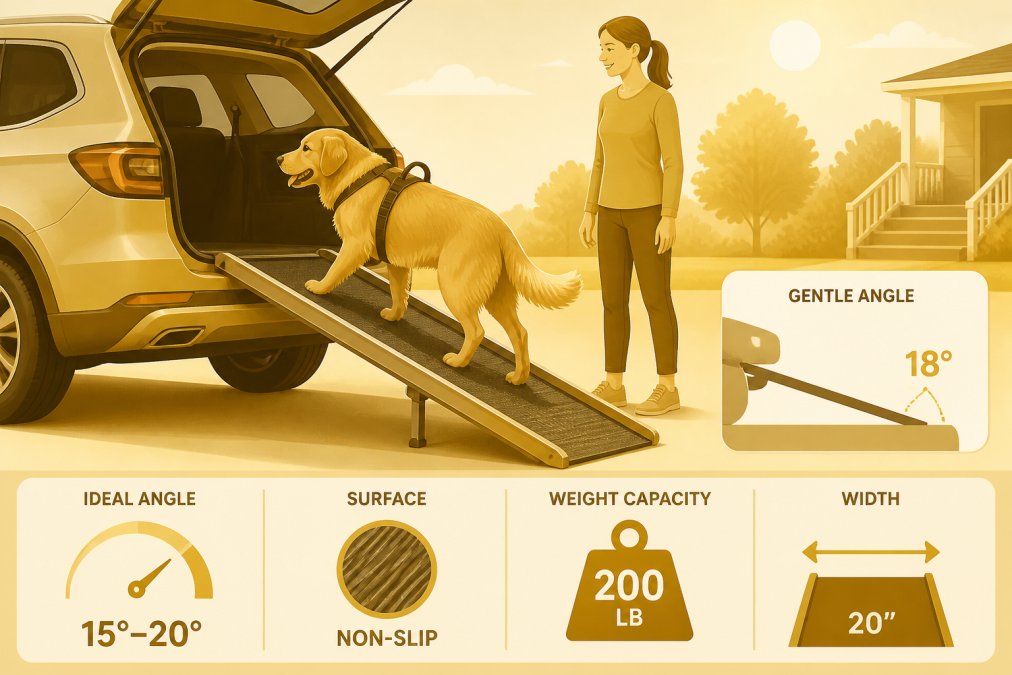
Test the ramp before committing. Some dogs need acclimation training to feel confident. If your dog refuses to use it, start with short, positive exposures and reward successful attempts with treats and praise, never force your dog onto a ramp.
Material affects durability and safety. Aluminum ramps are lightweight and weather-resistant. Wood offers traction but requires maintenance. Plastic ramps are affordable but may not suit larger dogs. Consider your climate and exposure frequency.
When to Use a Dog Wheelchair
A dog wheelchair becomes necessary when hindlimb weakness or paralysis prevents your dog from supporting their own weight in the rear legs, typically associated with degenerative myelopathy or severe spinal issues. Unlike ramps or harnesses, a wheelchair allows complete mobility without requiring your dog to bear weight on compromised hind legs.
Wheelchairs aren't suitable for all dogs. Your dog needs sufficient upper body strength and mental comfort with the device. Your veterinarian can assess whether your dog is a candidate before you invest.
Cart fitting is critical. A poorly fitted wheelchair causes discomfort and skin irritation. The device should support your dog's weight without pressure points on the spine or hips. Adjustable braces and straps let you customize fit as your dog's condition changes.
Acclimation takes patience. Introduce the wheelchair in short sessions on flat, familiar ground. Many dogs take days or weeks to feel confident. Trying before buying or choosing a retailer with a clear return policy matters.
Harnesses and Slings for Mobility Support
Harnesses and slings provide rear-end support or full-body assistance without restricting movement as much as a wheelchair. These versatile mobility aids work for various severity levels and situations.
A rear-end harness supports the hind legs while allowing your dog to walk independently using their front legs. This addresses hindlimb weakness and helps dogs with balance issues or muscle atrophy. Your dog can still move at their own pace and navigate stairs with support. Full-body slings support both front and rear legs, providing assistance for dogs that struggle to stand or move at all.
Proper harness fitment is essential. Measure your dog's girth, chest, and length according to manufacturer specifications. Adjustable harnesses accommodate changes over time. Check fit weekly, especially in the first month. Material affects comfort, padded harnesses reduce pressure on skin, and breathable fabrics prevent overheating. A lightweight support harness works well for walks around the house; a heavier-duty harness suits dogs requiring more substantial assistance.
Acclimation Training and Proper Fitting
Introducing any new mobility aid requires patience and positive reinforcement. Dogs don't automatically understand how to use a ramp, harness, or wheelchair.
Start in a low-pressure environment using your dog's favorite treats or toys as motivation. Let your dog investigate the mobility aid without wearing or using it. For a ramp, place treats at the bottom and gradually move them higher. For a harness, let your dog wear it for short periods indoors before outdoor use. Never force your dog onto or into any device.
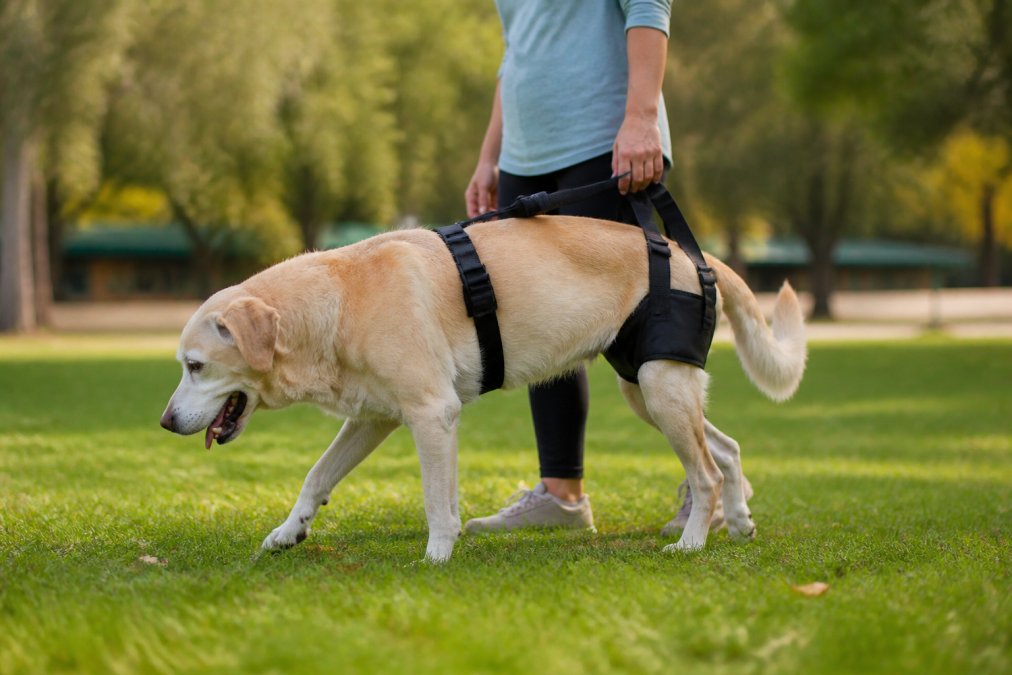
Gradual exposure works better than sudden introduction. Spend several sessions with your dog becoming comfortable with equipment before expecting full use. Reward every small success. Watch for signs of discomfort, excessive panting, whining, or attempts to escape suggest the fit is wrong or your dog needs more time.
For ramps, ensure adequate traction and appropriate angle. For harnesses, you should fit one finger between the harness and your dog's body, snug enough to support but not restrict breathing. For wheelchairs, support should distribute weight evenly without creating pressure points.
Check fit regularly as your dog's condition changes. Muscle atrophy or weight loss means harnesses may become loose. Progressive mobility planning means adjusting your approach as your dog's needs evolve. Work with your veterinarian to reassess periodically.
Maintenance, Hygiene, and Long-Term Planning
Mobility aids require regular maintenance to stay safe and effective. A ramp with compromised traction becomes dangerous. A harness with worn padding causes skin irritation. A wheelchair with misaligned wheels fails to provide stable support.
Clean ramps monthly or more frequently in wet conditions. Non-slip surfaces accumulate dirt and algae, reducing traction. Check for cracks, splintering, or loose fasteners. Harnesses need washing to prevent odor and skin issues, most can be hand-washed with mild soap and air-dried. Check straps for fraying or tears. Wheelchairs require checking wheels for proper alignment and smooth rotation. Lubricate moving parts according to manufacturer instructions.
Monitor your dog's skin where mobility aids contact their body. Pressure sores develop quickly and are painful to treat. If you notice redness, hair loss, or open sores, stop using the aid immediately and consult your veterinarian.
Long-term planning acknowledges that your dog's needs will change. Build relationships with your veterinarian and mobility aid retailers who understand this evolution. Mobility aids work best alongside orthopedic support beds, elevated feeding stations, and activity modification that avoids high-impact movements.
Choosing the right mobility aids for your arthritic dog requires understanding your dog's specific limitations, testing equipment for proper fit, and committing to acclimation training that builds confidence rather than forcing compliance. The best aid is the one your dog will actually use consistently.
At WellnessLifeClub74, we curate a selection of specialized mobility aids designed specifically for dogs with arthritis and mobility challenges. Our collection includes ramps with proven traction, harnesses engineered for proper weight distribution, and accessories that make long-term management easier. We understand that every dog's situation is unique, that's why we focus on quality equipment and transparent product information to help you make informed decisions. Shop our mobility aid collection today and discover how the right equipment can restore your dog's independence and comfort.
Frequently Asked Questions
Is a ramp or stairs better for dogs with arthritis?
Ramps are generally better for arthritic dogs because they reduce joint strain and impact compared to stairs. A ramp distributes your dog's weight more evenly and requires less bending of the hips, knees, and ankles. Stairs force dogs to lift their full body weight with each step, which aggravates joint inflammation and chronic pain. Choose a ramp with a gentle slope (around 15-20 degrees) and non-slip surface to prevent slipping and maximize stability.
How do I know if my dog needs a mobility harness or a dog wheelchair?
Use a mobility harness when your dog has mild to moderate hindlimb weakness and can still bear weight on all four legs. Harnesses provide rear-end support and help with weight distribution. A dog wheelchair becomes necessary when your dog cannot support its own rear legs or has severe mobility impairment. Start with a harness and consult your veterinarian if your dog's condition worsens, they can recommend progression to a wheelchair based on your dog's range of motion and muscle atrophy.
What are the first steps to choosing the right mobility aids for my arthritic dog?
First, schedule a veterinary consultation to assess your dog's specific condition, whether hip dysplasia, degenerative myelopathy, or general joint inflammation. Second, measure your dog accurately for harness fitment and cart fitting using manufacturer guidelines. Third, observe your dog's gait and identify which movements cause pain or instability. Finally, start with one aid (such as a harness) and monitor how your dog responds before adding additional support like ramps or orthopedic beds. This progressive approach prevents overwhelming your dog.
How do I maintain and clean mobility aids for my arthritic dog?
Clean harnesses and slings weekly with mild soap and water, then air dry completely to prevent mold and odor. For wheelchairs and carts, wipe down the frame and check wheels for debris after outdoor use. Inspect all equipment monthly for wear, fraying straps, or loose fasteners that could affect stability and safety. Store mobility aids in a dry location away from direct sunlight. Proper maintenance extends the life of your equipment and ensures consistent orthopedic support for your dog's chronic pain management.
This article was written using GrandRanker