Table of Contents
- Clippers vs Grinders: A Head-to-Head Comparison
- Advantages and Disadvantages of Nail Clippers
- Advantages and Disadvantages of Nail Grinders
- Noise, Vibration, and Anxiety: Which Tool Causes Less Stress
- Best Nail Trimmer for Anxious Dogs: Making Your Choice
- How to Trim Dog Nails for Anxious Dogs: A Step-by-Step Approach
- How to Get a Dog Used to Nail Trimming: Desensitization and Training
- Dog Nail Grinder Safety: Risk of the Quick and Bleeding
- Frequently Asked Questions
Last Updated: October 10, 2026
Clippers vs Grinders: A Head-to-Head Comparison
When your dog cringes at the sight of nail-trimming tools, choosing between dog nail clippers vs grinders for nervous dogs isn't just about convenience, it's about managing anxiety and preventing trauma. Both tools accomplish the same goal: keeping nails short. But they do it in fundamentally different ways, and for anxious dogs, that difference matters enormously.
How Clippers Work and What Dogs Experience
Nail clippers use a cutting mechanism that closes on the nail with sudden pressure. The moment of contact is quick and decisive. Your dog feels the clipper grasp the nail, then a sharp snapping sensation as the blade cuts through. For some dogs, this rapid pressure-and-release cycle triggers fear. The unpredictability of that snap can make nervous dogs tense up before you even make contact.
Scissor-style clippers and guillotine-style clippers are the two main types. Scissor clippers work like regular scissors, you squeeze handles and the blades cross. Guillotine clippers have a hole where you insert the nail, then squeeze to trigger the blade. Both deliver the cut in a single, fast motion.
How Grinders Work and What Dogs Experience
A nail grinder uses a rotating head to gradually wear down the nail. Instead of a sudden cutting action, the dog experiences continuous, gentle friction. The nail shortens slowly as the grinding head makes contact. This approach eliminates the snap entirely, but it introduces something clippers don't: sound and vibration.
Most grinders produce a whirring noise and mild vibration. For some nervous dogs, this sensory input is more unsettling than the quick cut of a clipper. For others, the predictable, ongoing sensation feels less threatening than the sudden snap. The choice depends entirely on what triggers your dog's anxiety.
Advantages and Disadvantages of Nail Clippers
Clippers excel at speed and simplicity. A single squeeze removes a nail section in under a second. For dogs that tolerate the tool, clippers are faster than grinders, meaning less time handling the paw overall. There's no learning curve, if your dog can tolerate the sensation, the process is straightforward.
The main drawback is the edge quality. Clippers can leave sharp, splintered edges on the nail. Grinding produces a smoother, rounded finish that's gentler on the paw pad. Additionally, clippers demand precision. Cut too far and you'll hit the quick, the blood vessel inside the nail. That causes bleeding and pain, which reinforces fear in nervous dogs. Grinders reduce this risk because you're gradually wearing the nail down, not making one decisive cut.
Advantages and Disadvantages of Nail Grinders
Grinders eliminate the risk of hitting the quick. You can see exactly how much nail remains as you grind, and you stop before reaching the pink inner layer. This makes grinders safer for anxious dogs where owner confidence matters. A calm owner using a grinder is less likely to cause injury than a nervous owner white-knuckling a clipper.
Grinders also leave a smooth, polished edge. The nail is rounded rather than sharp, which is more comfortable for your dog's paw pads. This is especially valuable for dogs with arthritis or sensitive feet.
The trade-off is noise and time. Grinders are louder and take longer per nail, sometimes 20-30 seconds versus 2-3 seconds with clippers. Dogs with sound sensitivity may find this worse than the clipper snap.
Noise, Vibration, and Anxiety: Which Tool Causes Less Stress
This is where the decision gets personal. Clippers are silent. If your dog's anxiety stems from sound sensitivity, clippers are the clear choice.
Nervous dogs often respond better to tools they can predict. A grinder's steady vibration and sound are constant and measurable. Your dog knows what's coming. A clipper's sudden snap is an ambush, the pressure builds, then releases in an instant. Some anxious dogs find the unpredictability more stressful than the sensation itself.
Test your individual dog's response. Many dogs that seem fearful of clippers relax significantly around a grinder once they're desensitized. Others do the opposite. There's no universal answer, only what works for your dog's specific anxiety triggers.
| Tool | Speed | Noise Level | Injury Risk | Edge Quality | Best For |
|---|---|---|---|---|---|
| Clippers | Very fast (2-3 sec/nail) | Silent | Higher if rushed | Sharp edge | Sound-sensitive dogs |
| Grinders | Slower (20-30 sec/nail) | Moderate whirring | Lower, more control | Smooth, rounded | Dogs fearful of sudden pressure |
Best Nail Trimmer for Anxious Dogs: Making Your Choice
The best nail trimmer for anxious dogs depends on what frightens your dog most. Ask yourself: Is your dog more afraid of sound or of sudden pressure? Does she tense up at unexpected sensations, or does she panic at continuous contact?
If your dog startles easily at sudden noises, clippers are your answer. If your dog freezes when feeling trapped or pressured, a grinder's gradual approach works better.
Start by observing your dog's behavior during other grooming tasks. Does she flinch at the sound of a hair dryer? Does she panic when you hold her paw too long? These reactions hint at which tool will cause less stress.
How to Trim Dog Nails for Anxious Dogs: A Step-by-Step Approach
Step 1: Choose your environment. Pick a quiet, familiar space where your dog feels safe.
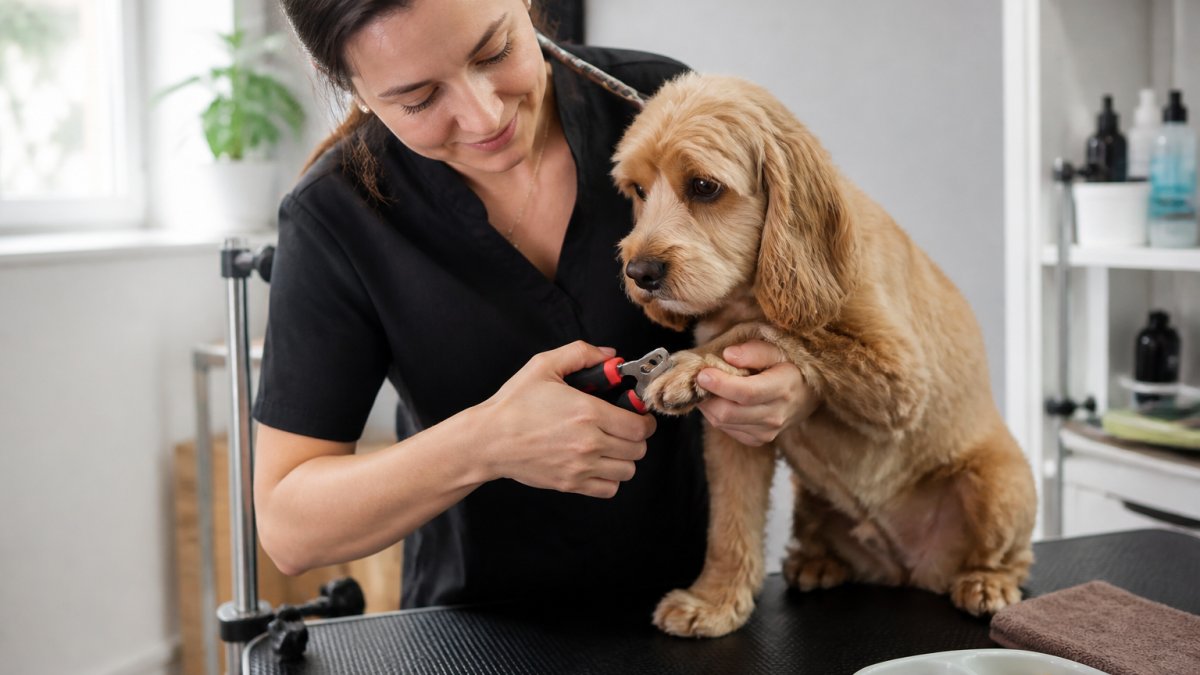
Step 2: Have treats ready. Place high-value treats within arm's reach, something your dog goes crazy for.
Step 3: Start with paw handling. Before touching the nail trimmer, spend 2-3 sessions just handling your dog's paw.
Step 4: Introduce the tool. Let your dog see and smell the clipper or grinder. Don't use it yet.
Step 5: Make brief contact. Touch the tool to one nail without using it. The moment you touch, give a treat.
Step 6: Trim or grind one nail. On the first attempt, do only one nail.
Step 7: Gradually increase. Over the next week, add one more nail per session. Stick with this pace.
How to Get a Dog Used to Nail Trimming: Desensitization and Training
Desensitization is the process of gradually reducing your dog's fear response through repeated, positive exposure. It works by changing your dog's emotional association with the tool. Instead of "clipper = pain or fear," your dog learns "clipper = treats and calm handling."
Phase 1: Paw Handling and Reward Association
Spend 1-2 weeks on paw handling alone. Handle your dog's paws during calm moments, not during actual trimming. Gently hold each paw for 5-10 seconds, then release and reward. Gradually extend the time you hold the paw. Your goal is to make paw contact feel routine and safe.
During this phase, never move toward the nails. Just hold the paw. This teaches your dog that paw handling doesn't lead to nail trimming yet. It's a separate, safe activity. Many anxious dogs relax significantly once they realize paw handling isn't a trap.
Phase 2: Introducing the Tool Without Using It
Once your dog is calm during paw handling, introduce the tool. Show it to your dog while offering treats. Let her investigate it, sniff it, see it move, hear it if it's a grinder. Never force interaction. If your dog backs away, move the tool farther away and try again tomorrow.
Spend 3-5 days on this phase. Your dog should show curiosity or at least neutral interest before moving forward. If she remains terrified, slow down. Spend another week just having the tool visible in the room during treats and playtime, with no direct contact.
Phase 3: Gradual Practice and Positive Reinforcement
Once your dog tolerates the tool nearby, begin the actual trimming process using the step-by-step approach above. The key is consistency and patience. If your dog shows signs of stress, trembling, pulling away, refusing treats, you've moved too fast. Go back to the previous phase for another week.
Progress isn't linear. Some days your dog will be calmer than others. Stress, changes in routine, or even weather can affect her anxiety level. Expect setbacks and respond by returning to an earlier phase temporarily. This isn't failure, it's realistic desensitization.
Dog Nail Grinder Safety: Risk of the Quick and Bleeding
The quick is the blood vessel running through the center of the nail. Cutting into it causes bleeding and pain. For anxious dogs, this experience can undo weeks of desensitization work.
With clippers, the risk is highest because you make one decisive cut. If you misjudge the nail length, you hit the quick instantly.
However, grinders carry a different risk: overheating. Holding a grinder on one nail too long generates friction heat.
Watch for these signs that you're approaching the quick: the nail will show a small dark dot in the center as you get closer.
If you do cause bleeding, stay calm. Your dog is watching your reaction. Apply gentle pressure with a clean cloth for 2-3 minutes. The bleeding will stop.
Managing anxiety during nail trimming requires patience and the right tool for your dog's specific fear triggers. At WellnessLifeClub74, we understand that nervous dogs need specialized care solutions, and that includes the right grooming tools matched to their temperament.
Frequently Asked Questions
Is it better to clip or grind a dog's nails?
Neither is universally better; the choice depends on your dog's temperament and sensitivity. Clippers work quickly and avoid motor noise, making them suitable for dogs frightened by sound. Grinders produce smoother edges and apply gradual pressure rather than a sudden snap, which some anxious dogs tolerate better. For nervous dogs, grinders often reduce the startle response, but noise sensitivity may make clippers preferable. Test your dog's reaction to each tool during desensitization before committing to one method.
What is the best nail trimmer for anxious dogs?
The best nail trimmer for anxious dogs depends on their specific fear triggers. Clippers suit dogs sensitive to noise and vibration, while grinders work well for dogs frightened by the sudden pressure of clipping. Some clippers are designed for medium to large dogs and offer quick, quiet trimming. Start with a trial period during desensitization training to determine which tool your dog accepts. Combine your tool choice with gradual introduction and positive reinforcement for the best results.
How can I get my nervous dog used to nail trimming?
Use a three-phase desensitization approach. Phase 1 involves handling your dog's paws daily and rewarding calm behavior with treats. Phase 2 introduces the tool without using it, letting your dog see and sniff it while receiving rewards. Phase 3 involves gradual practice: touch the tool to one nail, reward, then repeat over several sessions before actually trimming. Space sessions 2-3 days apart, and always stop if your dog shows extreme stress. Consistency and patience over weeks or months build tolerance much better than forcing the experience.
Is dog nail grinder safety a concern, and how do I avoid cutting the quick?
Grinders carry a lower risk of cutting the quick than clippers because they remove nail gradually rather than with a sudden snap. However, prolonged grinding can generate heat and cause discomfort if you apply too much pressure. To stay safe, grind in short bursts (2-3 seconds per nail), watch for signs of heat sensitivity, and stop immediately if your dog pulls away. For dogs with dark nails where the quick is hard to see, work slowly and stop when you reach the inner nail circle. When in doubt, consult your veterinarian or a professional groomer.
Are dog nail grinders quieter than clippers?
No; grinders are typically louder than clippers because they use a motor and spinning stone. However, the noise is continuous and predictable, whereas clippers produce a sudden, sharp snap that can startle anxious dogs more intensely. Some dogs find the steady hum of a grinder less frightening than the unexpected sound of clipping. High-quality grinders are engineered to minimize vibration and noise compared to budget alternatives. If noise is a concern, test your dog's reaction during desensitization training before committing to either tool.