Table of Contents
- How to Choose Unique Home Decor: Define Your Personal Style First
- Build a Cohesive Color Palette for Visual Impact
- Where to Buy Unique Home Decor: Sourcing Strategies That Work
- Curated Home Decor: Mixing Materials and Avoiding Mass-Produced Aesthetics
- Small Space Unique Decor: Making Statement Pieces Work
- Tell Your Personal Story Through Objects and Functional Decor
- Common Mistakes When Choosing Unique Home Decor
- Conclusion
Last Updated: August 2, 2026
Learning how to choose unique home decor transforms your living space from generic to genuinely reflective of who you are. At WellnessLifeClub74, we understand that curating a home goes beyond shopping for furniture, it's about building an environment that tells your personal story while maintaining visual harmony. This guide walks you through selecting pieces that feel authentic, avoid mass-produced aesthetics, and create spaces that energize you.
The difference between a home that feels "designed" and one that feels lived-in comes down to intentionality. Most people buy decor reactively, but homes that feel cohesive and genuinely unique follow a deliberate process. We'll show you exactly how to build that process, from defining your aesthetic to sourcing pieces that won't show up in five other homes on your street.
How to Choose Unique Home Decor: Define Your Personal Style First
Your design foundation matters more than any individual piece you'll ever buy. Before hunting for decor, you need clarity on what actually resonates with you, not what Instagram suggests, but what genuinely appeals to your eye and lifestyle.
Identifying your aesthetic preferences
Start by photographing corners of your home that already feel right. Scroll through design platforms and save images without overthinking; your instincts are better data than your conscious mind. After collecting 20-30 images, look for patterns. Do warm woods appear repeatedly? Are there consistent color families? Do you gravitate toward minimal surfaces or layered, textured environments?
Write down three words that describe your ideal space: "warm and minimal," "eclectic and collected," or "modern and calm." These become your filter. Every decor decision gets tested against them.
Creating a mood board of inspiration
A mood board is a strategic design tool, not decoration. Gather images, fabric swatches, paint samples, and physical objects that represent your vision. When you see your images side by side, contradictions become obvious. Your mood board becomes your shopping guide, when browsing, ask: does this piece fit the palette? Does it match the texture story I'm building?
The most effective mood boards include close-ups of textures, color combinations, and individual objects alongside full-room photos.
Build a Cohesive Color Palette for Visual Impact
Color is the fastest way to unify disparate pieces into a cohesive space. A cohesive palette doesn't mean monochromatic; it means every color serves a purpose.
Selecting your base, accent, and highlight colors
Think of your color palette in three layers. Your base color is the dominant tone, usually neutral, warm white, soft gray, or muted earth tone, covering roughly 60% of your visual space. Your accent colors (typically two) make up about 30%, adding personality without overwhelming. Your highlight color is the 10% pop that draws the eye.
This 60-30-10 framework prevents color chaos. When evaluating a potential purchase, ask: which layer does this fill? If you already have plenty of accent color, look for a highlight or base option instead.
Research indicates that intentional color choices measurably affect mood and perceived space size. Warm colors feel intimate; cool colors feel expansive.
Using texture and materiality to add depth
A monochromatic room with varied textures feels dynamic. A multicolored room with flat, uniform textures feels chaotic. Texture is your second tool for visual interest after color.
Linen feels different from velvet. Raw wood differs from polished metal. Ceramic contrasts with glass. Layering textures means combining rough with smooth, matte with reflective, soft with hard. A woven basket next to a glass vase next to a ceramic piece creates visual interest without requiring multiple colors. Handcrafted and artisanal items inherently possess texture and character that mass-produced items lack.
When sourcing decor, consider your space's texture profile. If you already have plenty of soft textures, look for pieces with visual contrast, something with a hard edge, reflective surface, or pronounced grain.
Where to Buy Unique Home Decor: Sourcing Strategies That Work
How you source your decor matters as much as what you choose. Unique pieces require intentional sourcing strategies.
Thrifted and vintage finds: hunting for character
Thrifting is the most accessible way to source unique decor without premium pricing. Visit thrift stores on restock days, usually early in the week. Develop relationships with staff; they'll alert you to incoming items matching your aesthetic. Focus on quality construction rather than current condition. A vintage wooden chair with worn upholstery is infinitely more interesting than new particle-board furniture.
Look for pieces with good bones: solid wood, quality joinery, interesting design details. Avoid items with structural damage or permanent stains. Vintage sources yield pieces carrying narrative weight, a mid-century wooden side table is a conversation starter with history embedded in its construction.
Artisanal and handcrafted marketplaces
Handcrafted items are the opposite of mass-produced aesthetics. When you buy from makers through online platforms, craft fairs, or artist studios, you're supporting people who pour intention into every piece. Artisanal ceramics, woven textiles, hand-forged metal, and carved wood carry maker's marks. No two pieces are identical.
Understanding how something was made deepens your appreciation and informs how you'll style it. Supporting artisanal makers also aligns with sustainability values. Handcrafted items are built to last, made from quality materials, and produced in small batches rather than industrial quantities.
Budget-conscious sourcing without compromising quality
Unique decor doesn't require premium spending if you're strategic. Invest more heavily in pieces that receive frequent use or occupy focal points. A quality sofa matters more than a cheap decorative object. Budget items can work in supporting roles.
Thrifting and estate sales are your budget allies. You'll find quality vintage pieces for a fraction of their original cost. Mix price points intentionally. A room with all expensive decor can feel sterile; a room with all cheap pieces feels disposable. Strategic mixing, expensive handcrafted ceramic with budget linen, vintage wood with affordable metal accents, creates visual sophistication without financial strain.
Curated Home Decor: Mixing Materials and Avoiding Mass-Produced Aesthetics
The distinction between curated, unique spaces and generic ones often comes down to materiality. Mass-produced decor relies on cheap materials and uniform finishes. Unique spaces layer different materials intentionally.
Combining natural and man-made materials
Natural materials, wood, ceramic, stone, linen, wool, carry inherent variation and warmth. Man-made materials, metal, glass, concrete, synthetic fabrics, offer precision and visual contrast. The most interesting spaces combine both.
Raw wood shelving with metal brackets. A ceramic vase on a glass table. A linen sofa with a concrete side table. This material mixing prevents your space from feeling like a catalog spread. Each material has different visual weight, texture, and story. When combined intentionally, you create visual rhythm and depth.
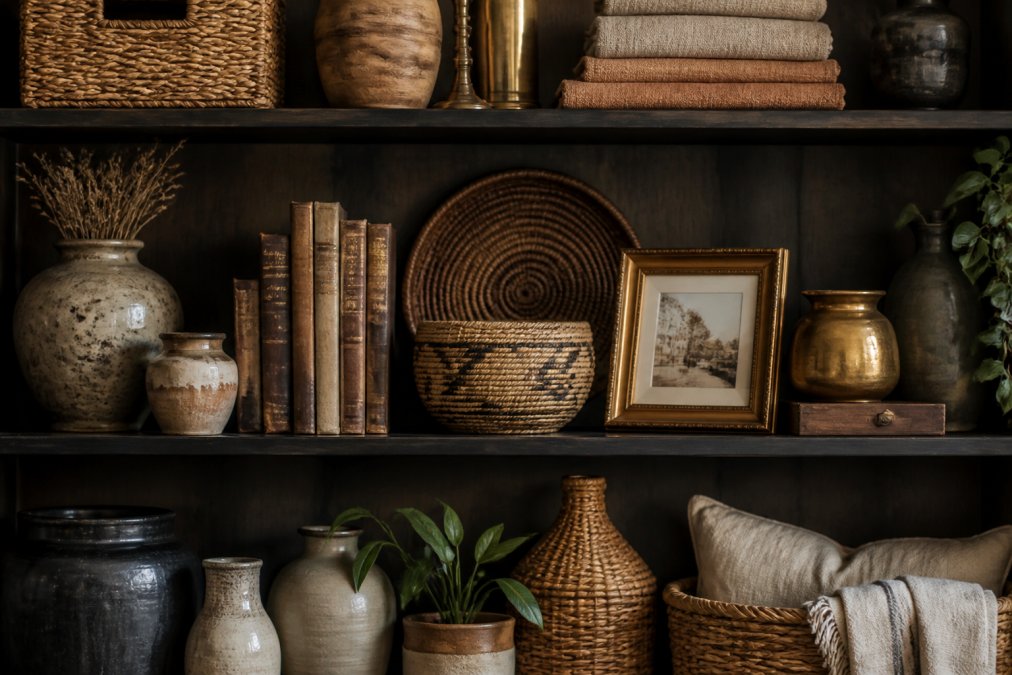
Layering textures and scale for visual interest
A room with all small items feels fussy. A room with all large pieces feels heavy. Intentional scale mixing creates visual balance. A large statement chair paired with small ceramic accessories. A substantial wooden shelving unit displaying smaller handcrafted objects.
Texture layering works similarly. A smooth concrete floor needs textured elements, a woven rug, textured wall hanging, or rough wooden furniture. Without this contrast, the space feels flat. With it, the space feels dimensional and collected.
The strongest unique decor intentionally mixes scales and textures. This separates "I decorated my home" from "I curated my home."
Sustainability and ethical sourcing considerations
Choosing unique decor often naturally aligns with sustainability. Vintage and thrifted pieces extend the life of existing items. Handcrafted items are typically made from quality materials designed to last, not disposable trends.
When sourcing decor, consider the maker's practices. Are materials sustainably sourced? Is the maker paid fairly? Will the piece last decades or months? Vintage and secondhand shopping is inherently sustainable, you're removing items from landfills and giving them new life.
Small Space Unique Decor: Making Statement Pieces Work
Smaller spaces require more intentional curation. Every piece must earn its place. This constraint actually makes unique decor easier, you can't rely on quantity, so quality and intentionality become non-negotiable.
Selecting focal points and accent pieces
In a small space, one strong focal point prevents visual chaos. This might be a statement wall, significant artwork, handcrafted shelving unit, or unique furniture piece. Everything else should support and complement this focal point.
Accent pieces in small spaces should be fewer but more impactful. Rather than scattered small objects, choose two or three pieces with strong visual presence. A single large ceramic vessel. One significant piece of art. A sculptural plant stand. Each piece should have a reason for existing.
Proportion and spatial flow in compact areas
Proportion matters more in small spaces. Oversized furniture makes rooms feel cramped. Tiny pieces in large rooms feel lost. Matching scale to space is essential.
Vertical storage and display create the illusion of more space. Tall shelving units, wall-mounted storage, and vertical arrangements draw the eye upward and make ceilings feel higher. Spatial flow means ensuring movement through the space feels natural. Furniture placement should create clear pathways.
WellnessLifeClub74 offers home accessories and decor pieces designed for discerning shoppers who prioritize quality, uniqueness, and functional beauty. When working with limited square footage, every item needs to pull its weight both functionally and aesthetically.
Tell Your Personal Story Through Objects and Functional Decor
The most memorable homes aren't the most expensive or perfectly designed. They're spaces where you can read the inhabitant's life in the objects displayed. Your decor should tell your story.
Using functional spaces and accessories for character
Functional decor is the secret weapon of unique homes. A beautiful wooden cutting board displayed on the kitchen wall. Vintage cookbooks stacked on a shelf. A collection of interesting baskets for storage. These items are useful and visually interesting.
Functional spaces, kitchens, bathrooms, entryways, offer opportunities for decor that serves a purpose. Open shelving in a kitchen becomes a display opportunity for beautiful dishes. A bathroom shelf can showcase interesting bottles or plants. An entryway table can hold objects reflecting your interests and travels.
Objects with personal significance, a handmade gift, a piece from a meaningful trip, something inherited from a family member, carry narrative weight that no mass-produced item can match.
Maintenance tips for vintage and unique items
Vintage and handcrafted pieces often require more care than mass-produced items. Wood furniture needs appropriate humidity levels and occasional conditioning. Vintage textiles may need specialized cleaning. Understanding these needs before purchasing helps you make informed decisions.
Embrace patina and age. A vintage wooden table with visible wear tells a story. The goal is preservation, not restoration to factory condition. Building relationships with specialists, upholsterers, woodworkers, textile conservators, becomes valuable when you invest in quality vintage or artisanal pieces.
Common Mistakes When Choosing Unique Home Decor
The first mistake is buying without a plan. Reactive shopping creates visual chaos. Every piece should connect to your mood board and color palette.
The second mistake is prioritizing trends over personal preference. Trendy decor dates quickly. Unique spaces are built on personal aesthetic choices that endure.
The third mistake is mixing too many aesthetic directions. Eclectic doesn't mean chaotic. You can blend bohemian, modern, and vintage elements, but they need a unifying thread, a consistent color palette, material story, or scale approach.
The fourth mistake is underestimating negative space. Empty wall space and uncluttered surfaces make displayed items more impactful. Restraint is a design tool.
The fifth mistake is neglecting proportion and scale. A single massive piece in a small space overwhelms. Tiny pieces scattered throughout a large room feel insufficient.
Choosing unique home decor is fundamentally about creating a space that reflects who you are rather than who you think you should be. The process requires clarity about your aesthetic, intentionality about sourcing, and restraint about curation. WellnessLifeClub74 offers curated home accessories and decor pieces designed for discerning shoppers who prioritize quality, uniqueness, and functional beauty. Our collections blend handcrafted items, vintage-inspired pieces, and carefully selected accessories that help you build a genuinely personal space. Explore our curated selections and discover how intentional sourcing transforms your home into a reflection of your authentic aesthetic.
| Strategy | Best For | Time Investment | Cost Range |
|---|---|---|---|
| Thrifting & Estate Sales | Budget-conscious hunters seeking one-of-a-kind pieces | High (requires regular hunting) | Low to moderate |
| Artisanal Marketplaces | Supporting makers while sourcing handcrafted items | Moderate (browsing, direct communication) | Moderate to high |
| Vintage Online Platforms | Specific searches with convenience of home shopping | Low to moderate (scrolling, bidding) | Moderate |
| Local Craft Fairs | Meeting makers, understanding process, community connection | Moderate (travel, browsing) | Moderate to high |
| Mixed Sourcing Strategy | Building layered, eclectic spaces with varied price points | Moderate (ongoing curation) | Flexible |
According to Interior design trends and consumer preferences, consumers increasingly seek personalization and authenticity in their living spaces rather than mass-market standardization. Research from sustainable interior design practices demonstrates that vintage and secondhand sourcing reduces environmental impact while supporting circular economy principles. Choosing unique, durable pieces over disposable decor aligns personal aesthetic goals with ecological responsibility.
Frequently Asked Questions
How do I find my personal home decor style?
Start by collecting images of spaces that appeal to you on Pinterest or Instagram, then identify common threads: color preferences, material types, and overall mood. Notice whether you gravitate toward minimalist, eclectic, vintage, or modern aesthetics. Create a mood board with 15-20 images and look for patterns in scale, texture, and how items are arranged. Your personal home decor style emerges from what naturally draws you in, not what design magazines say you should like.
What's the difference between curated home decor and mass-produced pieces?
Curated home decor typically includes handcrafted, artisanal, thrifted, or vintage items selected intentionally to create a cohesive aesthetic and tell your story. Mass-produced pieces are manufactured identically in bulk, often designed to appeal to the broadest market. Curated items show variation in finish, have unique histories, and contribute to a clutter-free, character-driven design philosophy. Mass-produced pieces, while convenient and affordable, can make spaces feel generic and interchangeable.
How can I decorate a small space with unique pieces without it feeling cluttered?
In small spaces, choose one or two statement pieces as focal points rather than many items. Use vertical space with wall-mounted shelving for functional decor. Select items in a cohesive color palette and similar scale to maintain spatial flow. Prioritize quality over quantity, one handcrafted piece matters more than five mediocre ones. Ensure each item serves both aesthetic and functional purposes, and maintain clear surfaces to avoid visual overwhelm.
Where can I find unique home decor items on a budget?
Thrifted and vintage stores, estate sales, and local artisan markets offer affordable unique pieces with character. Online marketplaces specializing in handcrafted goods sometimes have lower price points than retail stores. Shop off-season sales at independent boutiques. Support local makers directly through craft fairs or social media. Consider DIY or upcycling projects to transform inexpensive base items. Budget-conscious sourcing doesn't mean sacrificing quality, it means being intentional about where you source and willing to hunt for deals.
This article was written using GrandRanker