Table of Contents
- Why Curated Home Essentials Matter More Than Ever
- Quality Over Quantity: The Core Principle Behind Curation
- Intentional Home Design: Building a Cohesive Living Space
- Handmade vs Mass-Produced Home Decor: What Sets Curation Apart
- Decluttering and Curating: The Transition to Intentional Living
- Personalizing Your Home: Selecting Meaningful Pieces
- How Curated Home Essentials Solve Real Shopping Frustrations
- Conclusion: Build Your Curated Home Today
Last Updated: August 1, 2026
Why Curated Home Essentials Matter More Than Ever
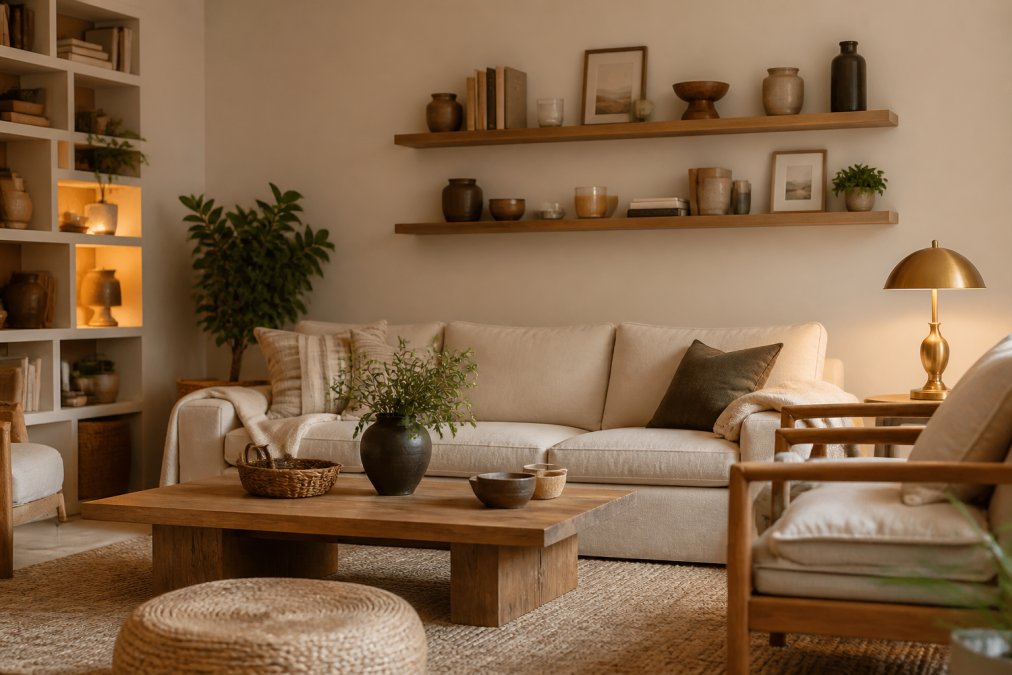
Modern homeowners are shifting from impulse purchasing toward intentional selection of items that define their daily lives. A home built on curated principles affects everything from stress levels to environmental impact. Curated home essentials are selected with purpose: each piece serves a function, reflects your aesthetic, or brings genuine joy.
The shift toward curation isn't about minimalism or deprivation. It's about maximizing the impact of every square inch and every dollar spent. When you curate thoughtfully, your home becomes an extension of who you are rather than a storage unit for forgotten possessions.
Quality Over Quantity: The Core Principle Behind Curation
The foundation of curated home essentials rests on a single principle: fewer, better things. This is practical economics. When you invest in quality pieces designed to last, you spend less money over time and create an environment that improves with age.
Investment Pieces That Last Decades
A curated home is built on investment pieces selected for durability, timeless design, and functional excellence. Consider the difference between a cheap particle-board bookshelf and a solid-wood cabinet. The cheap option might cost half as much upfront but fails within three years. The wooden cabinet costs more initially but functions beautifully for thirty years. Over that span, the wooden piece costs a fraction of what you'd spend replacing the cheap version multiple times.
Real investment pieces come from craftspeople and manufacturers who prioritize durability through quality materials, proper joinery, and construction methods that withstand time.
Durability and Maintenance: The Hidden Cost Advantage
Most shopping guides ignore maintenance costs, but they're crucial to understanding why curated home essentials are better. A poorly made item requires constant repairs or replacement. Quality pieces often improve with proper care. Real leather develops a patina. Solid wood can be refinished. Quality fabrics withstand cleaning and use.
You spend less time troubleshooting broken items, less money on repairs, and less energy on replacement shopping. Your home becomes more stable and genuinely yours.
Intentional Home Design: Building a Cohesive Living Space
Intentional design means making deliberate choices about how your space functions and feels. Harmony doesn't mean everything matches; it means your choices work together visually and functionally.
Creating Harmony Through Thoughtful Selection
When you curate intentionally, you create visual and functional rhythm through thoughtful constraint. Instead of choosing from infinite options, you set parameters: a color palette, a material family, a functional purpose. Within those parameters, you select pieces that speak to you.
A curated home reflects spatial awareness, understanding how pieces relate to each other, how scale and proportion work in your rooms, and how traffic flows through your space. This isn't about following design rules; it's about making choices that acknowledge the actual dimensions and use patterns of your home.
Avoiding the Matchy-Matchy Trap
One of the biggest mistakes in home design is believing that cohesion requires matching. Real design harmony comes from mixing textures, eras, and styles while maintaining visual balance. A mid-century chair can sit beautifully next to a vintage side table and a contemporary lamp. What ties them together isn't that they match, but that they share a scale, color family, or functional purpose.
This approach makes decorating more accessible. You're not hunting for matching sets. You're selecting pieces that work with what you have while bringing something new to the conversation.
Handmade vs Mass-Produced Home Decor: What Sets Curation Apart
The difference between handmade and mass-produced items reveals why curated home essentials are better at a fundamental level. Handmade items carry evidence of human skill and intention. Variations and imperfections are signatures of the maker's hand.
Artisan Craftsmanship and Heritage Quality
Handcrafted pieces are typically built to be repaired, adjusted, and maintained. If a handmade chair leg loosens, you can tighten it. If a woven blanket frays, you can mend it. Artisan work also preserves heritage craft techniques that would otherwise disappear. Your home becomes a repository of cultural knowledge and human skill.
Environmental Impact and Responsible Consumption
Mass production optimizes for speed and cost, typically meaning environmental shortcuts. Handmade and small-batch production often prioritize sustainable sourcing and responsible methods. Curated purchasing supports responsible consumption by encouraging you to buy less, buy better, and understand where items come from.
One well-made item lasting thirty years creates far less waste than ten cheap items replaced every three years. Curated home essentials embody this principle, reducing your environmental footprint while increasing satisfaction with your space.
Decluttering and Curating: The Transition to Intentional Living
Many people arrive at curation through necessity: they've accumulated too much and need to clear space. This transition forces intentionality about what stays and what goes.
From Clutter to Clutter-Free Spaces
The path to a clutter-free home isn't about throwing everything away. It's about recognizing that each item should earn its place through function, beauty, or genuine meaning. Ask honest questions: Do I use this? Does it bring me joy or serve a purpose? Would I buy this again today?
As you remove items that don't serve you, your remaining possessions become more visible and valuable. Clutter-free spaces are easier to clean, navigate, and maintain. Your stress levels drop and your home becomes a functional, pleasant environment.
Budget-Conscious Curation Strategies
Curation doesn't require wealth. Budget constraints often force better curation because you can't afford to buy everything. Start by identifying your actual needs versus wants. What items do you use daily? What problems does your space need to solve?
Buy secondhand when possible. Vintage and used items carry history and character while being cheaper and more durable. Invest in multi-functional pieces: an ottoman providing seating, storage, and a surface; a wooden ladder serving as a blanket rack or bookshelf. Strategic selection means your pieces work harder and your budget stretches further.
Personalizing Your Home: Selecting Meaningful Pieces
Your home should reflect who you are, not who marketing wants you to be. A curated home is a personal collection, not a catalog showroom.
Hand-Picked Items That Reflect Your Values
Hand-picked items carry your story. They remind you of places you've traveled, people you love, or values you hold. This might mean displaying a ceramic piece from a local artist, keeping inherited furniture, or choosing natural materials because sustainability matters to you.
The practice of hand-picking items slows down consumption. You're buying intentionally, noticing what you have, and appreciating it more deeply. Your relationship with your possessions becomes more conscious and meaningful.
Small Space Curation: Maximizing Impact With Limited Room
Small spaces require especially thoughtful curation because every item is visible and contributes to the overall feeling. Each item must earn its place through beauty, function, or both.
Vertical space becomes crucial. Floating shelves, wall-mounted storage, and tall furniture maximize usable space. Multi-functional pieces become essential: a bed with storage underneath, a desk that folds away, a mirror that reflects light and opens up the room.
Curating a small space forces intentionality. Every choice is visible and consequential, often resulting in small curated spaces feeling more cohesive than much larger homes filled with random accumulation.
How Curated Home Essentials Solve Real Shopping Frustrations
Curation solves real problems that most people face when shopping for home items.
Reliability and Transparency You Can Trust
When you shop for curated items, you're typically working with makers and retailers who stand behind their products. They provide detailed information about materials, construction, and care. They offer warranties or guarantees and are transparent about where items come from and how they're made.
This transparency reduces risk. You're not guessing about quality or durability. WellnessLifeClub74 provides curated selections with clear information about what each item is, why it matters, and how to use it effectively.
Curated Collections That Work Together
One of the biggest frustrations in home shopping is finding items that actually work together. Curated collections solve this problem by presenting items selected to work as a system. A well-curated collection for a home office might include a desk, chair, lighting, and storage that share materials, proportions, and aesthetic direction.
This approach removes decision fatigue. You're not trying to coordinate dozens of individual choices. You're working with a thoughtfully selected group of items that already work together.
Conclusion: Build Your Curated Home Today
Creating a curated home requires shifting from quantity-focused shopping to quality-focused selection. Ask different questions before you buy: Will this last? Does this serve a genuine purpose? Does this reflect who I am?
Start by identifying one area of your home and curate it intentionally. Remove items that don't serve you. Add pieces selected for quality, function, and meaning. Notice how that space feels different.
WellnessLifeClub74 supports this journey by offering curated collections of home essentials selected for durability, design, and authentic value. From handcrafted furnishings to functional decor that solves problems, our collections are built on the principle that fewer, better things create more satisfying lives. Explore our curated selections and discover how intentional choices transform your living space into a home that genuinely reflects and supports who you are.
| Strategy | Best For | Implementation Time | Ongoing Effort |
|---|---|---|---|
| Declutter and remove non-essential items | Any space, any budget | 4-8 hours per room | Minimal, maintenance only |
| Invest in multi-functional pieces | Small spaces, budget-conscious | Research and selection: 2-4 weeks | None, pieces work harder |
| Build a color palette and material family | Creating visual cohesion | Planning: 1-2 weeks | Moderate, guides future purchases |
| Source handmade or artisan pieces | Supporting craft and longevity | Research and acquisition: ongoing | Minimal, quality reduces maintenance |
| Prioritize quality over quantity | Long-term cost savings | Mindset shift: immediate | Moderate, requires intentional shopping |
External Resources
For more information on sustainable home practices, consult [EPA guidelines on responsible consumption(/products/ecomixes%E2%84%A2-solar-powered-led-light-with-motion-sensor-one-set) | epa.gov]. Research on how intentional design affects wellbeing is available through American Psychological Association studies on environmental psychology. Information on artisan craft preservation can be found in American Craft Council resources. For guidance on evaluating product durability and quality, review Consumer Reports methodology for testing home goods.
Frequently Asked Questions
What does it mean to have a curated home, and how is it different from just decorating?
A curated home reflects intentional design choices where every piece serves a purpose, functional, aesthetic, or emotional. Unlike decorating, which adds items for visual appeal, curation means selecting hand-picked, meaningful pieces that work together harmoniously. It emphasizes quality over quantity, sustainable sourcing, and creating spaces that align with your values and lifestyle. Curated homes feel intentional and soulful, not randomly assembled.
Are curated home essentials really worth the premium price compared to mass-market alternatives?
Yes, when you factor in longevity and total cost of ownership. Curated pieces, especially artisan and heritage craft items, last decades, while mass-produced alternatives often need replacing within years. Investment pieces reduce environmental impact through responsible consumption and carbon reduction. Though upfront costs may be higher, you spend less over time replacing worn-out items. Budget-conscious curation strategies, like mixing high-quality anchor pieces with affordable accents, help you build thoughtfully without overspending.
How do I start decluttering and curating my home if I'm overwhelmed by what I already own?
Begin by assessing what you have and asking: Does this serve a function or bring joy? Does it align with my design philosophy? Start small, one room or category, and remove items that don't fit your curated aesthetic. As you de-clutter, you'll clarify your personal style and values. Then, intentionally fill gaps with hand-picked, meaningful pieces that create visual balance and harmony. This transition from clutter-free to curated takes time; focus on progress, not perfection.
Can I curate a home on a budget, especially for small spaces?
Absolutely. Small space curation requires strategic selection of functional aesthetics, pieces that look beautiful and work hard. Prioritize investment pieces in high-visibility areas, then fill around them with affordable finds that complement your design philosophy. Shop vintage, artisan markets, and curated retailers for unique items at various price points. Focus on natural textures and timeless styles that don't feel trendy or dated. Quality sourcing matters more than quantity, so fewer, better pieces create greater impact in limited square footage.
This article was written using GrandRanker