Table of Contents
- How to Find Reliable Kitchen Gadgets: Core Evaluation Criteria
- How to Spot Fake Reviews on Amazon and Other Platforms
- Essential Kitchen Tools Checklist: What Actually Matters
- Signs of Low-Quality Kitchen Gadgets to Avoid
- Testing Methodology: How Reliable Brands Prove Quality
- The Anti-Gadget Philosophy: When Less Is More
- Sustainability and Eco-Friendly Kitchen Tools
- Where to Find Reliable Kitchen Gadgets and Build Trust
Last Updated: August 4, 2026
When shopping for kitchen tools, most people buy based on appearance or price alone, then watch their investment chip, rust, or break within months. Finding reliable kitchen gadgets requires understanding what separates genuine quality from marketing hype. This guide from WellnessLifeClub74 teaches you how to evaluate the specific criteria that predict longevity and performance. You'll learn to assess material composition, spot fake reviews, and avoid low-quality products that waste your money.
How to Find Reliable Kitchen Gadgets: Core Evaluation Criteria
Build quality comes from the combination of material composition, construction method, and design philosophy. When you know what to examine, you can immediately identify which tools are worth your money.
Material Composition and Food-Grade Safety
Your kitchen tools touch your food, so material safety is fundamental. Food-grade materials are certified safe for direct food contact and don't leach chemicals when exposed to heat, moisture, or acidic foods. Stainless steel is the industry standard because it resists corrosion and rust. Look for 18/8 or 18/10 stainless steel specifically, which indicates the chromium and nickel content that prevents deterioration.
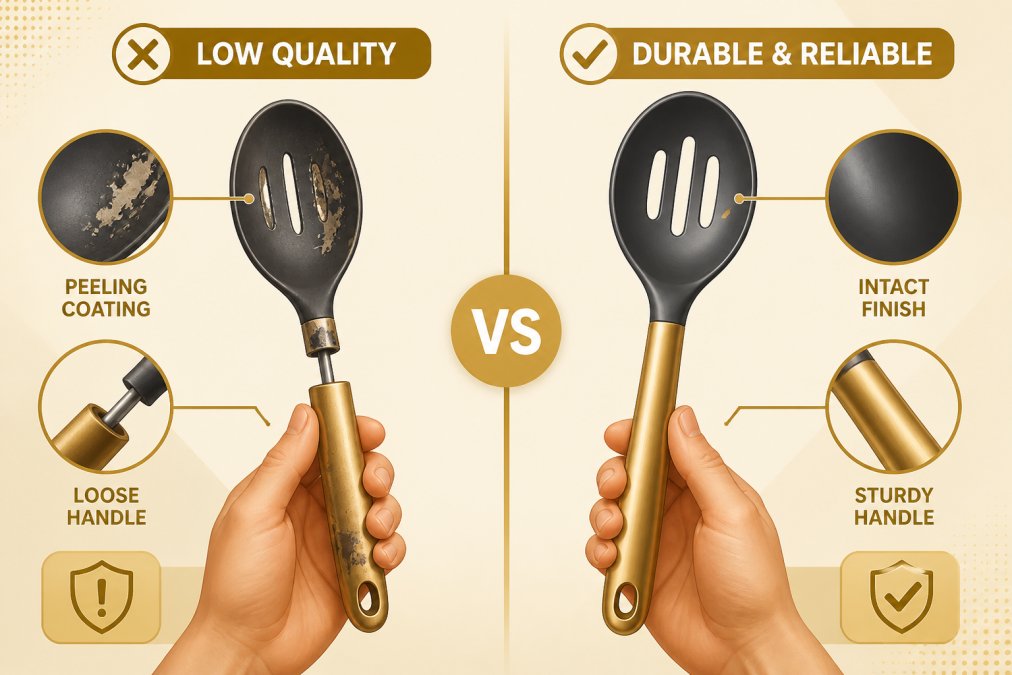
Quality non-stick coatings use PTFE or ceramic alternatives that maintain integrity through hundreds of uses. Poor-quality coatings peel after 20-30 uses because they're applied too thinly. When examining cookware, run your finger across the surface, premium coatings feel smooth and uniform, while cheap ones feel uneven. Silicone utensils should be 100% food-grade silicone, not blended with cheaper polymers. Cast iron requires maintenance but improves with age and lasts generations. BPA-free plastics matter for storage containers, though check whether the material is dishwasher safe and heat-resistant to at least 350°F.
Build Quality and Durability Indicators
Durability signals itself through weight, seams, and handle construction. A quality kitchen knife feels substantial with balanced weight distribution. Run your thumb along the blade's edge: a premium blade has a sharp, consistent edge, while a dull or uneven edge indicates poor manufacturing.
Premium handles use ergonomic grip designs with textured surfaces that won't slip when wet. They're securely attached with no gaps between handle and blade. Wooden handles should feel smooth and sealed, not splintered. Plastic handles should be rigid, not flexible.
Examine where different materials meet: the junction of handle to tool body, the connection between pot and rim. Gaps and rough edges indicate rushed manufacturing. Quality construction shows perfectly aligned seams and consistent finish throughout.
The warranty signals how much the manufacturer believes in their product. A lifetime warranty on a $15 spatula means the company expects it to last indefinitely. Longer warranties indicate confidence in materials and construction.
How to Spot Fake Reviews on Amazon and Other Platforms
Fake reviews have become so common that trusting online ratings without scrutiny is dangerous. Learning to identify authentic reviews protects you from buying unreliable kitchen gadgets based on manufactured consensus.
Red Flags in Review Language and Timing
Authentic reviews sound like humans writing naturally about their experience. Fake reviews follow predictable patterns: excessive enthusiasm, generic praise, or awkwardly formal language. Fake reviewers rarely mention specific uses, problems, or trade-offs. Authentic reviewers mention specific scenarios, acknowledge limitations, and provide context about their cooking style.
Timing patterns reveal manipulation. If a product suddenly receives 50 five-star reviews within two weeks after launch, then nothing for months, that's suspicious. Legitimate products accumulate reviews gradually as real customers purchase and use them over time.
Verified Purchase Badges and Review Patterns
Amazon's "Verified Purchase" badge means the reviewer actually bought the product through Amazon. Prioritize verified purchase reviews when making decisions.
Look at the distribution of star ratings. A healthy product has reviews spread across 1-5 stars with concentration in the 4-5 star range. A product with 95% five-star reviews and 5% one-star reviews suggests manipulation. Real customers express nuanced opinions.
Examine one-star reviews specifically. If they mention the same problem repeatedly, "handle breaks," "coating peels", that's a real durability issue. Check reviewer history: someone who's reviewed 200 products in the last month, all with glowing five-star ratings, is probably a paid reviewer.
| Review Signal | What It Means | Action |
|---|---|---|
| Verified Purchase + specific details | Likely authentic | Trust more heavily |
| No badge + generic praise | Likely fake | Disregard |
| Multiple reviews mentioning same problem | Real quality issue | Research further |
| Sudden review spike | Possible manipulation | Compare older reviews |
| Mixed ratings (1-5 stars) | Likely authentic distribution | Normal pattern |
| 95%+ five-star reviews | Suspicious | Investigate carefully |
Essential Kitchen Tools Checklist: What Actually Matters
The distinction between essential tools and unnecessary clutter comes down to function, frequency of use, and versatility. A reliable kitchen gadgets collection focuses on tools that earn their space through regular use.
Multi-Functional vs. Unitasker Tools
Multi-functional tools are your workhorses: chef's knives, cutting boards, mixing bowls, sheet pans. A quality chef's knife handles 80% of cutting tasks. Invest in premium versions because you'll rely on them daily.
Unitasker tools are specialized: microplane graters, fish spatulas, bench scrapers. They excel at specific tasks that multi-functional tools can't perform as well. Buy a unitasker only when you cook that specific dish regularly. If you make pasta twice a year, a pasta maker doesn't earn its space.
Ergonomics and Ease of Use
Ergonomic design determines whether a tool becomes a pleasure to use or a source of hand fatigue. Premium kitchen gadgets prioritize ergonomics because comfort drives usage.
Handle design is the primary ergonomic factor. The grip should fit your hand naturally without requiring you to squeeze hard. Look for textured surfaces that prevent slipping when wet. Handles should be angled slightly to reduce wrist strain during repetitive motions.
Weight distribution affects how long you can use a tool comfortably. A knife that's too heavy in the blade creates wrist fatigue during extended chopping. Quality tools balance weight so the tool feels like an extension of your hand.
Maintenance ease is an ergonomic consideration people overlook. A tool that requires hand-washing, drying, and special storage is less likely to be used regularly. Dishwasher-safe tools reduce friction and increase usage.
Signs of Low-Quality Kitchen Gadgets to Avoid
Low-quality gadgets share predictable failure patterns that appear within weeks or months of purchase.
Poor Material Choices and Coating Failures
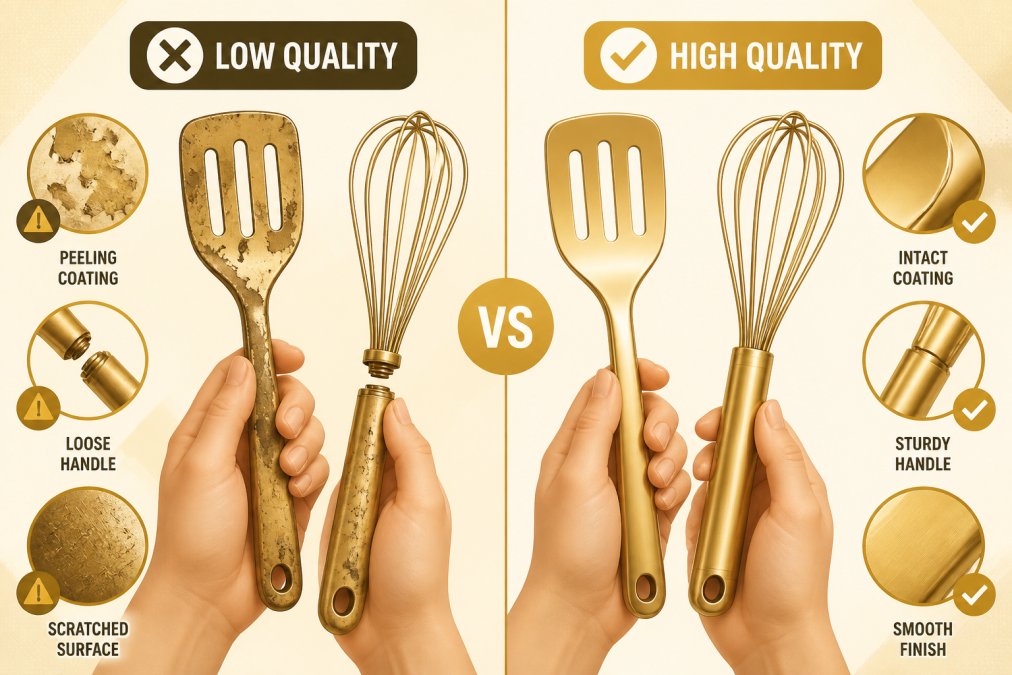
The most common failure mode is coating degradation. A non-stick pan that loses its coating after 30 uses is worthless. Look for uneven coating color, visible imperfections, or a coating that feels sticky rather than slippery.
Rust and corrosion appear quickly on low-quality metal tools. True stainless steel shouldn't rust; if a tool stains or rusts easily, the material isn't what the label claims. Plastic degradation is another reliability indicator. Low-quality plastic becomes brittle, discolored, or warped when exposed to heat or dishwasher cycles.
Glue failures cause handles to separate from blades. A tool with a loose handle is dangerous and useless. When testing tools, try to wiggle the handle. It should be completely solid with no movement.
Weak Ergonomic Design and Maintenance Issues
Handles that are too thin cause hand cramping. Handles that are too smooth slip when wet. Handles that are poorly angled create wrist strain. These determine whether you'll actually use the tool or let it languish in a drawer.
Difficult-to-clean designs trap food particles and bacteria. Quality tools have smooth transitions and sealed seams that clean easily. If a tool feels unbalanced or requires more effort than it should, the design is poor.
Testing Methodology: How Reliable Brands Prove Quality
Transparent testing methodology separates confident brands from those hiding their processes. Quality brands conduct durability testing that simulates real-world use. They cycle non-stick cookware through hundreds of wash cycles to verify the coating maintains integrity. They test knife blades through thousands of cuts to measure edge retention.
Third-party certifications provide independent verification. NSF certification indicates food safety compliance. UL certification verifies electrical safety for appliances. If a product lacks relevant certifications, that's a warning sign.
Real-world testing by professional chefs and food writers adds credibility. Brands that send products to respected culinary publications for review are confident in quality. Publications like Serious Eats product reviews conduct hands-on testing and publish detailed results.
The Anti-Gadget Philosophy: When Less Is More
The most reliable kitchen is often the simplest one. Every gadget you own requires storage space, cleaning, and maintenance. The anti-gadget philosophy argues that mastering a few essential tools beats accumulating dozens of specialized ones.
A sharp chef's knife and cutting board handle 80% of kitchen tasks. A heavy-bottomed pot works for boiling, simmering, and braising. A mixing bowl serves for prep, mixing, and storage. These tools are reliable because they're simple, durable, and used constantly.
Specialized gadgets create false efficiency. An avocado slicer seems clever until you realize a knife does the same job faster once you develop skill. Buy a gadget only when you've identified a specific, repeated need it solves better than existing tools. Skill with basic tools beats gadgets every time.
Sustainability and Eco-Friendly Kitchen Tools
Reliable kitchen gadgets last longer, which makes them inherently more sustainable than disposable alternatives. A quality stainless steel tool used for 20 years generates far less waste than buying cheap replacements every two years.
Sustainable materials matter for environmental impact. Stainless steel is 100% recyclable. Cast iron lasts generations with proper care. Wood is renewable and biodegradable. Silicone is durable and recyclable in some programs. Durability is the ultimate sustainability metric. A tool that lasts 10 years is more sustainable than one lasting one year, regardless of the material.
Environmental Protection Agency guidelines on sustainable consumer products provide frameworks for evaluating environmental impact.
Where to Find Reliable Kitchen Gadgets and Build Trust
Finding reliable kitchen gadgets requires knowing where to look and what signals indicate trustworthiness.
Specialty kitchen stores often carry higher-quality tools than big-box retailers. Staff typically have product knowledge and can explain durability differences. WellnessLifeClub74 curates a selection of reliable kitchen tools and home essentials specifically designed to meet the standards of discerning shoppers who want quality without guesswork.
Direct-from-brand purchases often provide better value and support than third-party retailers. Buying directly from manufacturers means you're getting authentic products without middleman markups. Warranty claims are simpler because you're dealing with the manufacturer.
Established kitchen brands have reputations to protect. Companies that have been manufacturing kitchen tools for decades have survived because their products work. Newer brands sometimes offer innovation, but established brands offer reliability.
Verify authenticity carefully. Counterfeit kitchen tools are common on some online platforms. Buy from authorized retailers or directly from brands. Research before purchasing. Read reviews on multiple platforms, not just the seller's website. Check YouTube for hands-on demonstrations. Spend 15 minutes researching a $50 tool to avoid wasting money.
According to Consumer Reports testing methodology for kitchen tools, comprehensive evaluation requires examining durability, ease of use, and safety across extended use periods.
Build relationships with retailers you trust. When you find a store or brand that consistently delivers quality, stick with them. You'll develop a sense for that retailer's standards, making future purchasing decisions faster.
Finding reliable kitchen gadgets becomes intuitive once you understand what to evaluate. Material composition, build quality, honest reviews, and transparent testing methodology separate genuine quality from marketing hype. Start with essential multi-functional tools, add specialized gadgets only when you've identified repeated need, and prioritize durability over novelty.
WellnessLifeClub74 has curated a collection of reliable kitchen tools and home essentials that meet these standards. Our selection focuses on items with proven durability, transparent material specifications, and honest customer feedback. We prioritize quality over quantity, ensuring every product in our collection delivers genuine value. Explore WellnessLifeClub74's kitchen tool collection today and start building a reliable kitchen that lasts.
Frequently Asked Questions
How can I tell if a kitchen gadget is high quality before buying?
Check the material composition first: stainless steel, food-grade silicone, and cast iron indicate durability. Read verified purchase reviews on Amazon and other platforms, looking for mentions of how the tool performs after months of use. Examine the ergonomic grip design and whether the product offers a warranty. High-quality gadgets typically have warranties of 1-5 years, indicating the manufacturer's confidence in durability and longevity.
What are the most reliable ways to spot fake reviews on Amazon?
Look for reviews that lack specific details about actual use or mention unrelated products. Fake reviews often use identical language across multiple posts or appear in suspicious bursts. Verified purchase badges indicate the reviewer actually bought the item. Filter by 'verified purchase' only, and read both 1-star and 5-star reviews to spot patterns. Genuine reviewers describe real problems or benefits; fake reviewers use generic praise like 'amazing' without specifics.
Which kitchen tools are worth buying and which are wasteful gadgets?
Essential kitchen tools include multi-functional items: a quality chef's knife, cutting board, mixing bowls, and measuring tools. These handle multiple cooking techniques and prep work. Avoid unitaskers that solve one narrow problem. The anti-gadget philosophy suggests asking: 'Does this replace something I already own?' If not, it's likely waste. Focus on tools that improve culinary performance across many recipes rather than gadgets designed for one specific dish.
What should I look for in warranty and build quality when finding reliable kitchen gadgets?
A solid warranty of at least 1-2 years signals manufacturer confidence in build quality. Check if the warranty covers normal wear or only defects. Examine heat resistance ratings for cookware and non-stick coating durability claims. Read user reviews specifically mentioning how the gadget performs after 6-12 months of use. Stainless steel construction and dishwasher-safe components indicate easier maintenance and longer appliance longevity. Avoid products with vague durability claims or no warranty information.
This article was written using GrandRanker