Table of Contents
- Why Simplifying Daily Cleaning Matters
- Create Your Daily Cleaning Checklist
- How Long Should Daily Cleaning Take
- Best Cleaning Tools for Efficiency
- Room-by-Room Maintenance Strategy
- Build Sustainable Cleaning Habits
- Overcome Psychological Barriers to Cleaning
- Conclusion
Last Updated: August 5, 2026
Why Simplifying Daily Cleaning Matters
A cluttered home doesn't just look messy, it drains energy and creates friction in your daily routine. At WellnessLifeClub74, we understand that busy homeowners need cleaning strategies that work WITH their schedules, not against them. The real problem isn't that your home is dirty; it's that you're spending too much time maintaining it. When you simplify your approach to daily house cleaning, you reclaim hours each week and reduce the mental load of managing household tasks.
Most people treat cleaning as a weekend project, a massive push that leaves them exhausted. That approach backfires. Small messes compound into large ones, and by the time you tackle them, the job feels overwhelming. A simplified daily cleaning routine prevents this spiral. By handling small tasks consistently, you maintain your home with minimal effort and keep surfaces from becoming problem areas.
The psychological benefit matters too. A tidy living space reduces stress and improves focus. When your environment is organized, your mind follows. This isn't about perfection; it's about creating a baseline that feels manageable and sustainable for your actual life.
Create Your Daily Cleaning Checklist
A daily cleaning checklist transforms vague intentions into concrete actions. Instead of thinking "I should clean today," you follow a specific sequence. This removes decision fatigue and makes the task feel achievable rather than overwhelming.
Your daily checklist should focus on high-impact tasks that prevent accumulation. Don't include deep cleaning, that's separate. Daily tasks are the maintenance layer: the actions that keep your home from sliding backward.
Morning Reset Tasks
Start your day with a 5-10 minute reset. This sets the tone for the entire day and prevents small messes from becoming big problems by evening.
- Make your bed, this single action creates immediate order in your bedroom and takes under two minutes
- Clear kitchen counters, put away breakfast items, load the dishwasher, wipe down surfaces
- Tidy the main living area, return items to their designated spots, fluff cushions, straighten throws
- Quick bathroom wipe, wipe down sink, toilet, and mirror; takes three minutes maximum
- Start a load of laundry if needed, get it running before you leave or move on to other tasks
The morning reset works because it addresses visible surfaces first. Your brain notices these spaces immediately, so tackling them early creates a sense of control and accomplishment. These tasks take 10-15 minutes total but set up your entire day for success.
Evening Tidy-Up Tasks
Before bed, spend 10-15 minutes undoing the day's accumulation. This prevents waking up to a messy home and keeps tomorrow's morning reset manageable.
- Clear dining and kitchen surfaces, put away dishes, wipe down tables, return items to the kitchen
- Gather items that migrated throughout the day, collect items from the living room that belong in bedrooms or bathrooms
- Do a quick living room sweep, return pillows to couches, fold blankets, straighten furniture
- Prep for tomorrow, lay out clothes, pack bags, set items by the door
- Spot-clean spills or obvious marks, address anything that stands out before it sets
The evening reset is your insurance policy. It takes minimal time but prevents the compounding effect where each day's mess builds on the last. You're not deep cleaning; you're resetting surfaces to a baseline state.
How Long Should Daily Cleaning Take
Daily house cleaning should take between 20 and 30 minutes total when you follow a simplified approach. This includes both the morning reset and the evening tidy-up. The key is consistency, not duration.
Most people overestimate how long daily maintenance takes because they're thinking about deep cleaning. A daily routine isn't about scrubbing grout or polishing baseboards. It's about preventing messes from becoming entrenched. Twenty minutes of daily prevention saves you hours of weekend deep cleaning.
The time investment varies slightly based on household size and whether you have children or pets. A single person in a one-bedroom apartment might finish in 15 minutes. A family of four in a larger home might need 30-35 minutes. The principle remains the same: consistent small actions beat infrequent large ones.
Track your actual time for a week. Most people discover they're spending less time than they expected once they stop treating daily maintenance as a chore and start treating it as a routine. Routines require less mental effort than tasks, so they feel faster even when the clock says the same.
Best Cleaning Tools for Efficiency
The right tools make daily cleaning faster and less physically demanding. You don't need an arsenal of specialized products. A few high-quality, multi-purpose items handle 90% of daily maintenance tasks.
Essential Multi-Purpose Supplies
Microfiber cloths are the foundation of efficient daily cleaning. They capture dust and debris without requiring chemical cleaners, work on virtually every surface, and last for years. A set of 10-12 cloths costs less than a single specialty tool and eliminates the need for paper towels.
A quality multi-purpose cleaner handles counters, appliances, and bathrooms. Look for options that work on multiple surfaces and don't require mixing or special instructions. The simpler the product, the more likely you'll actually use it consistently.
Vacuum or broom selection depends on your flooring. Hard floors need a lightweight broom or cordless vacuum. Carpeted areas benefit from a robot vacuum that runs on a schedule, this removes the decision of when to vacuum and lets the machine handle daily maintenance automatically.
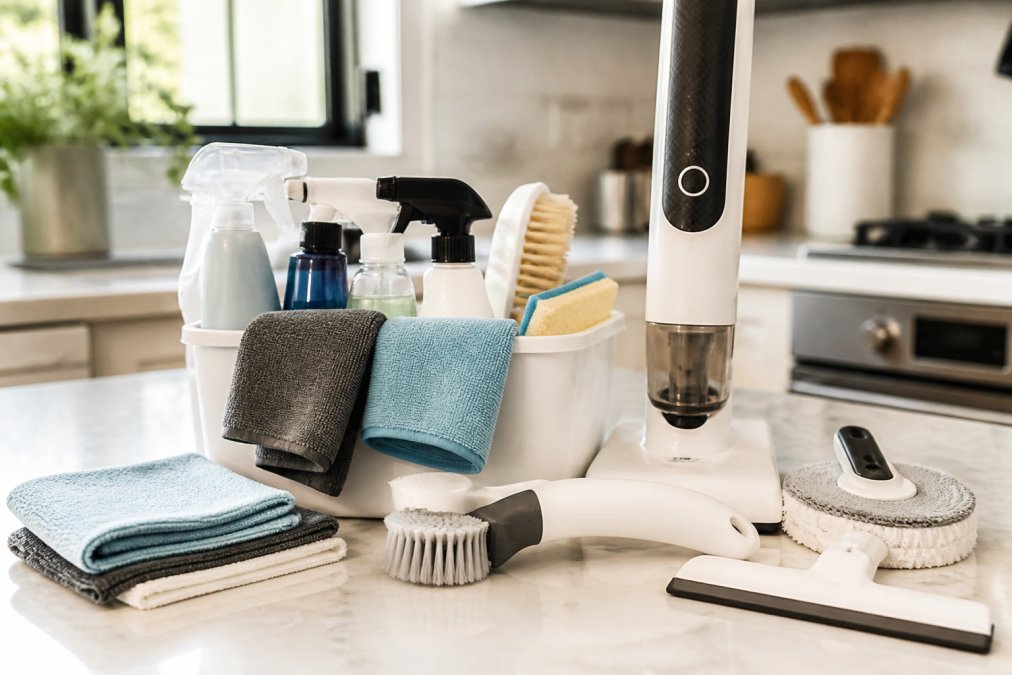
A simple dust pan and small handheld vacuum handle quick cleanups without pulling out a full-size machine. These tools reduce friction because they're fast and accessible. When the barrier to cleaning is low, you're more likely to address small messes immediately.
Time-Saving Gadgets and Equipment
Robot vacuums eliminate the most time-consuming daily floor maintenance. Set them to run on a schedule and they work independently. This is one of the highest-return investments for busy households because it removes a recurring task entirely.
Cordless handheld vacuums make spot-cleaning quick. Unlike traditional vacuums, they're ready to use instantly and don't require setup. Keep one accessible for immediate cleanup when crumbs or debris appear.
Microfiber mop systems with spray bottles reduce the physical effort of floor cleaning. You spray as you go rather than filling buckets, and microfiber pads require less scrubbing than traditional mops. The entire process takes half the time of conventional mopping.
Cleaning caddies keep supplies organized and portable. Instead of running between rooms gathering products, you carry everything with you. This seems minor but saves significant time across a week of daily cleaning.
Room-by-Room Maintenance Strategy
Different rooms require slightly different daily attention. A room-by-room approach ensures you don't miss areas while also preventing you from over-cleaning spaces that need minimal daily maintenance.
Bedroom: Make the bed, tidy surfaces, and put away clothes. This takes three minutes. Deep cleaning happens monthly.
Kitchen: Clear counters after meals, load the dishwasher, wipe the table. This is the highest-traffic daily cleaning area and takes five minutes per meal.
Bathroom: Wipe the sink and mirror after use, return items to designated spots. Quick daily maintenance prevents soap scum and toothpaste buildup from becoming stubborn problems.
Living Room: Return items to their places, fluff cushions, straighten throws. This visual reset takes five minutes and has an outsized impact on how the space feels.
Entryway: Clear items that pile up by the door, wipe muddy footprints immediately, organize shoes and coats. Five minutes of daily attention prevents this transition space from becoming a dumping ground.
The room-by-room approach works because you're not trying to deep clean everything daily. You're maintaining each space at a baseline level. Deep cleaning happens monthly or seasonally for each room, but daily maintenance is minimal and targeted.
Build Sustainable Cleaning Habits
The difference between people who maintain clean homes and those who don't isn't effort, it's habit formation. Habits require no willpower because they're automatic. Your goal is to make daily cleaning so routine that you do it without thinking.
The Daily Reset Approach
The daily reset is a specific framework for building the cleaning habit. You perform the same sequence at the same time every day. Consistency creates automaticity. After three weeks of doing your morning reset at the same time, your brain stops treating it as a task and starts treating it as part of your routine.
Anchor your reset to an existing habit. Do your morning reset immediately after breakfast or before your first cup of coffee. Do your evening reset right after dinner or before you sit down to relax. These anchors make the new habit stick because they attach to behavior you already do automatically.
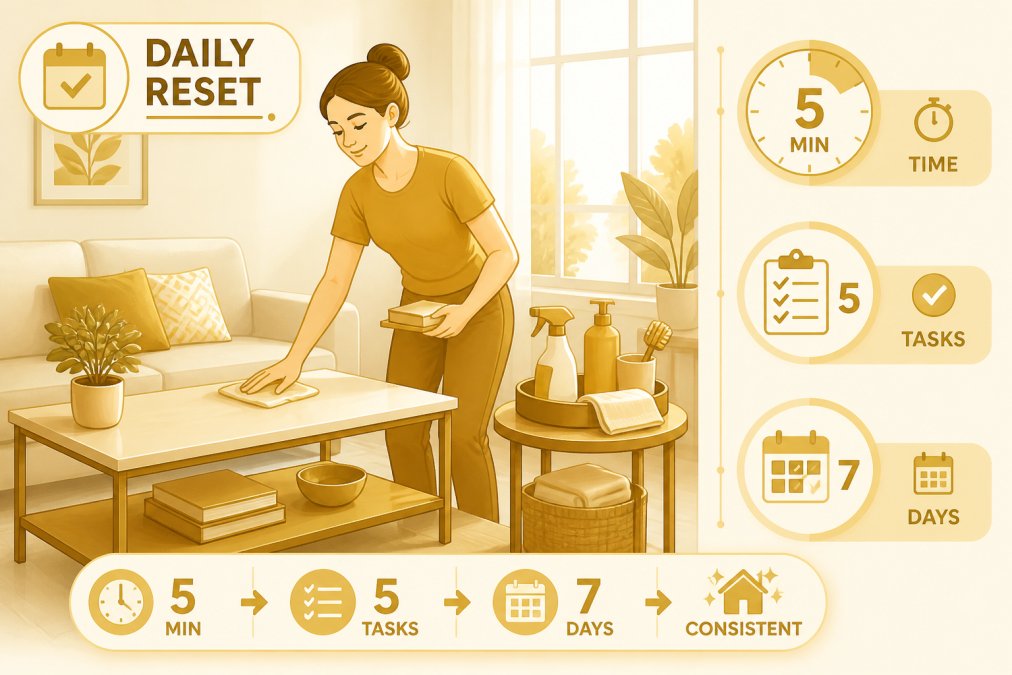
Track your resets for two weeks. A simple checklist on your phone or a mark on a calendar creates accountability without being burdensome. After two weeks, the habit usually solidifies and tracking becomes unnecessary. You're doing the reset automatically.
Preventative Cleaning to Reduce Deep Cleaning
Preventative cleaning is the philosophy that small daily actions prevent large problems. Address spills immediately instead of letting them dry. Wipe surfaces daily instead of waiting until they're visibly dirty. Return items to their places instead of letting them accumulate.
This approach reduces deep cleaning from monthly to quarterly or even semi-annual. When you prevent buildup through daily maintenance, deep cleaning becomes genuinely deep, addressing baseboards, inside appliances, and other areas that don't require frequent attention.
Most people reverse this. They ignore daily maintenance and then spend entire weekends deep cleaning. This creates a feast-or-famine cycle that's exhausting and unsustainable. Preventative daily cleaning creates a steady baseline that requires minimal effort.
The time math is simple: 20 minutes daily prevents 8 hours of deep cleaning monthly. That's a 24:1 return on investment. Even if deep cleaning takes you only half that time, daily prevention is still dramatically more efficient.
Overcome Psychological Barriers to Cleaning
Many people struggle with cleaning not because they lack time or tools, but because of psychological barriers. Procrastination, perfectionism, and decision fatigue all sabotage cleaning routines.
Perfectionism is the biggest saboteur. If you believe your home must be spotless, you'll avoid cleaning because the task feels impossibly large. Shift your standard to "maintained" instead of "perfect." A maintained home has clean surfaces and clear floors. It doesn't have polished baseboards or dust-free ceiling fans. This mental shift makes the task feel achievable.
Decision fatigue stops people before they start. If you have to decide what to clean, when to clean it, and how to clean it, you'll procrastinate. A checklist removes all three decisions. You follow the sequence without thinking. This is why the daily reset works, it's a predetermined routine that requires zero decision-making.
Start absurdly small if you're struggling. Commit to a five-minute reset, not a 15-minute one. Five minutes feels manageable and builds momentum. Once you start, you often continue. But even if you stop at five minutes, you've still made progress. Small consistency beats perfect intentions.
Environmental cues matter more than willpower. Keep cleaning supplies visible and accessible. When you see the microfiber cloths on the counter, you're more likely to use them. When supplies are hidden in a cabinet, you'll skip cleaning to avoid the friction of retrieving them.
Simplifying your daily house cleaning comes down to creating a sustainable routine that prevents accumulation rather than fighting against it. The morning reset and evening tidy-up take 20-30 minutes combined but eliminate the need for exhausting weekend deep cleaning sessions. At WellnessLifeClub74, we recognize that modern homeowners need solutions that fit their actual lives, not idealized versions of them. Our curated selection of cleaning tools and efficiency gadgets helps you maintain this simplified approach without unnecessary complexity. Start with a basic checklist, commit to consistency for three weeks, and watch as daily cleaning becomes automatic. The key isn't perfection, it's preventing the mess from becoming the problem in the first place.
Frequently Asked Questions
What is a good daily cleaning routine for busy families?
A realistic daily cleaning routine takes 15-20 minutes and focuses on high-impact tasks: making beds, wiping down kitchen surfaces, doing dishes, and a quick tidy of common areas. Break tasks into morning (5 minutes) and evening (10-15 minutes) sessions. The key is consistency over perfection. Use a daily cleaning checklist to stay on track without decision fatigue.
How can I stop feeling overwhelmed by house cleaning?
Break cleaning into smaller, daily habits rather than tackling everything at once. Use the daily reset approach: spend 10 minutes each evening preventing clutter buildup. Invest in efficient cleaning tools and multi-purpose cleaners to reduce the mental load of choosing products. Accept that maintenance cleaning prevents the need for exhausting deep cleaning sessions.
What is the 10-10-10 rule for cleaning?
The 10-10-10 rule divides daily cleaning into three 10-minute blocks: 10 minutes for morning tasks (make beds, wipe surfaces), 10 minutes for midday spot cleaning, and 10 minutes for evening tidy-up. This structured approach prevents overwhelming buildup and keeps your home consistently clean without requiring large blocks of time.
How do I clean my house a little each day to avoid buildup?
Assign specific tasks to each day using a room-by-room strategy. Monday might focus on bathrooms, Tuesday on the kitchen, and so on. Combine this with daily surface maintenance and spot cleaning. Preventative cleaning, wiping spills immediately, putting items away daily, stops clutter and dirt from accumulating, making your overall workload lighter.
This article was written using GrandRanker