Table of Contents
- How to Verify Online Product Quality: What You Need to Know
- Step 1: Research the Seller and Identifying Legitimate Online Retailers
- Step 2: Analyze Customer Reviews and How to Spot Fake Reviews
- Step 3: Verify Product Specifications and Descriptions
- Step 4: How to Check Product Authenticity Using Technical Methods
- Step 5: Confirm Secure Payment Methods and Data Protection
- Step 6: Evaluate Return Policies and Warranty Coverage
- Step 7: Physical Quality Verification Upon Arrival
Last Updated: August 17, 2026
How to Verify Online Product Quality: What You Need to Know
Buying products online exposes you to real risks: counterfeit goods, misleading descriptions, bait-and-switch tactics, and sellers who disappear after payment. Yet millions of shoppers complete transactions daily without incident. The difference isn't luck, it's verification.
How to verify online product quality means systematically checking multiple signals before you buy and after your package arrives. This guide breaks down the seven-step process that separates smart shoppers from those who get burned. Each step takes minutes and together they form a verification framework that catches most problems before money changes hands.
Step 1: Research the Seller and Identifying Legitimate Online Retailers
Before evaluating the product itself, evaluate the business selling it. A legitimate online retailer has verifiable credentials, transparent contact information, and a documented history.
Check business registration and contact information
Legitimate online retailers display their legal business name, physical address, and phone number in the footer or "About Us" section. You can verify this information through your state's Secretary of State office or the Better Business Bureau.
Look for inconsistencies. If the website claims to be a major brand but lists a residential address, or if the phone number doesn't connect to a real business, that's a red flag. Call the number and ask basic questions about business history and return policy. A legitimate business answers directly.
Check the domain name carefully. Scammers register domains with subtle misspellings or slight variations of well-known retailers. Type the URL directly into your browser rather than clicking links from emails or ads.
Look for trust badges and security certifications
Trust badges signal that a retailer has passed third-party verification. Common legitimate badges include SSL certificates (the padlock icon in your browser's address bar), verified business seals from the Better Business Bureau, and payment processor certifications.
These badges are not foolproof, scammers sometimes display fake ones, but their absence is a warning sign. Visit the badge issuer's website to verify authenticity. Click the badge itself; legitimate ones link to a verification page.
Step 2: Analyze Customer Reviews and How to Spot Fake Reviews
Customer reviews are your window into real user experience. Learning to identify authentic feedback from fabricated praise is essential to how to verify online product quality.
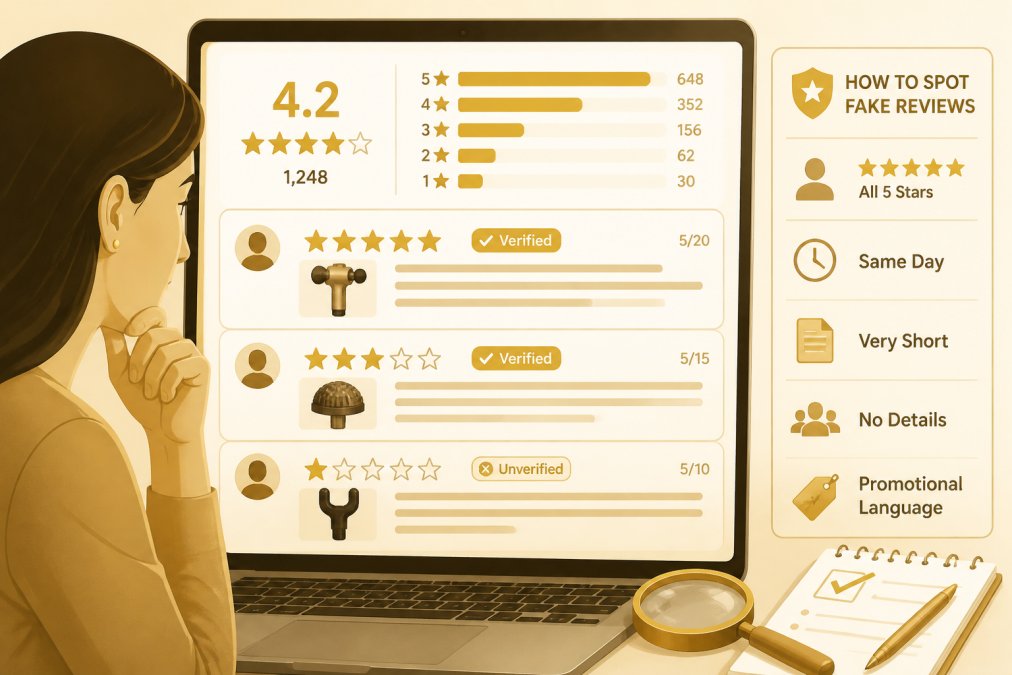
Examine review patterns and language for authenticity
Authentic reviews show variation. Real customers describe different experiences with a realistic distribution of five-star, three-star, and one-star ratings. If every review is five stars or all negative reviews use identical phrasing, that's suspicious.
Read the language carefully. Authentic reviews include specific details: "The strap broke after two weeks of daily use" or "Setup took longer than expected, but once configured, it works great." Fake reviews tend toward generic praise without specifics.
Check for reviews that mention competitor products. A real customer might say, "This is better than the Brand X version I tried last year." Paid reviewers rarely reference alternatives.
Check verified purchase badges and review timing
Verified purchase badges indicate the reviewer actually bought the product from that retailer. Prioritize reviews marked "Verified Purchase" over unverified ones.
Examine the timing of reviews. Products sometimes receive a flood of five-star reviews within days of launch, suggesting a coordinated campaign rather than organic feedback. Authentic products accumulate reviews gradually over weeks and months.
Be skeptical of reviews posted immediately after purchase, before the customer could reasonably have tested the item.
Step 3: Verify Product Specifications and Descriptions
Misleading product descriptions are common across online retail. A product might be described as "premium stainless steel" when it's actually steel-plated aluminum. Specifications that matter for your use case, weight capacity, battery life, dimensions, might be missing or buried.
Compare the product description across multiple retailers. If the same product is sold on five different sites, do the specifications match? The official brand website usually has the most accurate specs.
Look for specificity. Legitimate product descriptions include exact measurements, materials, weights, and electrical specifications. Vague descriptions like "compact" or "durable" without numbers are a warning.
Check for disclaimers buried in the description: "Does not work with hard water," "Requires separate purchase of batteries," or "Fits standard doorways only." These details matter.
Search for the product's official brand website. If the product you're looking at has significantly different specs than what the brand lists, you might be looking at a counterfeit.
Step 4: How to Check Product Authenticity Using Technical Methods
For higher-value purchases or products where authenticity matters, technical verification methods provide additional confidence.
Use reverse image search to verify product photos
Counterfeiters often steal product photos from legitimate retailers and reuse them on fake sites. Right-click on a product photo, select "Search Image with Google," and see where else that photo appears online.
If the same photo appears on the official brand website and authorized retailers, that's a good sign. If it appears on dozens of unrelated sites or sites known for selling counterfeits, that's a red flag.
Check regulatory certifications and compliance
Products sold in the market must meet specific safety and quality standards. Health and beauty products, electronics, and pet supplies all have regulatory requirements. Legitimate sellers can provide proof of compliance.
For electronics, look for FCC certification markings. For health supplements, verify that the manufacturer follows FDA guidelines. For products making health claims, check that the seller can document those claims.
Manufacturers typically display certification information on packaging or in product documentation. If the listing doesn't mention certifications, ask the seller directly. A legitimate business provides documentation.
Step 5: Confirm Secure Payment Methods and Data Protection
How you pay matters as much as what you buy. Use credit cards or payment platforms that offer buyer protection: credit cards, PayPal, Apple Pay, Google Pay, or Amazon Pay. Avoid wire transfers, gift cards, cryptocurrency, or direct bank transfers.
Before entering payment information, confirm the URL starts with "https://" and displays the padlock icon. Look for security badges from payment processors.
Review the retailer's privacy policy. Legitimate retailers explain how they collect, use, and protect your data. If the privacy policy is vague, missing, or promises to share your data with "partners," that's a warning.
Enable two-factor authentication for account logins if available.
Step 6: Evaluate Return Policies and Warranty Coverage
A generous return policy suggests the seller stands behind their products. Review the return window, many retailers offer 30 days; some offer 60 or 90. Longer windows give you time to thoroughly evaluate a product.
Check the return process. Can you initiate returns online? Do you pay for return shipping, or does the retailer cover it? Free returns are preferable, especially for higher-value items.
Look for warranty coverage. Legitimate retailers explain warranty terms clearly: what's covered, how long coverage lasts, and how to file a claim.
Be cautious of "final sale" policies. Some retailers mark certain items as final sale with no returns, sometimes legitimate for custom items, but also used by scammers.
Step 7: Physical Quality Verification Upon Arrival
The moment your package arrives is your final verification checkpoint. Inspect the packaging immediately. Legitimate retailers use professional packaging, sturdy boxes, protective materials, and branded labels. Counterfeit products often arrive in generic packaging or packaging with printing errors.
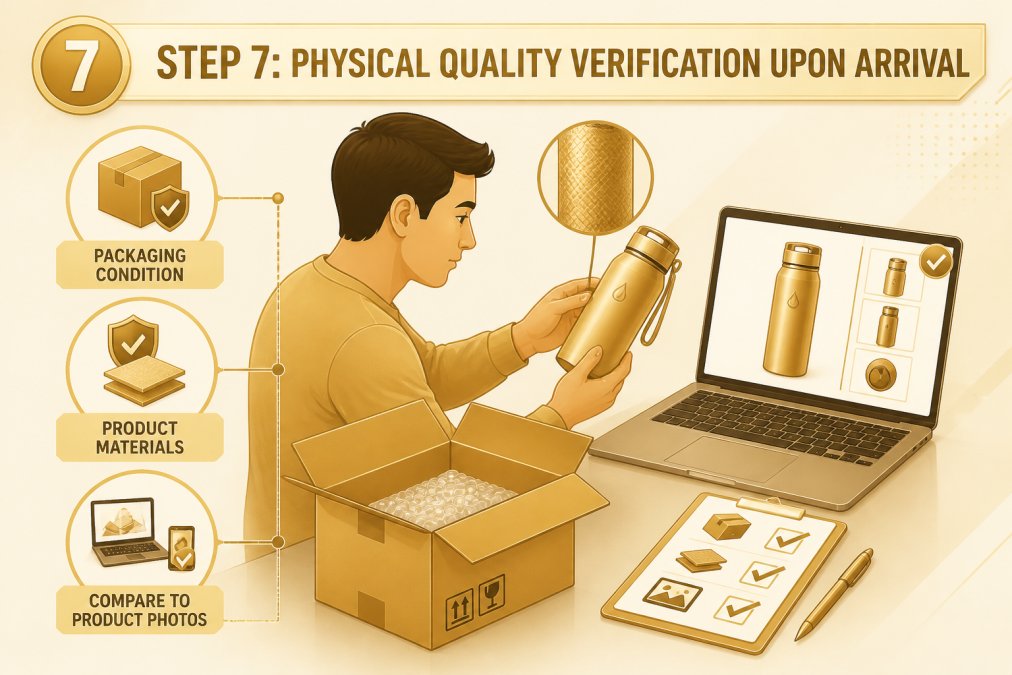
Examine the product itself. Compare it to the product photos from the listing. Does it match in materials, color, size, and weight? Quality products feel solid and well-finished. Cheap counterfeits often have rough edges, poor paint application, or loose components.
Test basic functionality before the return window closes. If it's an electronic device, charge it and confirm it powers on. If it's a physical tool, test its primary function. If it's a beauty or wellness product, check the expiration date and ingredient list.
Compare the product documentation to what arrived. Legitimate products include instruction manuals, warranty cards, and safety information. Counterfeit products often include poorly translated instructions or missing documentation.
Verify serial numbers if the product has them. If you can register the serial number on the manufacturer's website, that's confirmation of authenticity.
Document everything with photos and video before opening or using the product. These records prove the condition in which you received it.
Verifying online product quality requires skepticism and systematic checking, but it's time well spent. You're protecting your money, your health, and your satisfaction. At WellnessLifeClub74, we understand that discerning shoppers demand transparency, that's why we curate our selection with verified suppliers, provide detailed product specifications, and stand behind every item with clear return policies and customer support. Start with seller research, dig into reviews, check specifications, verify authenticity where it matters, confirm secure payment, understand the return policy, and inspect what arrives. These seven steps transform online shopping from a gamble into a confident purchase decision.
| Verification Step | What to Check | Red Flag |
|---|---|---|
| Seller research | Business registration, contact info, trust badges | Missing address or unverifiable phone number |
| Customer reviews | Verified purchases, varied ratings, specific feedback | All five-star reviews or generic praise |
| Product specs | Exact dimensions, materials, weight, electrical specs | Vague descriptions or missing key details |
| Authenticity | Reverse image search, certifications, compliance | Stolen photos or missing certifications |
| Payment security | HTTPS, payment processor badges, privacy policy | Insecure payment methods or vague privacy terms |
| Return policy | Return window length, shipping costs, warranty | No returns or final sale with no exceptions |
| Physical inspection | Packaging quality, product condition, functionality | Damage, mismatched appearance, or poor construction |
Frequently Asked Questions
What are the red flags of fake online reviews?
Fake reviews often use generic praise without specifics, contain identical wording across multiple reviews, appear in clusters on the same date, or lack verified purchase badges. Suspicious language includes excessive capitalization, poor grammar, or overly promotional tone. Real customer reviews typically mention specific product features, honest drawbacks, and natural variation in writing style. Check the reviewer's profile, accounts with only one review or recently created profiles warrant skepticism. Compare review patterns across multiple sites; legitimate products show consistent feedback.
How can I check if an online retailer is legitimate before making a purchase?
Verify the retailer's business registration through Better Business Bureau (BBB) or state records. Look for physical address, phone number, and clear contact information on their website. Check for trust badges like SSL certificates (HTTPS), payment processor logos, and third-party verification seals. Research customer complaints on independent review platforms. Examine their return policy, shipping information, and privacy policy, legitimate retailers provide transparent, detailed policies. Avoid retailers with poor grammar, unprofessional design, or vague company information. Contact customer support with a question to gauge response quality and speed.
How to check product authenticity using reverse image search?
Upload the product image from the retailer's listing into Google Images or TinEye. If the same image appears on multiple unrelated websites, the retailer may be dropshipping or using stock photos. Compare the reverse search results to the product description, authentic products show consistent branding, packaging, and appearance across legitimate sources. Check if the image matches the official manufacturer's website. Be cautious if the product photo looks professionally staged but the retailer has minimal other products or inconsistent branding. Authentic sellers typically use original product photography or license images from manufacturers.
What should I check when a product arrives to verify quality?
Inspect packaging for damage, tampering, or signs of poor handling. Check that the product matches the description, color, size, materials, and included accessories should align with the listing. Examine build quality: seams should be even, materials should feel durable, and no parts should be loose or broken. Verify serial numbers or authenticity markers if the product includes them. Test basic functionality if applicable. Compare the physical product to photos on the retailer's website and manufacturer's site. Document any discrepancies with photos. If quality doesn't match the description, contact the retailer within the return window with evidence.
This article was written using GrandRanker