Table of Contents
- Why Dropshipping Hurts Product Quality
- How to Verify Online Product Quality Before You Buy
- Dropshipping Product Safety and Compliance Risks
- Signs of a Low-Quality Dropshipping Store
- Quality Control SOPs: What Responsible Retailers Do
- The Sample-First Testing Framework
- How Poor Quality Damages Customer Lifetime Value
Last Updated: August 18, 2026
Why Dropshipping Hurts Product Quality
Dropshipping outsources fulfillment and quality control simultaneously, creating a structural problem: retailers have no direct oversight of products before they reach customers. When cost pressure intensifies, suppliers cut corners on materials and manufacturing. The retailer bears the reputational cost while the supplier absorbs minimal consequences.
Dropshippers operate on thin margins with little financial incentive to invest in supplier vetting, sample testing, or quality audits. Most never physically inspect a product before it ships. By the time a retailer learns about quality problems, hundreds of identical units may already be in transit to other customers. At WellnessLifeClub74, we've observed how this disconnect creates cascading quality issues that damage brand reputation and erode customer trust.
How to Verify Online Product Quality Before You Buy
Start with product images. High-quality sellers provide multiple angles and close-up details. Zoom in and look for uneven seams, visible defects, cheap materials, or inconsistent coloring. If photos hide details rather than reveal them, that's a warning sign.
Read the product description critically. Vague language like "premium quality" without specific details is a red flag. Legitimate descriptions include material composition, dimensions, weight, certifications, and performance specifications.
Check the return policy explicitly. A retailer confident in quality offers easy returns, typically 30 days minimum with free return shipping. Restrictive policies signal that quality issues are expected.
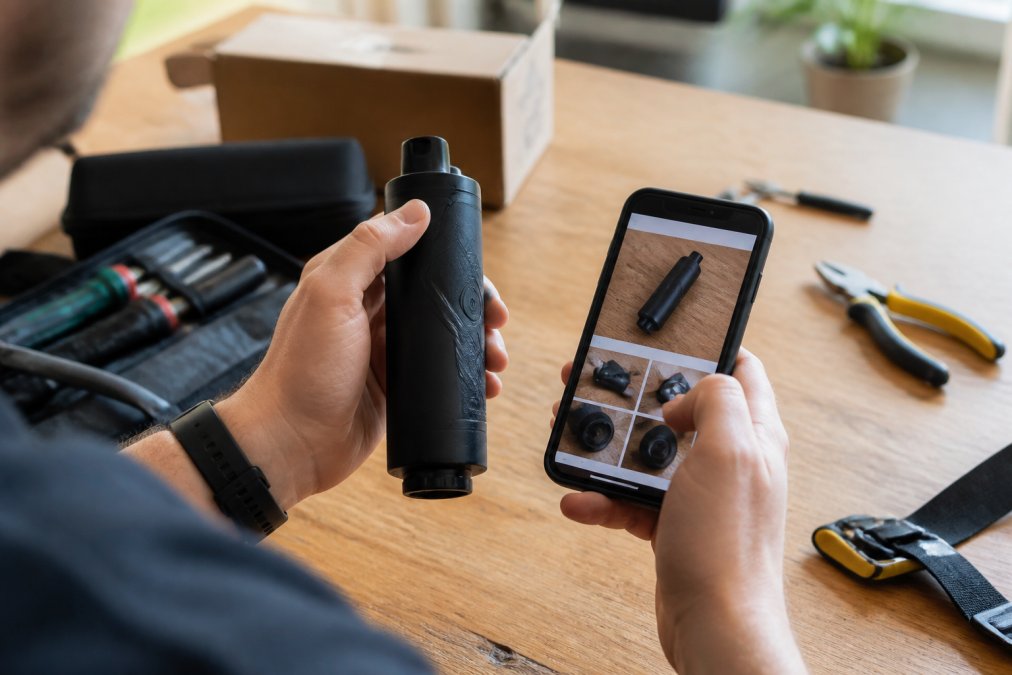
Read 2-3 star reviews first to identify common failure points. If multiple reviews mention the same defect, that's a systemic quality issue. Search for third-party certifications (UL, FCC, CE, FDA approval). Legitimate products carry these; their absence is concerning.
Verify the retailer's commitment to transparency. Responsible retailers publish sourcing information, supplier vetting processes, and quality assurance procedures. Anonymous dropshippers hide this entirely.
Dropshipping Product Safety and Compliance Risks
When you sell a product under your brand, you're legally responsible for its safety and regulatory compliance, regardless of who manufactures it. Items for children must meet CPSIA requirements. Electronics must comply with FCC regulations. Textiles must meet flammability standards. A dropshipper sourcing from manufacturers cutting corners creates legal exposure for the retailer.
You need documented proof that suppliers meet applicable standards: certificates of compliance, test reports, and traceability documentation. Most dropshippers operate without this paperwork, assuming compliance based on supplier assurances, a dangerous assumption when regulators investigate product failures.
Compliance risk extends to import regulations. Products manufactured overseas must meet country-of-origin labeling and tariff classification requirements. Suppliers sometimes misclassify products to reduce import duties, creating customs violations for retailers. When regulators discover this, the retailer's business faces seizures and penalties.
Implement a compliance checklist before listing any product: verify certifications, request test documentation, confirm labeling compliance, and ensure traceability. Retailers who skip these steps gamble with their business license and personal assets.
Signs of a Low-Quality Dropshipping Store
Examine inventory management practices. A retailer claiming to stock thousands of products but unable to provide accurate inventory status is likely dropshipping without proper oversight. Out-of-stock items and inventory changes without notice suggest fulfillment delays and order accuracy problems.
Assess customer service responsiveness. Low-quality dropshippers take days to respond to emails, have no phone support, and offer templated responses. Responsible retailers answer within 24 hours and address problems directly.
Look at shipping times. Dropshippers claiming "fast shipping" but taking 2-3 weeks are sourcing from overseas suppliers without domestic inventory. This increases damage in transit and fulfillment delays.
Examine product consistency. If the same product has dramatically different reviews over time ("great quality" six months ago, "terrible quality" recently), the supplier has changed manufacturing. This indicates the retailer isn't monitoring supplier changes.
Check for transparent sourcing information. Retailers hiding supplier identity, manufacturing location, or quality processes operate without accountability. Responsible retailers publish this information.
Evaluate return policies. Retailers making returns difficult, requiring original packaging, charging restocking fees, or delaying refunds are protecting against high defect rates. Easy returns indicate confidence in quality.
Quality Control SOPs: What Responsible Retailers Do
Responsible retailers implement structured quality control processes that dropshippers typically skip. The first step is supplier vetting: evaluating manufacturing capabilities, quality certifications, production capacity, and financial stability. They conduct site visits or request third-party audits and verify documented quality assurance processes.
The second step is sample testing. Before listing a product, responsible retailers order samples and test them thoroughly, checking dimensions, weight, material quality, durability, and functionality. For electronics, this means power-on testing and safety checks.

Third is ongoing supplier audits. Responsible retailers periodically reorder samples and test them. They monitor defect rates in returned products and communicate quality expectations to suppliers. They're willing to terminate relationships if quality declines.
Fourth is documentation. Responsible retailers maintain records of all testing, certifications, and supplier communications. This proves due diligence if regulatory issues arise and provides evidence in supplier disputes.
Fifth is customer feedback integration. Responsible retailers actively monitor reviews and complaints, identify patterns suggesting systemic issues, and communicate these back to suppliers with demands for corrective action.
Sixth is inventory control. Responsible retailers maintain FIFO rotation to prevent expired stock, inspect inventory regularly for storage damage, and track batch numbers for traceability.
The final step is continuous improvement. Responsible retailers treat quality as competitive advantage, investing in better supplier relationships, more rigorous testing, and faster problem resolution.
The Sample-First Testing Framework
The Sample-First Testing Framework provides a practical methodology for evaluating products before committing to inventory or customer sales. It operates in three phases: pre-sourcing evaluation, sample testing, and batch verification.
In the pre-sourcing phase, establish quality criteria for the product category. Document these explicitly, they become your supplier requirements.
In the sample testing phase, order a small quantity (typically 2-5 units) from the prospective supplier. Test each sample against your documented criteria and document all results. Compare results to competitor products and industry standards. Only suppliers passing this phase advance to inventory commitments.
The batch verification phase occurs after you've committed to inventory. Inspect a statistically meaningful sample from each shipment (typically 5-10% of the order, minimum 10 units). If the batch passes, release it for fulfillment. If it fails, reject the entire shipment and demand replacement or refund.
This framework prevents the common dropshipping mistake of assuming quality remains consistent across batches. It also creates documentation that protects you legally if a product causes injury or fails a safety audit.
How Poor Quality Damages Customer Lifetime Value
Poor quality erodes customer lifetime value, the total profit a customer generates across all transactions. A dissatisfied customer doesn't just request a refund; they leave negative reviews, share complaints on social media, and recommend competitors to friends. One poor experience can prevent 3-5 future purchases from that customer's network.
Processing returns consumes staff time, shipping costs, and inventory management. A 5% return rate consumes 5-10% of profit margin. A 10% return rate eliminates profitability entirely. Dropshippers without quality control often see return rates exceeding 10%, making the business unprofitable despite high sales volume.
Retailers with poor quality ratings struggle to attract new customers and pay higher acquisition costs. Their organic search visibility declines as review ratings drop. Over time, poor quality becomes a financial death spiral.
A satisfied customer purchases repeatedly, refers others, and tolerates occasional minor issues because they trust the brand. A dissatisfied customer is gone forever. The math is straightforward: a customer with 5 purchases at $50 average order value represents $250 in revenue. If quality issues prevent repeat purchases, you've lost $200 in future revenue to save perhaps $5 in quality control costs.
The decision to dropship or maintain quality control is fundamentally a choice about business values. Dropshipping prioritizes short-term margin over long-term brand equity. Quality-focused retail prioritizes customer satisfaction and lifetime value over transaction volume. WellnessLifeClub74 has built our reputation on this commitment, we curate high-quality items, conduct rigorous supplier vetting, and stand behind every product we sell. Shop now and experience the difference that genuine quality control makes.
| Quality Control Element | Responsible Retailers | Typical Dropshippers |
|---|---|---|
| Supplier vetting | Comprehensive audits and site visits | Minimal or none |
| Sample testing | Mandatory before listing | Skipped |
| Batch verification | Testing on each shipment | No inspection |
| Documentation | Complete records maintained | Minimal records |
| Return rates | 2-5% | 10-20%+ |
| Customer satisfaction | High repeat rates | Low repeat rates |
| Inventory control | FIFO rotation and tracking | No physical control |
Frequently Asked Questions
Why is dropshipping often associated with poor product quality?
Dropshipping relies on third-party suppliers with minimal oversight. Retailers never physically inspect inventory before it ships to customers, creating gaps in quality control. Suppliers prioritize cost reduction over durability, leading to inconsistent product standards. Without direct supplier relationships or inventory management, retailers cannot enforce quality assurance protocols or catch defects before they reach customers.
How can I verify online product quality before purchasing?
Check for detailed product photos from multiple angles, read verified customer reviews for patterns of complaints, and look for return policies that indicate confidence in quality. Ask retailers about their sourcing strategy and supplier vetting process. Request product certifications or compliance documentation. Contact customer service with specific questions about materials, durability, and testing. Reputable retailers provide transparent answers; dropshipping stores often cannot.
What are the main safety and compliance risks with dropshipped products?
Dropshipped items often bypass regulatory standards for consumer protection, product liability, and safety testing. Items may not meet FDA, CPSC, or industry-specific requirements. Retailers lack traceability through the supply chain, making recalls difficult. Counterfeit or substandard materials increase injury risk. Without compliance verification, customers face product failures, health hazards, and chargebacks. Retailers absorb liability despite having no direct control over manufacturing.
How does poor product quality affect my long-term relationship with a retailer?
Low quality erodes customer lifetime value. When products fail, customers stop returning and switch to competitors. High return rates and chargebacks signal unreliable sourcing. Negative reviews spread, damaging brand reputation and reducing future sales. Retailers that invest in quality control and supplier vetting build trust, reduce returns, and retain customers long-term. One defective product can cost far more in lost loyalty than the profit from that single sale.
This article was written using GrandRanker