Table of Contents
- 1. Maximize Vertical Space with Floor-to-Ceiling Storage
- 2. Space-Saving Furniture for Small Apartments
- 3. How to Arrange Furniture in a Small Living Room
- 4. Best Lighting for Small Spaces
- 5. Mirrors and Neutral Color Palettes Create Illusion of Space
- 6. Decluttering and Minimalist Design Essentials
- 7. Budget-Friendly DIY Modifications and Sustainable Decor
- Conclusion
Last Updated: August 21, 2026
Modern home decor for small spaces doesn't have to mean cramped or cluttered. The real challenge is making intentional choices about what stays, where it goes, and how it functions. At WellnessLifeClub74, we understand that your living environment directly impacts your daily wellness and comfort, which why we've curated a collection of practical solutions to help you maximize every square foot. Below, we'll walk you through 10 strategic approaches that transform compact living into something genuinely functional and beautiful.
1. Maximize Vertical Space with Floor-to-Ceiling Storage
The biggest mistake people make in small spaces is ignoring the walls above eye level. Your vertical space is real estate you're probably leaving empty. Floor-to-ceiling storage transforms a cramped room into one that feels organized and intentional.
Tall shelving units pull the eye upward, creating the illusion of height while providing genuine storage capacity. The key is choosing units that don't feel bulky. Open shelving works better than closed cabinets in tight quarters because it doesn't visually anchor itself to the floor. Interior design principles from the American Society of Interior Designers emphasize that vertical elements make rooms feel more spacious.
Consider wall-mounted solutions like the IKEA MOSSLANDA Picture Ledge, which costs just under $10 and requires minimal installation. For a more substantial storage solution, the Umbra Conceal Bookshelf creates floating books that appear to defy gravity, the hidden mounting hardware keeps visual clutter to a minimum while holding up to 15 pounds per shelf. These invisible shelves work particularly well in bedrooms or home offices where you want to display items without overwhelming the space.
The Yamazaki Home Tower Rolling Slim Storage Cart offers another angle: it's only about 5 inches wide, designed specifically to slip into gaps between furniture or alongside appliances. The multiple tiers mean you're stacking storage vertically rather than spreading it horizontally across your limited floor space.
2. Space-Saving Furniture for Small Apartments
Your furniture choices determine whether a small space feels functional or suffocating. This is where multifunctional pieces become non-negotiable.
Multi-Functional Furniture That Doubles as Storage
The West Elm Mid-Century Storage Ottoman is a perfect example of this philosophy. It provides seating, a footrest, a side table surface, and hidden storage all in one piece. When you're working with limited square footage, every object needs to earn its place by serving multiple purposes. A storage ottoman eliminates the need for a separate coffee table, side table, and storage bin.
The Flexispot Standing Desk Converter takes a different approach for home offices. Instead of requiring a dedicated desk footprint, it converts any existing table into a sit-stand workstation. This means you're not sacrificing living space to accommodate work-from-home needs. The gas spring system adjusts smoothly, and the integrated keyboard tray keeps your workspace organized within a compact footprint.
These pieces work because they prioritize function without sacrificing aesthetics. Modern home decor for small spaces means choosing furniture that looks intentional, not makeshift.
Furniture Scale and Visual Weight
Here's what most guides miss: furniture scale matters more than you think. A large, low sofa visually grounds a room and makes it feel intentional. A tiny loveseat with spindly legs makes the same space feel cramped and apologetic. Choose fewer, larger pieces over many small ones.
Visual weight refers to how "heavy" a piece feels. Solid wood furniture feels heavier than pieces with exposed legs or glass tops. In a small space, some visual weight is actually your friend, it creates stability and prevents the room from feeling chaotic. The trick is balancing that weight with open sightlines. A substantial sofa with exposed legs underneath maintains visual flow because you can see through to the wall beyond.
3. How to Arrange Furniture in a Small Living Room
Furniture arrangement determines whether a small room feels spacious or claustrophobic. The difference between a well-arranged 300-square-foot apartment and a poorly arranged one is often just a few feet of intentional spacing.
Floor Plan Optimization and Open-Concept Flow
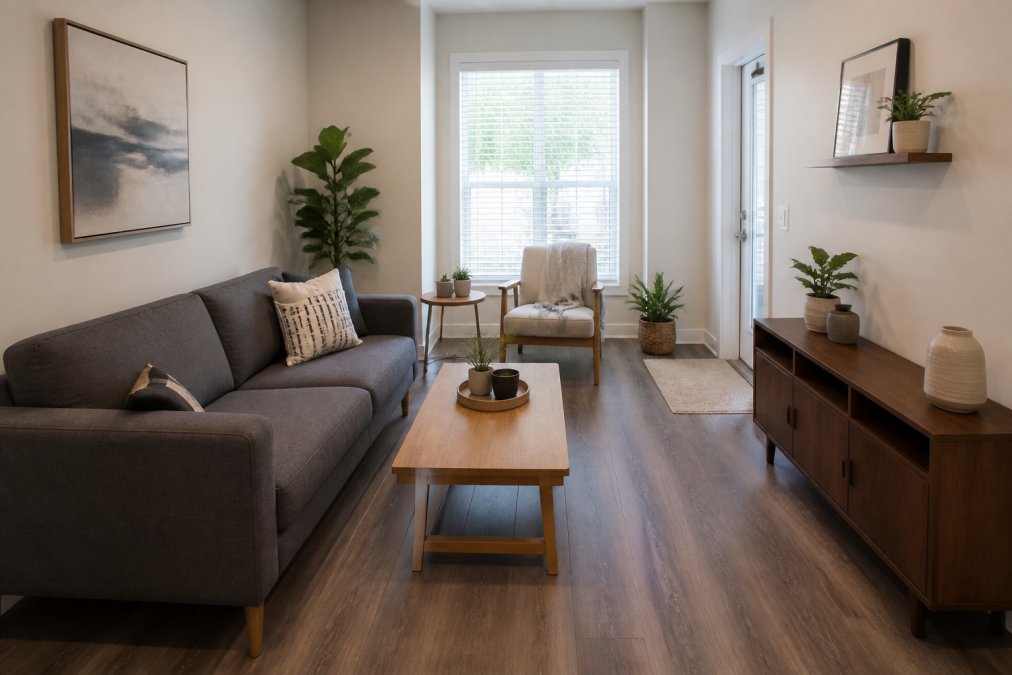
Start by identifying your traffic patterns. Where do people naturally walk when entering the room? Arrange furniture to create clear pathways rather than forcing people to navigate around obstacles. A floating furniture arrangement, where the sofa doesn't hug the wall, often works better than pushing everything to the perimeter. This counterintuitive move actually makes rooms feel larger because it creates defined zones and allows sight lines across the entire space.
Open-concept flow means your eye can travel from one end of the room to the other without obstruction. Avoid placing tall furniture in the center of the room or blocking windows. Position your largest pieces (sofa, bed, desk) first, then arrange smaller items around them. Leave at least 18 inches of walking space between furniture pieces (asid.org).
Room Dividers and Zoning Strategies
In studio apartments or open-concept spaces, room dividers create psychological separation without permanent walls. The IKEA KALLAX Shelf Unit serves double duty here, it functions as storage while also defining different zones. Positioned between a sleeping area and living area, it creates privacy without closing off the space entirely.
Other zoning strategies include using area rugs to anchor different functional areas, positioning furniture to face different directions (the sofa faces the TV, a chair faces the window), or using lighting to distinguish zones. Layered lighting in particular makes each area feel intentional rather than like one cramped room.
Modern home decor for small spaces often relies on these subtle zoning techniques. You're not building walls; you're creating visual and functional boundaries that make the space feel organized.
4. Best Lighting for Small Spaces
Lighting is the single most underutilized tool for making small spaces feel larger. Poor lighting makes rooms feel cramped and dreary. Strategic lighting transforms the same square footage into something open and welcoming.
Layered Lighting and Light Reflection
Avoid relying on a single overhead light. Instead, use three types of lighting working together: ambient (general room illumination), task (focused light for specific activities), and accent (highlighting architectural features or decor).
Ambient lighting might come from a dimmer-controlled ceiling fixture or recessed lights. Task lighting includes desk lamps, reading lights, or under-cabinet kitchen lighting. Accent lighting highlights a mirror, artwork, or architectural feature. When these three layers work together, the room feels intentional and spacious rather than uniformly lit and flat.
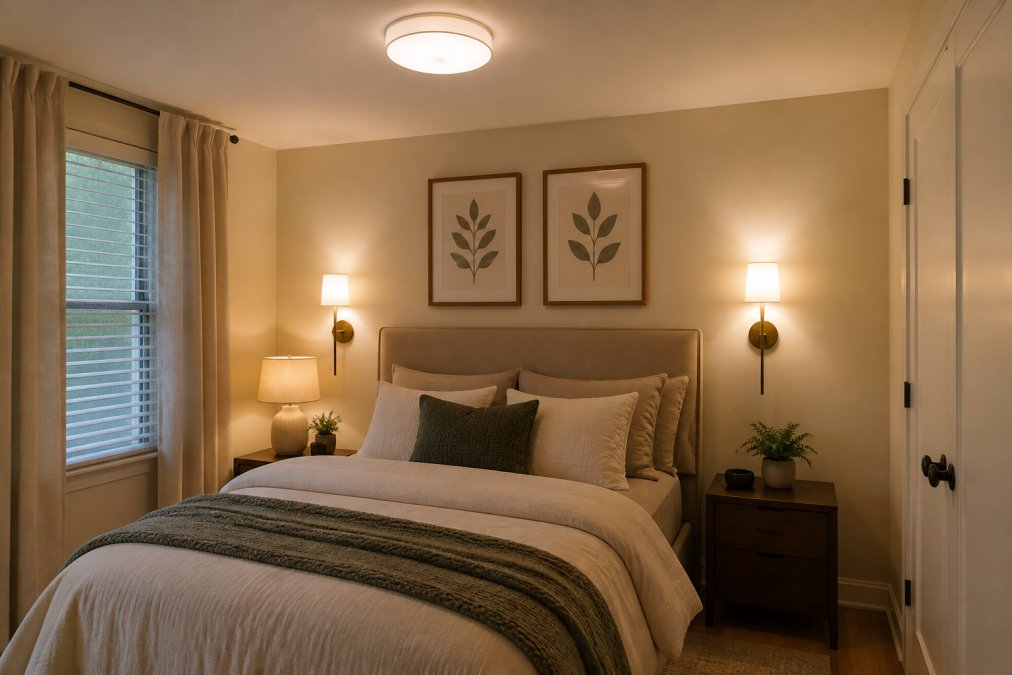
Light reflection amplifies the effect of your lighting choices. Mirrors bounce light around the room, making it feel brighter and larger. Glossy or semi-gloss finishes on walls and furniture reflect more light than matte surfaces. Even the BENDO CLIP Luxe Wall Hook, with its metallic finish, contributes to light reflection when positioned strategically.
5. Mirrors and Neutral Color Palettes Create Illusion of Space
These two elements work together to fundamentally change how your brain perceives a small room's dimensions.
Mirrors are the most direct tool for creating the illusion of space. A large mirror opposite a window reflects natural light and makes the room feel twice as deep. The Puik Design FACETT Mirror uses geometric faceting to add visual interest while still serving the primary function of light reflection. Position mirrors strategically, across from windows, behind furniture, or on walls that get natural light.
Neutral color palettes (whites, beiges, soft grays, warm taupes) recede visually, making walls feel farther away than they actually are. This is basic color psychology: cool, light colors feel spacious; dark, saturated colors feel intimate and enclosed. In a small space, you want the former.
This doesn't mean your home has to be boring. Add visual interest through texture rather than color. A cream-colored linen sofa, a light wooden shelf unit, and soft gray walls create a cohesive, airy aesthetic. Then layer in texture through throw pillows, a woven rug, or tactile elements like linen curtains. The room feels sophisticated and intentional without relying on bold colors that visually shrink the space.
Modern home decor for small spaces embraces this restraint. You're not decorating with less; you're decorating more strategically.
6. Decluttering and Minimalist Design Essentials
Clutter is the enemy of small-space living. Every object competes for visual attention, making the room feel chaotic. Minimalist design isn't about owning nothing, it's about owning only things that serve a purpose or bring genuine joy.
Start with a ruthless audit. Walk through your space and ask of each item: Do I use this? Do I love this? Does it serve a function? If the answer to all three is no, it goes. This isn't about deprivation; it's about clarity. A room with 50 carefully chosen objects feels larger and more intentional than one with 200 items competing for space.
Storage solutions help maintain this minimalism. Hidden storage prevents visual clutter while keeping necessary items accessible. The West Elm Storage Ottoman, IKEA KALLAX with drawer inserts, and rolling carts all serve this purpose, they contain things without displaying them.
Vertical storage and shelving systems work better than horizontal surfaces for minimalist design. Horizontal surfaces (tables, counters, shelves) accumulate clutter naturally. Vertical wall space stays visually clean. This is why wall-mounted solutions like the Open Spaces Shelf Risers work so well, they add storage without adding visual weight at eye level.
7. Budget-Friendly DIY Modifications and Sustainable Decor
You don't need to spend thousands to transform a small space. Strategic, budget-conscious modifications deliver disproportionate results.
Removable wallpaper costs a fraction of traditional wallpaper but creates dramatic visual impact. Peel-and-stick options let renters add personality without violating lease agreements. A single accent wall in a subtle pattern or soft color can define a space and make it feel intentional.
Paint is another budget tool. Painting the interior of open shelving a contrasting color creates visual interest and makes displayed items pop. Painting the back wall of a shallow closet or nook a bold color (while keeping the room's main walls neutral) adds personality without overwhelming the space.
DIY floating shelves using brackets and reclaimed wood cost a fraction of purchased units. The IKEA MOSSLANDA Picture Ledge at under $10 is essentially a DIY option, minimal cost, maximum visual impact.
For sustainable decor, prioritize multifunctional pieces that will last. A well-made ottoman outlasts five cheap side tables. Invest in timeless designs rather than trendy pieces that feel dated in a year. Natural materials like wood, linen, and wool age beautifully and feel more intentional than synthetic alternatives.
When you're working with limited space, quality matters more than quantity.
Modern home decor for small spaces comes down to intentionality. Every piece of furniture, every color choice, every storage solution should earn its place by serving a clear function or creating genuine visual appeal. The challenge isn't working with less square footage, it's making deliberate decisions about what matters most in your daily life and designing your space around those priorities. Start with vertical storage, choose multifunctional furniture scaled appropriately, arrange your layout for clear sightlines, layer your lighting, use mirrors strategically, declutter ruthlessly, and invest in sustainable pieces that will serve you long-term. These principles transform compact living from a constraint into an opportunity to create something genuinely functional and beautiful. Explore WellnessLifeClub74's curated collections of home essentials and modern decor solutions designed specifically for small spaces, and discover how the right pieces can maximize both your square footage and your daily comfort.
| Strategy | Primary Benefit | Best Tools/Products | Difficulty Level |
|---|---|---|---|
| Vertical storage | Maximizes unused wall space | Shelf risers, wall-mounted units, tall shelving | Easy |
| Multifunctional furniture | Eliminates need for multiple pieces | Storage ottomans, desk converters, modular units | Medium |
| Floor plan optimization | Creates open sightlines and flow | Strategic furniture placement, area rugs | Easy |
| Layered lighting | Makes space feel larger and brighter | Wall sconces, task lamps, dimmers | Medium |
| Mirrors and neutral palettes | Creates illusion of depth | Large mirrors, light colors, minimal patterns | Easy |
| Decluttering | Reduces visual chaos | Storage solutions, minimalist principles | Easy |
| Budget-friendly modifications | Adds personality affordably | Removable wallpaper, paint, DIY shelves | Easy |
=== FAQ ANSWERS (audit these too, same rules) ===
[1] Q: What is the 70/30 rule in decorating small spaces? A: The 70/30 rule suggests filling 70% of your small space with functional items and keeping 30% open and empty. This balance prevents clutter while maintaining a streamlined, airy aesthetic that makes compact living feel less cramped. Apply this principle to furniture placement, decor, and storage to achieve visual harmony without overwhelming your room.
[2] Q: How do you make a small room look modern and expensive with modern home decor? A: Focus on quality over quantity by choosing fewer, well-designed pieces with clean lines and neutral tones. Incorporate hidden storage, wall-mounted shelving, and mirrors to create depth. Use layered lighting and tactile elements like natural wood or metal accents. These modern design choices create an illusion of space and sophistication without requiring a large budget for volume.
[3] Q: What's the best space-saving furniture for small apartments? A: Multi-functional furniture is essential for compact living. Ottomans with hidden storage, wall-mounted desks, rolling carts, and modular shelving units maximize functionality without consuming floor space. Choose pieces with vertical storage and minimal visual weight. These solutions allow you to maintain both comfort and style while optimizing your floor plan.
[4] Q: How do mirrors and lighting transform the perception of a small space? A: Mirrors reflect natural and artificial light, instantly brightening your room and creating the illusion of depth. Strategic mirror placement opposite windows amplifies light reflection. Combined with layered lighting (ambient, task, and accent), this approach makes small rooms feel more spacious, airy, and inviting without structural changes.
Frequently Asked Questions
Q: What is the 70/30 rule in decorating small spaces?
A: The 70/30 rule suggests filling 70% of your small space with functional items and keeping 30% open and empty. This balance prevents clutter while maintaining a streamlined, airy aesthetic that makes compact living feel less cramped. Apply this principle to furniture placement, decor, and storage to achieve visual harmony without overwhelming your room.
Q: How do you make a small room look modern and expensive with modern home decor?
A: Focus on quality over quantity by choosing fewer, well-designed pieces with clean lines and neutral tones. Incorporate hidden storage, wall-mounted shelving, and mirrors to create depth. Use layered lighting and tactile elements like natural wood or metal accents. These modern design choices create an illusion of space and sophistication without requiring a large budget for volume.
Q: What's the best space-saving furniture for small apartments?
A: Multi-functional furniture is essential for compact living. Ottomans with hidden storage, wall-mounted desks, rolling carts, and modular shelving units maximize functionality without consuming floor space. Choose pieces with vertical storage and minimal visual weight. These solutions allow you to maintain both comfort and style while optimizing your floor plan.
Q: How do mirrors and lighting transform the perception of a small space?
A: Mirrors reflect natural and artificial light, instantly brightening your room and creating the illusion of depth. Strategic mirror placement opposite windows amplifies light reflection. Combined with layered lighting (ambient, task, and accent), this approach makes small rooms feel more spacious, airy, and inviting without structural changes.
This article was written using GrandRanker